— BUYING GUIDES
Compostable Tableware for Festivals and Events: A Bulk Buying Guide for Catering Suppliers
November 2026
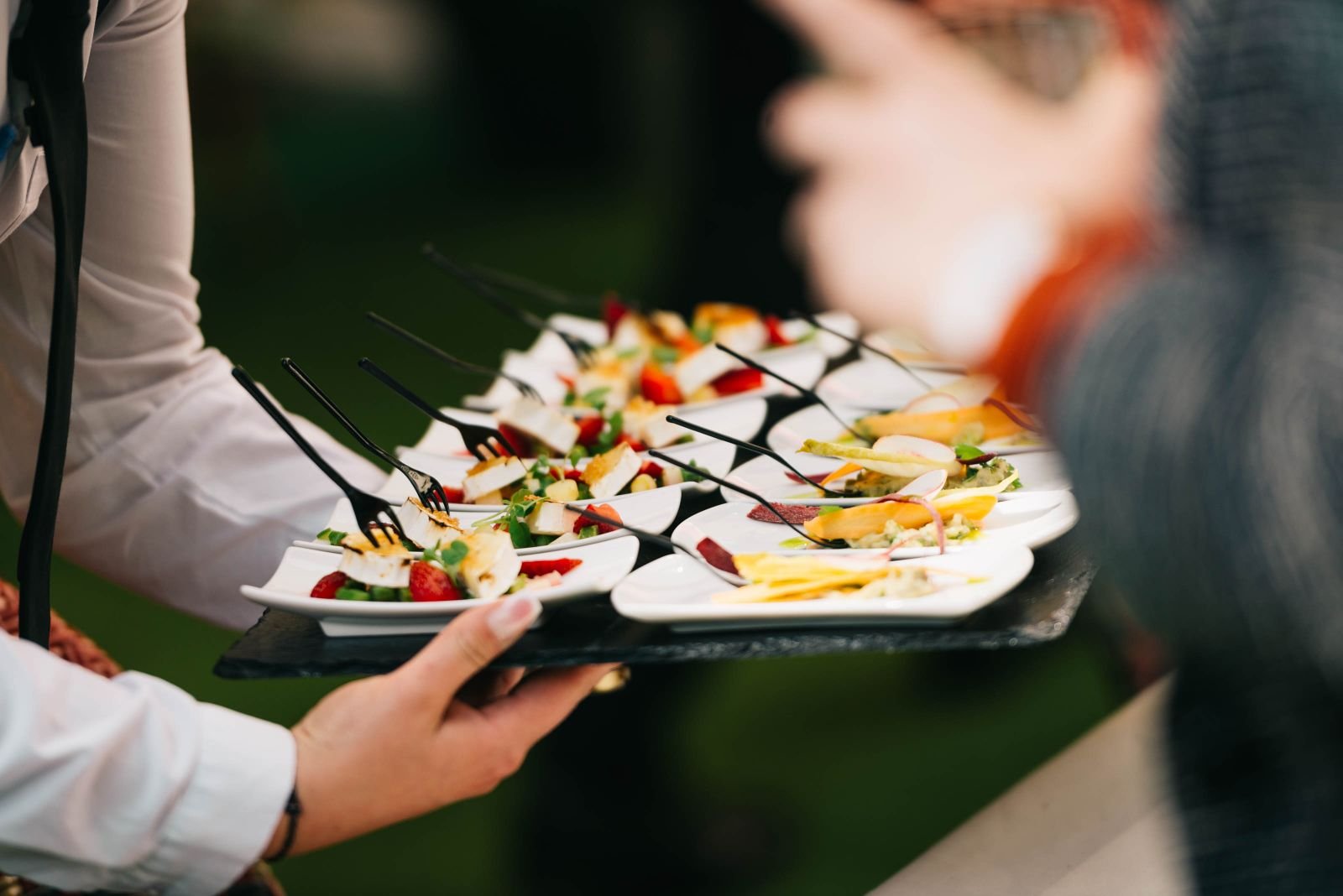
Buying compostable tableware for festivals and events fails in a different way from restaurant supply. The risk is not one bad service. It is running out of plates at peak hour, or holding three pallets of the wrong format until next season. This guide shows catering suppliers how to plan by covers, match formats to food, and check venue rules before ordering.
We write this from the factory side, for the importers and distributors who supply the caterers. Hebei Daoxiang Eco Tableware Technology Co., Ltd. runs its own moulding plant in Hebei, China. We produce sugarcane bagasse plant-fibre tableware — 126 items across six collections. Of all the uses our buyers put that range to, compostable tableware for festivals and events is among the most demanding.
Everything below is a planning method, not a sales pitch. Use your own event numbers throughout. Worked figures are example arithmetic for you to replace, never consumption data from our side.
Start with covers, not cartons: planning compostable tableware for festivals and events
Cartons are how tableware ships. Covers are how it gets used. When buyers plan compostable tableware for festivals and events by carton count alone, they usually overbuy one item and underbuy another. The fix is to plan per 1,000 covers first, then convert the result into cartons and SKUs.
A cover is one visitor served one meal occasion. Start from the event organiser’s expected attendance and meal participation. Not every visitor eats, and some eat twice. Those two judgements belong to you and your catering customer, not to any supplier. Once you have a covers figure, walk the menu and assign each dish its serving format.
Then apply three adjustments that experienced event suppliers build in by habit. The table below works one example set of shares through in full. First, a wastage allowance for dropped, double-served and damaged pieces. Second, a peak factor, because a headline act ending can send half the site to the food stalls within twenty minutes. Third, a format split, because one cover of compostable tableware for festivals and events may need a plate, a cutlery set and a sauce cup.
| Item | How to count it (your arithmetic) | Worked example per 1,000 covers |
|---|---|---|
| Main plates or trays | Covers × share of covers taking a plated main × (1 + your wastage allowance) | 1,000 × 0.70 × 1.05 = 735 pieces |
| Bowls | Covers × share taking a bowl dish (curry, noodles, soup) × (1 + allowance) | 1,000 × 0.30 × 1.05 = 315 pieces |
| Clamshell boxes | Covers × share taking food to carry away from the stall × (1 + allowance) | 1,000 × 0.25 × 1.05 = 263 pieces |
| Cutlery sets | Covers × share of dishes that need cutlery × (1 + allowance) | 1,000 × 0.80 × 1.05 = 840 sets |
| Portion and sauce cups | Covers × share taking dips, sides or desserts × average cups per such cover | 1,000 × 0.40 × 1 = 400 pieces |
The shares in the right-hand column are placeholders chosen to show the method. Your menu mix will produce different shares, and it should. A burger-led site leans on clamshells and trays. A world-food site leans on bowls.
Recalculate per event type, and keep the sheet. After two or three events, your own shares become the most accurate planning data you own.
Split the total by service point, not just by event. Ten stalls holding even stock will still stock-out at the two stalls nearest the main stage. Allocate by expected stall share, and hold a small central reserve that a runner can move during service.
Match formats to the food, not to the catalogue
The second planning pass is about format behaviour under real festival food. Greasy, wet and heavy dishes punish thin walls and shallow formats. Dry, light food forgives almost anything. Buyers of compostable tableware for festivals and events should spec each format against the hardest dish it will carry.
Plates carry the main-course load at most seated and standing events. Buyers typically source round plates in the 9 to 10 inch band for mains, with smaller sizes for desserts and sides. Treat those as common market ranges, and test stiffness with your actual food. Our wholesale guide to bagasse plates covers format choice and flex testing in plate-specific detail.

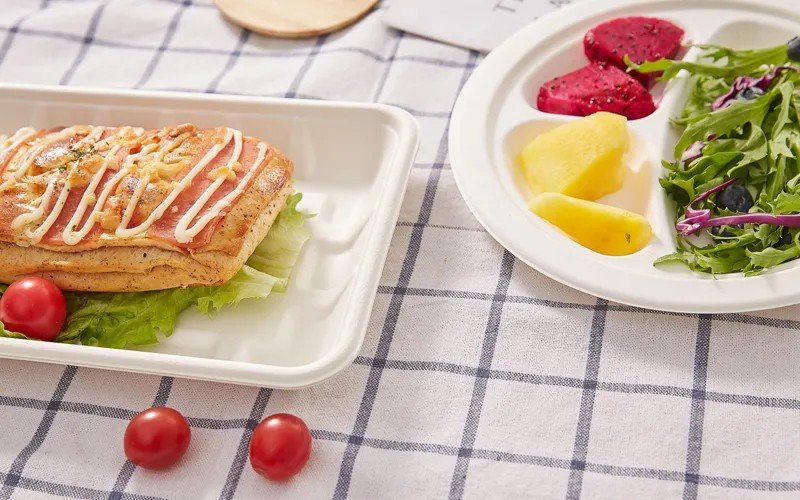
Bowls suit the dishes festivals increasingly run on: curries, noodle boxes, grain bowls and soups. For bowls in compostable tableware for festivals and events, depth matters more than diameter. A deep bowl keeps sauce off hands when visitors eat standing or walking. Clamshell boxes suit burgers, wraps and loaded fries, where the lid protects food on the move and stacks for the stall. Compartment trays suit organised catering points and crew feeding, where a main, a side and a sauce must stay separate on one piece.
Cutlery deserves its own decision. Loose cutlery at a busy stall slows service and spreads waste across the counter. Individually wrapped sets keep service fast and hygienic, and one set per cover is easy to count. In our own range, cutlery means paper cutlery and individually wrapped paper cutlery sets. Our guide to compostable cutlery options explains the set formats buyers usually compare.
Cups play a smaller, specific role in a bagasse set. Portion and sauce cups handle dips, slaws and desserts at the stall. Plan them from the menu, as the table above shows, rather than adding a token quantity at the end. If the venue rules cover drinks service too, check which cup formats those rules require before you finalise the list.
Compostable-only rules: what venues and councils actually check
Many festivals now write compostable-only rules into vendor contracts, requiring compostable tableware for festivals and events at every stall. Some municipalities attach similar conditions to event permits on public land. The buyer supplying the caterer carries the practical risk. If a stall is found serving on non-compliant plastic, the caterer loses the pitch and the supplier loses the account.
Read the rule the way an inspector would. Check three things. First, scope: does the rule cover every serveware item, or only plates and containers? Cutlery, cups and lids are the items most often forgotten. Second, evidence: does the venue ask for certification documents in advance, or does it inspect packaging on the day? Third, collection: is there a compost or food-waste stream on site that accepts certified compostable items?
On evidence, keep the claim precise. Our tableware is certified to FDA and LFGB food-contact requirements and to EN 13432, with production under ISO 9001. EN 13432 is the industrial-composting standard venues most commonly name. Ask us for the documentation for the specific items you plan to import, and pass it to the organiser before the event, not during it.
Collection is the point buyers most often skip. Compostable tableware for festivals and events only completes its route if the site separates it into the right stream. Ask the organiser who collects food waste, and whether their composter accepts certified compostable serveware.
If the answer is no, raise it early. A clear back-of-house bin plan, with one stream for food and serveware together, is usually part of the caterer’s pitch. Supplying that plan with the goods makes you harder to replace.
Service speed and handling when the rush comes
Festival service is a peak-load business. A format that performs in a café trial can fail when two hundred covers arrive in fifteen minutes. When you test compostable tableware for festivals and events, test it at festival tempo and festival distance. Visitors carry food further, hold it longer, and eat standing more often than in any indoor setting.
Run three checks on samples before you commit a season’s stock. First, the one-hand carry: load the plate or tray with the heaviest dish, and carry it thirty metres one-handed. Rim stiffness decides whether the food arrives level. Second, the standing meal: leave a saucy dish on the piece for twenty minutes, then check the underside for softening or soak-through. Third, the stack check: stack filled clamshells or loaded trays the way a stall stacks orders waiting for collection, and look for lid slip or base sag.
Handling details also decide how fast a stall can work. Wrapped cutlery sets can be dropped onto a tray without a second motion. Nested plates that separate cleanly save seconds on every cover. Lids that click shut first time prevent the re-pressing that slows the queue.
None of this appears on a specification sheet for compostable tableware for festivals and events. All of it appears in your sample testing, if you test the way the stall works.
Storage between events: protecting stock you hold for months
Event supply is seasonal, so distributors often hold stock between events. Bagasse is a natural plant fibre, and it absorbs ambient moisture. Storage conditions therefore decide whether compostable tableware for festivals and events stays crisp or goes soft in the carton.
Keep cartons off the floor, on pallets, away from damp walls and direct weather. A dry, ventilated warehouse is enough; a container left in summer rain is not. Check incoming pallets for crushed corners, because deformed stacks at the bottom of a pallet cause jams and breakages at the stall months later. Rotate stock first in, first out, and put the oldest cartons into the earliest events of the season.
Between events, recount your compostable tableware for festivals and events by SKU against your per-1,000-covers sheet. Partial cartons from the last event hide shortages until the next load-in. A simple rule works: no carton goes back into stock uncounted, and opened cartons get used first. If an item underperformed or a format drew complaints, record it while the memory is fresh. That note is what turns next season’s order from a repeat into an improvement.
Ordering compostable tableware for festivals and events in bulk
Bulk ordering works per SKU, and event ranges involve more SKUs than most buyers expect. Our minimum order is 5,000 pieces per SKU from existing moulds. One SKU is one format in one size. A 10 inch round plate and a compartment tray are two SKUs, each with its own minimum. Custom shapes need a new mould and start at 20,000 pieces.
That structure rewards concentration. Build any compostable tableware for festivals and events order around the formats your covers arithmetic says will move. Two or three proven plate and box SKUs at full volume serve a season better than eight thin lines. Production runs 15 to 20 days after order confirmation. Work backwards from your first event’s load-in date, and leave room for shipping and your own warehousing.
Free samples are dispatched within 3 days, so test before you commit the season. Order samples of the exact plates, bowls, boxes and sets on your list. Run the carry, soaking and stacking checks above with your caterer’s real dishes. Keep one approved set as the reference standard for when production stock arrives. Ordering compostable tableware for festivals and events this way turns a seasonal gamble into a repeatable buying routine.
FAQ: compostable tableware for festivals and events
How much compostable tableware do I need per 1,000 festival visitors?
Plan per cover, not per visitor. Estimate how many visitors will eat, assign each menu item its format, then add your own wastage allowance. The worked table in this guide shows the arithmetic. Your menu mix sets the shares, so recalculate for each event type rather than copying another buyer’s figures.
What does a compostable-only venue rule usually require?
It usually requires all serveware at the event to be certified compostable, with documents available for inspection. Scope varies: some rules cover cutlery, cups and lids, others focus on plates and containers. Ask the organiser for the rule in writing, and check whether their waste contractor accepts certified compostable items.
Can bagasse tableware handle hot, oily festival food?
Properly moulded bagasse fibre is rigid enough for hot, oily and saucy food over a normal service period. Judge it by testing, not by claims. Load samples with your oiliest dish, carry them one-handed, and leave them for twenty minutes. Check the underside for softening or soak-through before you order.
What is the minimum order for event tableware in bulk?
For items from our existing moulds, the minimum is 5,000 pieces per SKU, where a SKU is one format in one size. Most event orders combine several SKUs, such as plates, bowls, clamshells and wrapped cutlery sets. Custom shapes need a new mould and start at 20,000 pieces.
How should I store bagasse tableware between events?
Store compostable tableware for festivals and events dry, on pallets, away from damp walls and weather. Bagasse fibre absorbs ambient moisture, and damp storage softens pieces in the carton. Rotate stock first in, first out, recount partial cartons after every event, and use opened cartons first at the next event.
Start with samples, not a container. If you are planning a compostable tableware for festivals and events order for next season, tell us which formats your covers arithmetic points to. We will dispatch free samples within 3 days, so you can run the carry and soaking tests on your caterer’s real food. Reach us on WhatsApp +86 18733012158, or send your enquiry through our contact page. A short message with your event type, expected covers and target formats is enough to start a factory-direct conversation with Hebei Daoxiang Eco Tableware Technology Co., Ltd.