BUYING GUIDES
Bagasse Plates Wholesale: A Factory-Direct Buying Guide
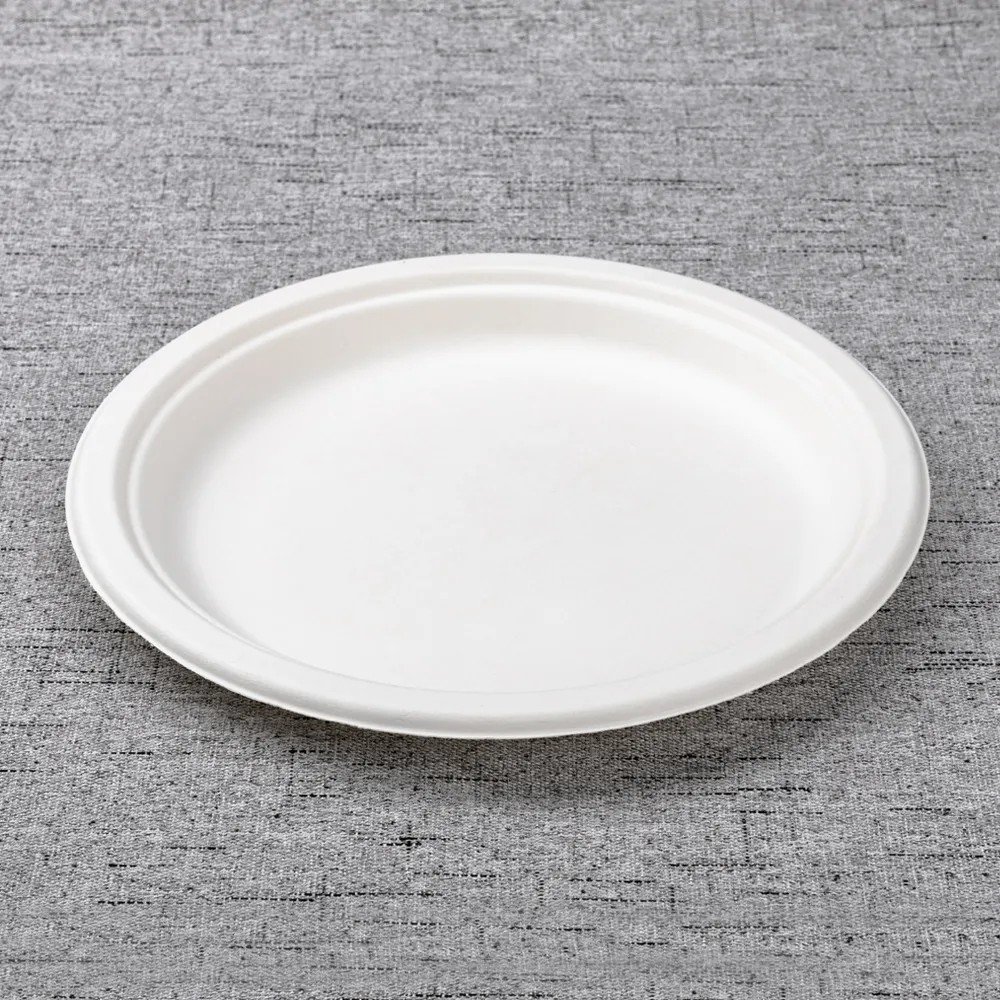
Buying bagasse plates wholesale looks simple until the first container lands and half the plates flex under a serving of pasta. The product is not complicated, but small choices — plate format, wall stiffness, how the plates are packed — decide whether your customers reorder or complain. This guide walks through what experienced buyers check before they commit to a factory order: formats, sizes, strength, packing, MOQ and sample testing.
We write this from the factory side. Hebei Daoxiang Eco Tableware Technology Co., Ltd. runs its own moulding plant in Hebei, China, producing compostable, biodegradable tableware from sugarcane bagasse fibre — 126 items across six collections.
Plates sit inside our standard tableware range, and everything below reflects how wholesale orders for them actually run. If you are comparing bagasse plates wholesale offers from several suppliers, use the same checks. They will help you separate a well-made plate from a cheap one, before price even enters the conversation.
Choosing plate formats for bagasse plates wholesale orders
Format comes first, because it defines the mould, the menu the plate can serve and the customers you can sell to. In bagasse plates wholesale purchasing, four formats cover almost every use case:
- Round plates are the default for main courses, buffets and catering. They are the easiest to sell across markets because end users already know them.
- Compartment plates — usually 2, 3 or 4 sections — serve canteens, schools, hospitals and meal delivery, where sauces and sides must stay separate. The divider walls also add rigidity, which helps with wetter food.
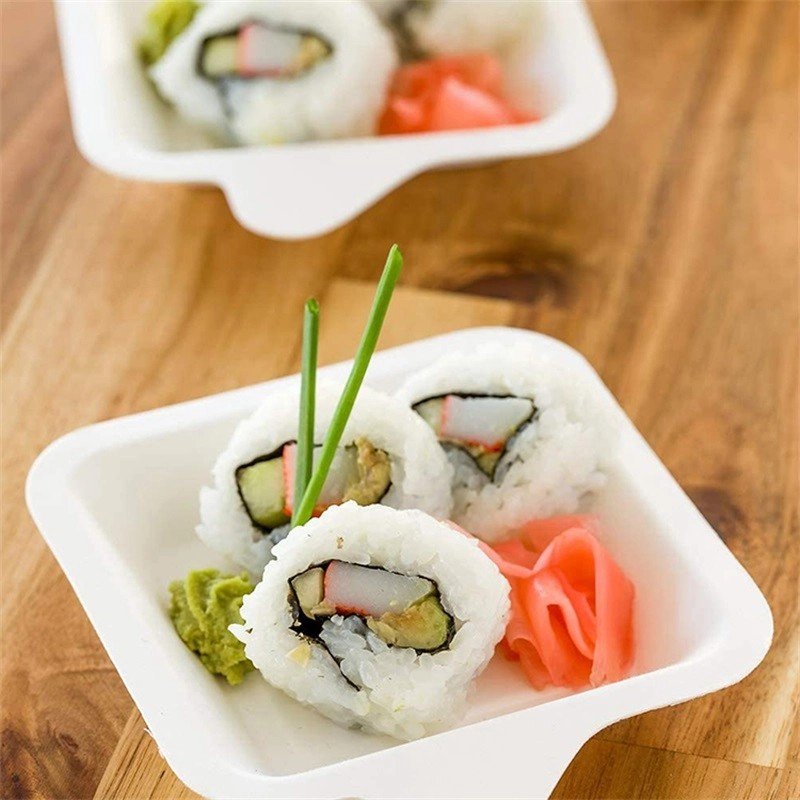
- Square plates are a presentation choice: cafés, bakeries and premium takeaway use them to look different from standard round service. Volumes per SKU tend to be smaller, which matters for MOQ planning.
- Oval platters and trays move sharing dishes and larger portions; they are often ordered alongside round plates rather than instead of them.
A practical rule: build your first order around one or two proven formats per customer segment instead of spreading volume thinly across every shape in the catalogue. You can browse the plate shapes we run in the standard tableware collection and shortlist formats against your own sales history before asking for samples.
| Format | Typical use | Buying note |
|---|---|---|
| Round, plain | Main courses, catering, retail packs | Highest-volume format; the safest first SKU |
| 2–4 compartment | Canteens, schools, meal delivery | Dividers add stiffness; check portion sizes per section |
| Square | Cafés, bakeries, premium takeaway | Presentation-driven; order volumes usually smaller |
| Oval platter | Sharing dishes, larger portions | Often paired with a round plate order |
One caution on compartment plates: more sections are not automatically better. Each divider reduces the usable floor of each section, so a 4-compartment plate in a small diameter can end up serving four unsatisfying portions. In bagasse plates wholesale orders, compartment plates are normally chosen by menu first — what has to stay separate — and by diameter second.
Sizes buyers commonly source for bagasse plates wholesale
Plate sizes in this trade are still quoted in inches in most markets. Buyers usually work in a familiar band rather than exact millimetres. Small plates in the 6–7 inch range suit desserts and side dishes. The 8–9 inch sizes cover starters and light meals. A 10 inch plate is the standard main-course size. Plates and platters of 12 inches serve sharing and catering. Compartment plates are most often sourced in the 9–10 inch band, because the sections need enough floor space to hold a real portion.
Treat these as market conventions, not a specification sheet. Use them in bagasse plates wholesale sourcing as a starting shortlist. Then narrow the list against your own customers’ menus and existing stock. What matters for your order is matching diameter to portion. A plate that is 1 inch too small makes a normal serving look overcrowded. A compartment plate with shallow sections will spill sauce, no matter how stiff the material is. If you sell into retail packs, also check the size mix your retail customers already stock. Shelf compatibility often matters more than adding one more diameter to your range.
One more sizing point is easy to miss. Moulded fibre plates nest inside each other, so diameter affects stack height. That decides how much warehouse and shelf space a case occupies. Ask for sample stacks of the exact sizes you plan to order, and measure them in your own storage rather than relying on a photo.
Strength and stiffness checks for oily and soupy food
Bagasse fibre handles hot, oily and wet food well when the plate is moulded and pressed properly — and disappoints quickly when it is not. Stiffness is, in practice, the specification that decides whether a bagasse plates wholesale order succeeds, because it is the first thing end users feel in their hands. Since you cannot judge this from a product photo, use the checks below on samples and on the first production batch.
The flex test
Hold the plate by one edge with a typical hot serving on it. A good plate stays level with a slight give; a weak one folds at the rim or sags in the middle. Repeat with the plate loaded and carried in one hand, the way a customer actually uses it. Rim design matters here: a rolled or reinforced rim carries far more load than a flat, thin edge.
The oil and sauce test
Serve an oily dish and a dish with free sauce, then leave both for the length of a normal meal service. Check the underside afterwards. Light darkening of the fibre is normal; oil soaking through to the table, or the plate going soft where sauce pooled, is not. For compartment plates, also check that liquid does not creep between sections.
The heat and moisture test
Fill a plate with near-boiling soup or a freshly cooked, steaming portion and wait ten minutes. The plate should keep its shape, the base should not turn spongy, and condensation on the underside should be minimal. Stack a hot filled plate on top of an empty one to see whether heat and moisture transfer enough to mark the plate below — a common complaint in buffet service.
Run all three checks on samples before you approve a bagasse plates wholesale order. They take one meal service and no special equipment.
Plates are only one part of compliance, of course. Our tableware is certified to FDA, LFGB and EN 13432 requirements, with production under ISO 9001. We summarise what each certification actually covers in our certifications overview.
Stacking, packing and storage: what protects the plates in transit
In a bagasse plates wholesale shipment, moulded plates travel as nested stacks. How those stacks are built and packed decides the condition of the plates on arrival. Three things are worth agreeing with your supplier before production, not after:
- Consistent nesting. Plates from the same mould should stack evenly, without rocking or jamming. If stacks lean, cases get crushed unevenly and rims chip or crack in transit.
- Protection between stacks. Sleeves or inner wrapping keep stacks clean and stop plates scuffing each other. Confirm what is included as standard and what counts as an extra, especially if you plan retail-ready packs.
- Dry storage guidance. Bagasse is a natural fibre and absorbs ambient moisture. Cases should be stored off the floor, away from damp walls. Your warehouse team should also know that a soft-feeling plate is often a storage problem, not a production problem.
On arrival, inspections should sample plates from several cases rather than only the top one. We describe our own pre-shipment checks in our quality control guide, and it is worth mirroring the same points in your incoming inspection. Regular buyers also agree on the rejection criteria for transit damage in advance. Define what counts as a cracked rim or a deformed stack before the goods arrive. That way, an arrival dispute never depends on opinions formed after the fact.
How the 5,000-piece MOQ works in bagasse plates wholesale orders
Our minimum order for items from existing moulds is 5,000 pieces per SKU. In bagasse plates wholesale terms, a SKU means one format in one size. A 10 inch round plate and a 9 inch three-compartment plate are two SKUs, each with its own minimum. Custom shapes are a different route entirely: they need a new mould and start at 20,000 pieces.
This per-SKU structure shapes how smart buyers build an order. A distributor launching plates typically concentrates on two or three SKUs. Take a 10 inch round, a 9 inch compartment plate and a 6 inch side plate, each at or above the minimum. That beats ordering a little of everything and failing the minimum on half the list. Smaller test volumes belong in the sample stage, not the production order. Production then runs on a 15–20 day cycle once the order is confirmed.
We explain the full ordering sequence, from enquiry to shipment, in our MOQ, samples and lead times guide, so this article stays on the plate-specific side of the decision.
Testing samples before you commit
Free samples are the cheapest quality control you will ever buy, and ours are dispatched free within three days. Use them properly: a sample that sits in a drawer tells you nothing. For plates, run a short, written test protocol and keep the results with the SKU reference.
- Serve real food. Test with your actual menu items or your customers’ typical dishes — the oiliest, wettest, heaviest ones, not the easiest.
- Load and carry. Fill the plate, carry it one-handed, set it down repeatedly, and stack filled plates the way a buffet or canteen would.
- Leave it. Let a saucy serving sit for a full service period and inspect the underside for soak-through and softening.
- Check the stack. Pull plates from the middle of the sample stack, not just the top; look for warping, loose fibre on the surface and uneven rims.
- Test your packaging fit. If you repackage into retail packs, run the plates through your own packing process before ordering in volume.
Keep one approved sample set aside as your reference standard. When the production order arrives, compare incoming plates against it — same flex, same rim finish, same stacking behaviour. We go deeper on sample evaluation in our guide to testing tableware samples.

FAQ: bagasse plates wholesale
What is the minimum order for bagasse plates?
For plates made with our existing moulds, the minimum is 5,000 pieces per SKU, where each SKU is one format in one size. If you want a shape that does not exist yet, a new mould is needed and custom shapes start at 20,000 pieces.
Can I mix sizes and formats in one order?
Yes — most bagasse plates wholesale orders combine several SKUs, such as round plates in two sizes plus a compartment plate. Each SKU simply needs to meet its own 5,000-piece minimum; the order is then produced and packed SKU by SKU.
How do bagasse plates handle oily or hot food?
Properly moulded and pressed bagasse fibre is rigid enough for hot, oily and saucy food over a normal service period. Judge it by testing, not by specification sheets. Load a sample with your oiliest dish and leave it for the length of a meal. Then check the underside for soak-through and softening.
How long does production take after I order?
Production runs 15–20 days once the order is confirmed. Samples are quicker: we dispatch free samples within three days, so testing and approval for your bagasse plates wholesale order can happen before you commit to production volumes.
Are the plates certified for food contact in Europe and the US?
Yes. Our tableware is certified to FDA and LFGB food-contact requirements and to EN 13432 for compostability, and production follows ISO 9001 quality management. Ask us for the documentation for the specific items you plan to import.
Start with samples, not a container. If you are planning a bagasse plates wholesale order, tell us which formats and sizes you are considering. We will dispatch free samples within three days, so you can run the tests in this guide on your own food. Reach us on WhatsApp at +86 18733012158, or send your enquiry through our contact page. A short message with your target sizes, formats and estimated volume is enough to get a factory-direct quotation from Hebei Daoxiang Eco Tableware Technology Co., Ltd.