— BUYING GUIDES
Home Compostable vs Industrial Compostable: What the Labels Mean for Bagasse Tableware
November 2026
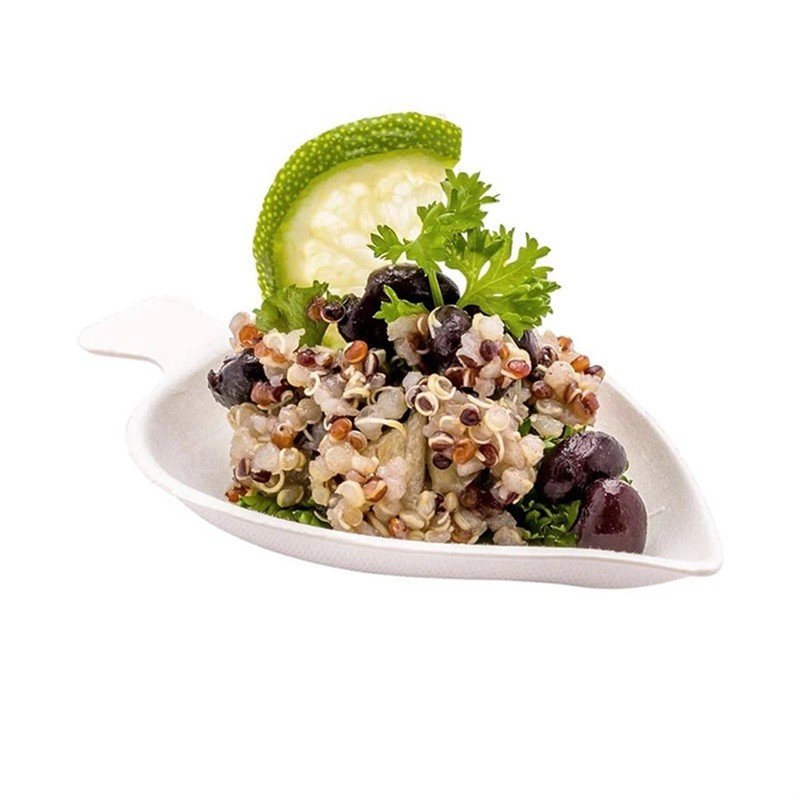
Your customer asks a simple question: can this plate go in a home compost heap? The home compostable vs industrial compostable distinction decides whether you may answer yes. The two labels rest on different test conditions, different certificates and different logos. Mix them up on pack, and a routine claim becomes a greenwashing complaint. This guide walks through both certification routes for bagasse tableware, and the per-SKU checks behind each claim.
We write this as a moulded-fibre factory. Hebei Daoxiang Eco Tableware Technology Co., Ltd. runs its own moulding plant in Hebei, China. We produce sugarcane bagasse tableware — 126 items across six collections. Our range is certified to FDA and LFGB food-contact requirements and to EN 13432, with production under ISO 9001. Note what that list does not include: a home-compost certificate. That absence is exactly why we wrote this guide.
Two heaps, two climates: what home compostable vs industrial compostable really measures
An industrial composting plant is a managed process. Material is shredded, mixed, turned and kept moist and aerated. Microbial activity holds the pile at sustained high temperatures, typically around 55–60 °C. Under those conditions, certified items break down within weeks.
A garden heap is none of those things. It works at ambient temperature, often somewhere around 20–30 °C. It heats and cools with the weather. Its speed depends on what else is in the heap, how often it is turned, and how wet the season is. Breakdown there is measured in months, not weeks.
That climate gap is the whole home compostable vs industrial compostable story. The same plate can pass easily in a hot, managed facility and stall in a cool garden heap. So certification tests simulate each environment separately. A home compostable vs industrial compostable label is a test result for one set of conditions, not a general description of the material.
Certification routes behind home compostable vs industrial compostable claims
Two separate certification routes sit behind home compostable vs industrial compostable claims in Europe. They use different standards, different test laboratories and different logos. Neither route substitutes for the other.
| Route point | Industrial compostable | Home compostable |
|---|---|---|
| Reference standard | EN 13432, the European standard for compostable packaging | OK compost HOME scheme; NF T51-800, the French national home-composting standard |
| Test conditions | Sustained high temperatures in a managed facility, controlled moisture and aeration | Ambient temperatures, simulating an unheated garden heap over a much longer period |
| Logos buyers see | The Seedling logo, or OK compost INDUSTRIAL | OK compost HOME |
| What it proves | The finished item breaks down in industrial composting within the standard’s timescales | The finished item breaks down at home-heap temperatures within the scheme’s timescales |
| What it does not prove | It does not prove the item will break down in a garden heap, in soil, or in water | It does not extend to other items, thicker versions, or paired films and lids |
Independent certification bodies run both routes. Bodies such as TÜV Austria and DIN CERTCO test the submitted item and license the matching logo. Their certificates name the item tested, the certificate holder and the scope covered. Many certificates also state a maximum thickness, because a thicker wall breaks down more slowly.
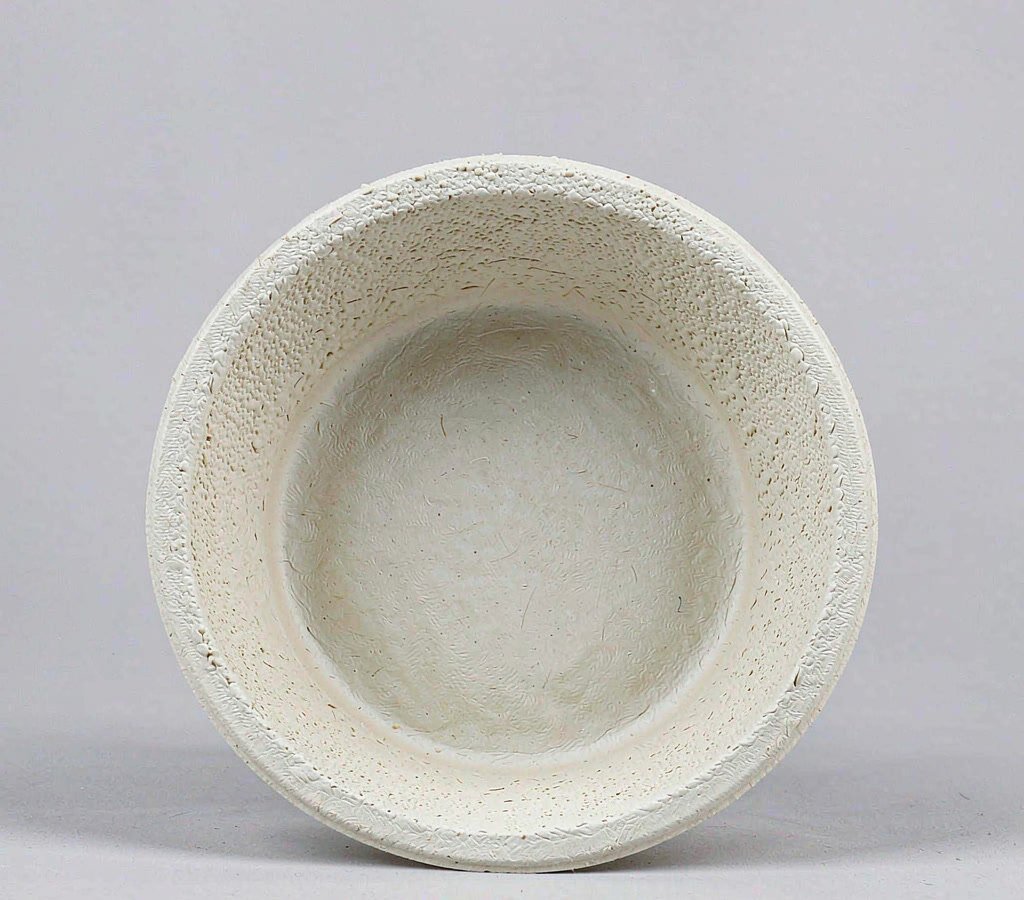
One direction of travel is safe. An item that passes the cooler home test will also break down under hotter industrial conditions. The reverse does not hold. An industrial certificate says nothing reliable about a garden heap, which is where most labelling errors begin. Keep that asymmetry in mind whenever a home compostable vs industrial compostable claim is drafted from one certificate alone.
If you first need the wider vocabulary, our explainer on compostable vs biodegradable vs recyclable tableware covers the definitions. This article stays on the narrower question: which certificate actually sits behind the claim on your pack.
What home compostable vs industrial compostable certification lets you print on pack
A certificate is, in practice, a printing licence for specific words and logos. An industrial certificate behind a home compostable vs industrial compostable decision licenses the word compostable with an industrial qualifier. It also licenses the Seedling or OK compost INDUSTRIAL logo, usually with the certificate number printed beside it.
A home certificate licenses stronger words. It allows home compostable wording and the OK compost HOME logo on that item’s pack. Only that wording tells a retail customer that the item belongs in a garden heap. Nothing in an industrial certificate licenses those words, that logo, or garden imagery beside them.
Neither certificate licenses a bare, unqualified claim. The word compostable on its own, with no route named, invites the reader to assume the easiest disposal route. Many consumers assume that means their own heap or bin. Regulators and competitors increasingly read unqualified claims the same way, and challenge them on that basis.
Claims attach to the item as sold
A claim covers the finished item in its certified form. It does not cover the material family in general. It does not cover a thicker version of the same shape. It does not cover a set once you pair the item with an uncertified film, lid or wrapper. Each component of a retail pack needs its own evidence, or the pack claim needs to shrink to match.
Responsibility follows the claim onto the market. Whoever places the packed product on the market carries the claim toward retailers and consumers. As the importer, that is usually you — even when the words came from your supplier’s catalogue. Checking the certificate before artwork, not after printing, is the cheap order to do this in.
Bagasse fibre and the home compostable vs industrial compostable gap
Bagasse is plant fibre, and microbes treat plain fibre as food. An uncoated moulded-fibre plate in an active heap behaves very differently from a bioplastic film. It softens, fragments and feeds the heap rather than persisting as a sheet. That material behaviour is real, and it is why buyers ask us the home question so often.
Behaviour, however, is not certification. The home compostable vs industrial compostable gap for a finished item turns on variables a material description ignores. Wall thickness matters. Pressing density matters. Surface treatments, blends and inks can all change the result. A bowl sold with a film lid is two separate claims in one pack, not one.
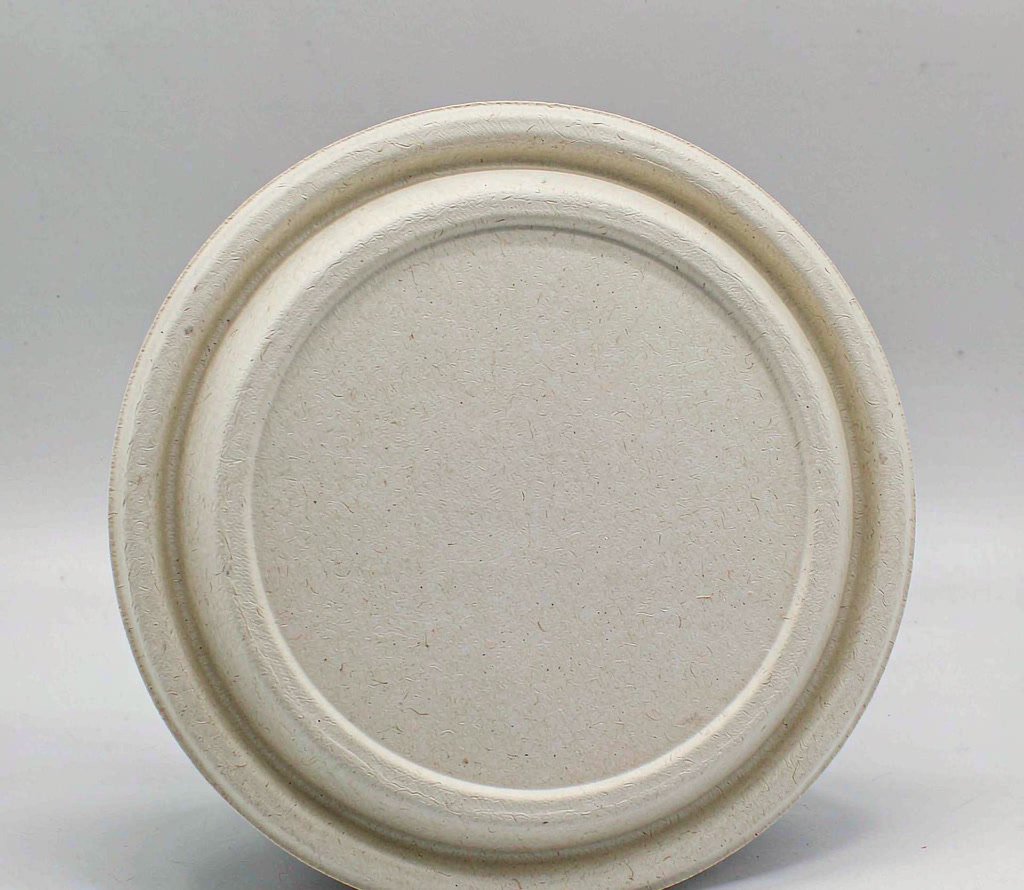
So here is our own position, stated plainly. Our range is certified to EN 13432, the industrial route. We do not hold OK compost HOME or NF T51-800 certification for our range. We therefore do not print home-compost claims on our items, and buyers should not print them on our items either. We summarise the documents we do hold in our eco tableware certifications guide.
Hold every supplier to the same standard, including us. If a home claim matters for your market, request the home-route certificate for the specific SKU. Check it before samples become an order. A supplier who genuinely holds the certificate can send it. A supplier who answers with material talk instead is telling you something.
Labelling mistakes that trigger greenwashing complaints
Most complaints in this category are not fraud. They are shortcuts, copied artwork and claims that drifted one step beyond the evidence. These are the five we see behind home compostable vs industrial compostable disputes most often:
- Printing home wording on an industrial certificate. EN 13432 evidence sits in the file, but the pack says home compostable. This is the single most common error, and the hardest to defend.
- Treating material behaviour as proof. “It is only fibre, it rots anyway” may be true in a heap. It is not a certified claim, and it licenses no logo and no pack wording.
- Copying one certificate across a range. One bowl passes its test, so the artwork spreads the claim to trays, plates and thicker versions. Certificates cover named items within a stated scope, nothing more.
- Leaving the claim unqualified. A bare compostable flash, perhaps with leaves or a garden photograph, implies the easiest route. On an industrial-only item, that implication is the complaint.
- Using logos without a licence. The Seedling and OK compost marks belong to their schemes. A logo copied from a supplier’s brochure, an expired certificate, or a raw-material certificate is not a licence for your finished pack.
Notice what these mistakes share. None of them requires a bad product. Each one is a paperwork gap between what was tested and what was printed. That is good news: every one of them is preventable at artwork stage, for the cost of reading one certificate properly.
A buyer checklist for home compostable vs industrial compostable claims
Start from your market, not from the claim. Ask where your customers’ waste actually goes. Foodservice buyers whose venues use commercial food-waste collection usually complete the loop with the industrial route. Retail packs sold on a garden-compost promise need the home route, evidenced per SKU. The home compostable vs industrial compostable choice is a channel decision before it is a printing decision.
- Request the certificate for the specific SKU, not the supplier’s general certificate file.
- Check which standard the certificate names: EN 13432 for industrial, OK compost HOME or NF T51-800 for home.
- Confirm the certificate holder matches the company supplying you.
- Confirm the scope covers your item as sold, including its thickness and any lid, film or wrapper in the pack.
- Confirm you may use the logo on your artwork, and keep the certificate copy with the SKU’s import file.
For our own range, sourcing runs as follows. Our minimum order is 5,000 pieces per SKU from existing moulds. Custom shapes need a new mould and start at 20,000 pieces. Free samples are dispatched within three days, so you can handle and test the exact items. Production runs 15–20 days after order confirmation. Ask us for the documentation for the specific items you plan to import, and check the composting route on that documentation before you brief any artwork.
FAQ: home compostable vs industrial compostable
What differs in a home compostable vs industrial compostable test?
Mainly temperature and time. Industrial tests run hot, at sustained facility temperatures, and expect breakdown within weeks. Home tests run at ambient temperatures, simulating a garden heap, and allow much longer. An item can pass the hot test and fail the cool one, so the two results are not interchangeable.
Can I print “home compostable” if an item is certified to EN 13432?
No. EN 13432 certifies the industrial route only. It licenses industrial compostable wording and the industrial logos. Home compostable wording needs home-route evidence for that item, such as OK compost HOME or NF T51-800 certification. Printing home wording on industrial evidence is the most common greenwashing error in this category.
Does bagasse tableware break down in a home compost heap?
Plain moulded fibre generally does break down in an active heap, because it is plant material. Speed varies with thickness, heap conditions and climate. But general behaviour is not certification. Do not label an item home compostable without a home-route certificate for that SKU — and our own range holds EN 13432 industrial certification, not a home certificate.
Which logos belong to each composting route?
The industrial route uses the Seedling logo or OK compost INDUSTRIAL. The home route uses OK compost HOME. Each logo is licensed by its certification body for certified items only, usually with the certificate number shown. Never lift a logo from a brochure or another product’s pack.
What should I request before printing any compostable claim?
Request the certificate for the specific SKU you will sell. Check the standard named, the certificate holder, the scope and any maximum thickness. Confirm your right to use the matching logo on your market’s artwork. Keep the documents with that SKU’s file. Repeat the check whenever anything changes that could affect the item’s home compostable vs industrial compostable status: its thickness, its paired lid or film, or its supplier.
Start with samples, not a container. If the home compostable vs industrial compostable distinction affects your next range, send us the items you are considering. We will dispatch free samples within three days, and you can check our EN 13432 documentation against your labelling plans before any artwork is briefed. Reach us on WhatsApp +86 18733012158, or send your enquiry through our contact page. Hebei Daoxiang Eco Tableware Technology Co., Ltd. will tell you plainly which route our items are certified for — and which claims they do not carry.