Compostable vs biodegradable tableware: which label matters
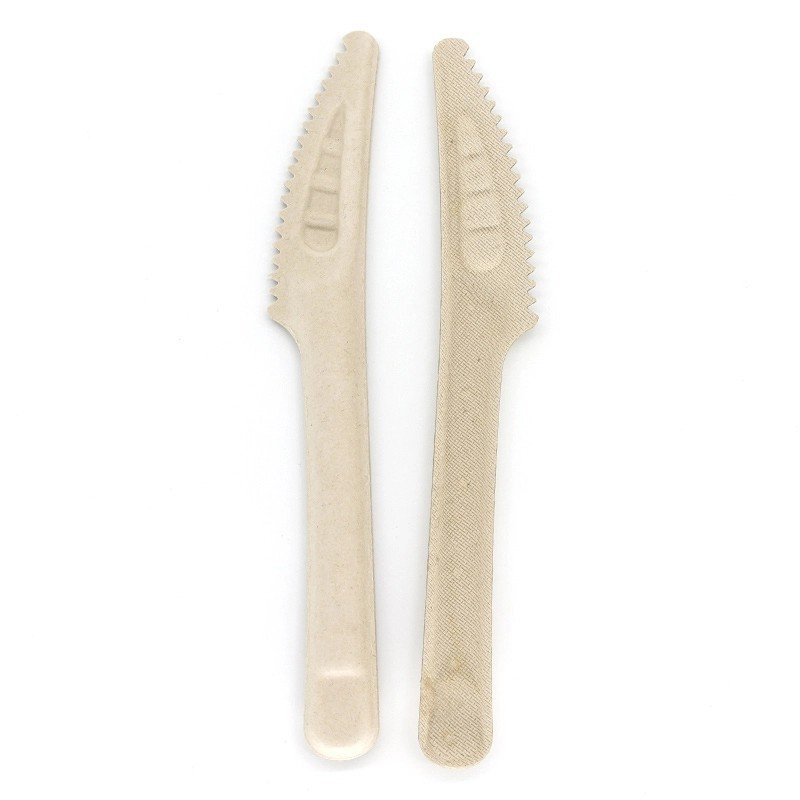
If you are choosing compostable vs biodegradable tableware, or wondering whether your pieces count as recyclable, the three words get used loosely and they do not mean the same thing. The differences decide what happens to a piece after it leaves your counter, and how you should describe it to your own customers.
The short answer
- Compostable means a tested breakdown against a standard, usually in industrial composting, within a defined time.
- Biodegradable means a material can break down, but on its own it says nothing about how long or under what conditions.
- Recyclable means a waste stream exists to reprocess the material; for used food packaging that stream rarely survives contact with food.
Compostable vs biodegradable: what the tests prove
The gap between these two words is the difference between a claim you can check and a claim you have to trust. Compostable is defined by a standard with a pass or fail test. Biodegradable is a general description of a material with no standard, no timescale, and no fixed environment attached. If you only remember one thing from this guide, remember that the first word is evidence and the second is an adjective.
What “compostable” actually means
Compostable is the strongest of the three claims because it is tied to a standard. In Europe, EN 13432 sets the bar: a material must disintegrate, biodegrade, and pass an ecotoxicity test within a defined composting cycle. In the United States the equivalents are ASTM D6400 and, for the products that earn the mark, BPI certification. When a piece is described as compostable against one of these standards, a buyer can trace the claim to a test report rather than to a slogan.
There is a catch, and it sits in the word “industrial”. Most certified compostable packaging breaks down in an industrial facility that holds heat, moisture and microbes at the right levels for a set period, often around twelve to twenty-four weeks. That is a very different condition from a garden heap or a landfill. So the honest version of the claim is: compostable in industrial composting, not gone in a fortnight in your back garden.
Why “biodegradable” is the weakest claim
Biodegradable simply means a material can be broken down by living organisms over time. On its own it is close to meaningless for a buyer, because almost everything biodegrades eventually, including conventional plastic. The term is largely unregulated, carries no fixed timescale, and does not say which environment the breakdown needs. It is the word to be most careful with on packaging and in your own marketing.
Where the word does carry weight is when it is qualified. “Biodegradable in industrial composting within 180 days to EN 13432” is a real, checkable statement with a number and a standard behind it. Without that qualification, treat a bare “biodegradable” label the way you would treat any claim without a figure: ask for the test report before you print it on your menu.
When plant fibre is actually recyclable
Recyclable means a reprocessing stream exists for the material. Clean, unsoiled plant fibre can enter the same paper and board recycling stream as cartons. But food service packaging is rarely clean: a plate with food residue or a cup with a greasy film is a contaminant in that stream, and in most municipalities the contamination sends the whole load to the wrong place.
This is why compostable is usually the better description for used food packaging. Our pieces are moulded from plant fibre and are compostable after use; the comparison with plastic covers what changes at the end of life. For an operator, the practical outcome is a waste stream that sorts more cleanly and a straight answer to the customer who asks what happens to the packaging afterwards.
Home composting vs industrial composting
Buyers often ask whether a piece will break down at home. The honest answer for most certified compostable fibre is that it needs industrial conditions, because home heaps rarely reach or hold the temperatures that the standards test for. A few materials are certified for home composting, and if your programme needs that specific claim, ask for it by name and for the report that supports it. Do not let a supplier assume home composting from an industrial certificate, and do not assume it yourself when you write the copy for your customers.
How to read the claims and what to ask for
Before a piece goes into your programme, ask for the evidence rather than the adjective:
- Which standard? EN 13432, ASTM D6400 or BPI, and ask for the test report number.
- Industrial or home composting? The two are not interchangeable, and the claim should say which.
- Which pieces? Certification applies to a specific product, not to a whole catalogue, so confirm it piece by piece.
A supplier who cannot answer these three questions is describing an aspiration, not a material. If you want to see how our fibre behaves in service before you decide, start with the material page or request samples.
Need the paperwork for a programme?
Tell us the pieces and the destination market, and we will confirm which standards apply and share what we hold. Ask about certifications →