— BUYING GUIDES
Compostable Meal Trays for Schools and Canteens: Compartment Formats and Buying Checks
November 2026
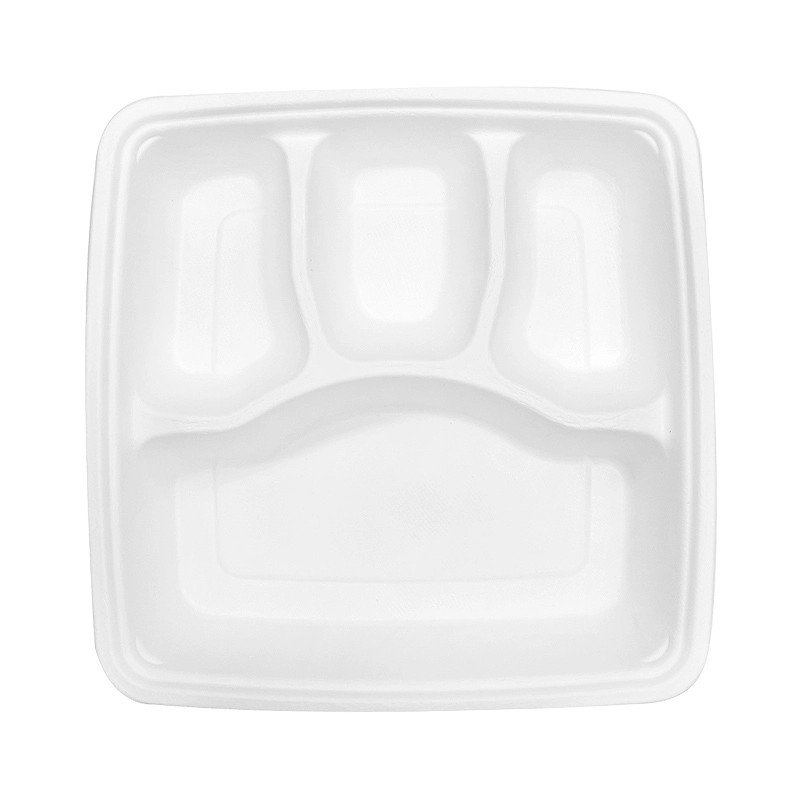
If you supply schools, hospitals or staff canteens, compostable trays for schools and canteens solve a specific problem. They serve a full meal on one rigid tray, keep the courses separate, and go into the food-waste stream afterwards. This guide covers compartment formats, portion control, and the tender checks that decide whether a tray survives a real lunch service.
We write this from the factory side. Hebei Daoxiang Eco Tableware Technology Co., Ltd. runs its own moulding plant in Hebei, China, producing sugarcane bagasse plant-fibre tableware — 126 items across six collections. Compartment trays are part of that range, and the checks below reflect what institutional buyers ask us before they commit.
Why institutions are switching to compostable trays for schools and canteens
Reusable plastic trays look cheap until you count the washing. Every reusable tray needs collection, scraping, washing, drying, storage and replacement of cracked stock. A busy school kitchen needs that staff time exactly when the next sitting is queueing. Single-use compostable trays for schools and canteens remove the wash stage entirely. Pupils scrape leftovers into a food-waste bin, the tray goes in with them, and the tray return point stays clear.
Hygiene is the second driver: a fresh tray for every diner, with no wash quality to argue about. That matters in hospitals, where trays travel to wards, and in schools, where several sittings share one dining hall.
The third driver is policy. Many institutions now report single-use plastic reduction in their own sustainability targets. For catering managers, compostable trays for schools and canteens are a visible, explainable change. Tray and food scraps also share one collection stream, where the local scheme accepts certified compostable items.
None of this makes every compostable tray suitable: a tray that flexes under a hot main course will spill soup within a week. Format, stiffness and portion fit are set at the buying stage.
Choosing between 3, 4 and 5 compartments
The format-led question — how many sections — is really a menu question. Buyers of compostable trays for schools and canteens usually start from the standard meal pattern in their contract. A main, two sides and a dessert need different separation from a main, a sauce and a salad. Work backwards from the serving counter, not forwards from a catalogue.
Buyers typically source compartment trays sized to mirror the reusable trays they replace. Treat the formats below as common market ranges buyers typically source, not as a specification sheet. Match them against your own portion ladles before you shortlist.
| Format | Typical institutional use | Buying note |
|---|---|---|
| 3-compartment | Simple school lunches: main, one side, dessert or fruit | Largest sections; best where younger children carry their own tray |
| 4-compartment | Standard school and staff-canteen meals: main, two sides, dessert | The most flexible middle option for mixed-age service |
| 5-compartment | Full set meals, hospital and care service, portion-controlled diets | Smallest sections; check each section against your smallest portion |
| Flat tray, no compartments | Carrying plate, bowl and cup together to the table | A carrier format, not a serving format; pairs with separate tableware |
Divider walls do two jobs. They keep sauce away from salad, and they stiffen the tray itself. A compartment tray usually feels more rigid than a flat tray. That stiffness helps most in the largest section, which carries the heaviest food.
More compartments are not automatically better, though. Each divider takes floor space from the sections it creates. A five-compartment tray in a small footprint can leave every section too shallow for a real portion. When buyers compare compostable trays for schools and canteens, we suggest they fill each format with their actual menu before judging it.
Many canteens keep soup or dessert in a separate bowl or plate rather than on the tray. Our format-led overview of tray shapes sits in our bagasse trays wholesale guide, while this article stays on the institutional side of the decision.
Portion control: the hidden job of compostable trays for schools and canteens
Schools and hospitals rarely serve free portions. Contracts often define portion bands by age group or dietary plan. A compartment tray turns those bands into something visible. The kitchen fills a section, and the section itself sets the portion.
That visibility helps in three ways. First, serving staff work faster, because nobody weighs each scoop. Second, portions stay consistent across sittings and across sites run by the same caterer. Third, food waste becomes easier to read. If one section comes back full every day, the menu team sees it at the return point.
Age matters here. Younger pupils eat smaller portions and carry trays with less control. A tray with fewer, larger sections is easier for them to manage. Older pupils and adult canteen users expect a fuller tray, and they notice skimpy sections quickly. Many buyers of compostable trays for schools and canteens therefore run two formats: a smaller-section tray for younger years and a standard tray for everyone else.
One caution: compartments separate food on the tray, but they are not an allergen-control system. Sauces can splash, and serving utensils still move between dishes. Keep your existing allergen procedures in place; the tray is for portioning, not a safety barrier.
When you test compostable trays for schools and canteens, test with your real portion tools. Fill each section with your standard ladle or scoop. A section that needs one-and-a-half scoops will slow the queue and break portion consistency.
Tender checks for compostable trays for schools and canteens
Institutional buying rarely works like a normal wholesale order. Caterers and public-sector suppliers often buy against a tender, a framework agreement or a contract specification. The tray has to satisfy a document before it satisfies a diner. Smart buyers therefore check paper and product in parallel.
What belongs in the tender specification
Write the specification for compostable trays for schools and canteens around performance, not around one supplier’s catalogue. Useful lines include compartment format, the portion each section must hold, and behaviour under a hot, wet main course. Add the waste route the tray must fit, such as an existing food-waste collection. Vague wording invites the cheapest thin tray that technically complies.
Ask us for the documentation for the specific items you plan to import. Our tableware is certified to FDA and LFGB food-contact requirements and to EN 13432, with production under ISO 9001. Tender files usually need those documents named per item, not as a general company claim.
What belongs in the sample evaluation
Tender samples should face a real service, not a desk inspection. Load the tray with the heaviest, wettest meal on your menu. Carry it one-handed at a child’s pace, including through a doorway. Set it down, slide it along a table, and stack empties at the return point.
Then check three things. The large section should not sag under the main course. Sauce should not creep under dividers into the next section. The rim should give a secure grip for small or gloved hands. Record the result per format, because tender scoring needs evidence, not impressions.
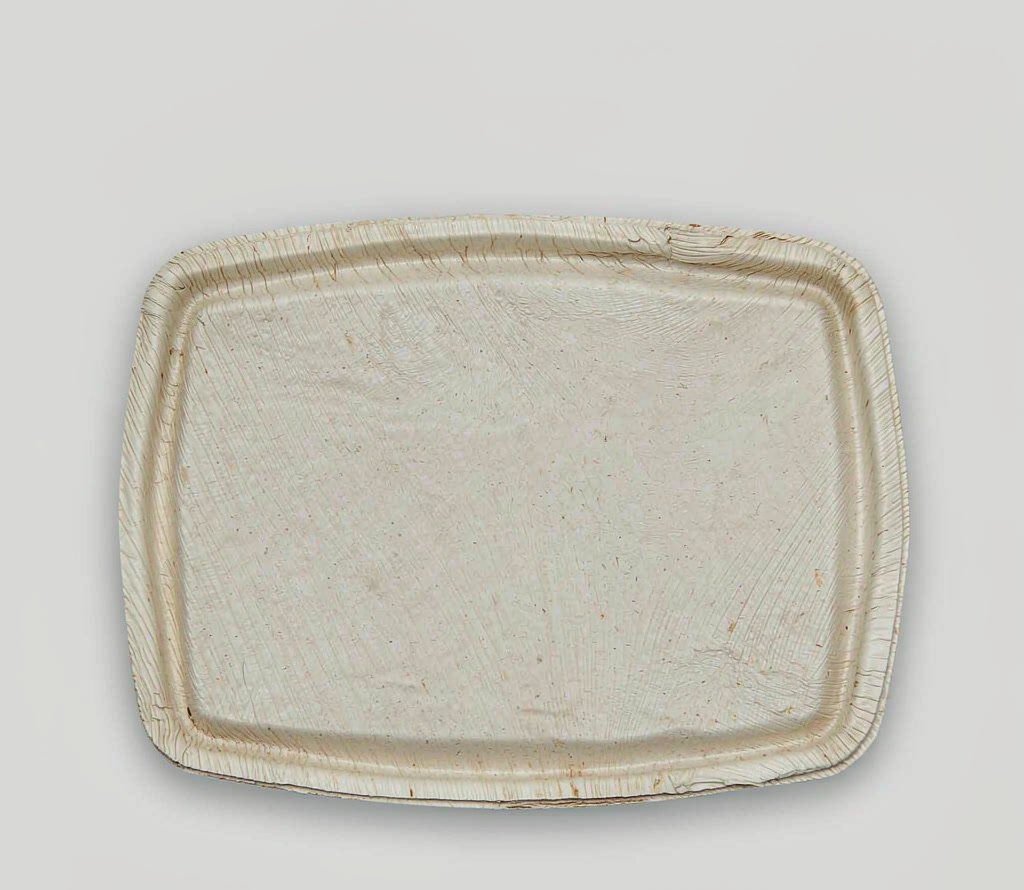
Lids deserve a line in the tender too. Some schools cook in a central kitchen and transport meals to satellite dining rooms. Others send trays to hospital wards. In those cases a fitting lid protects the meal in transit and stacks more safely. Test lid fit on the exact tray format you plan to order, because lids and trays are matched pairs.
Continuity is the last tender check. Confirm how repeat orders, substitute formats and delivery scheduling will work before award. A tray that wins the sample test but arrives irregularly will fail the contract.
Service in practice: carrying, stacking and the lunch queue
The lunch queue is where compostable trays for schools and canteens earn their keep. Service has to move at the speed of the shortest break. Trays that separate cleanly from the stack keep the line moving. Trays that stick together cost seconds per serving, multiplied by hundreds of diners.
Ask for sample stacks of compostable trays for schools and canteens, not single trays, and test separation during a busy service. Check nesting in both directions. Full trays should sit steadily on the counter. Empty trays should stack compactly at the return point, so bins fill with food waste instead of air.
Carrying is the second practical test. Pupils often carry a tray with a cup and cutlery on it, using both hands and limited attention. A rigid tray with a grippable rim forgives that. A flexible tray does not. Staff canteens add a different load: adults stack a bowl, a side plate and a drink on the same tray. Test the tray under the full set your diners actually carry, including any items from our bagasse plates wholesale guide range that you plan to serve alongside.
Heat behaviour matters quietly. Hot food sits on the tray from serving counter to table, sometimes longer in ward service. The base should stay comfortable to hold from below. It should also keep its shape while the diner eats, not only while it is carried.
Composting on site: trays and food waste in one stream
The strongest waste argument for compostable trays for schools and canteens is that scraping becomes sorting. Diners tip leftovers and tray into the same food-waste bin. Kitchen staff no longer wash, sort or separate at the return point. That single-stream habit is easy to teach, even to young pupils.
It only works where the collection behind the bin accepts the trays. Before you buy, confirm three things with your waste contractor. First, that certified compostable moulded fibre is accepted in your food-waste stream. Second, where that stream goes — industrial composting or anaerobic digestion schemes treat materials differently. Third, what contamination rules apply to items such as cutlery and cups used alongside the trays.
Signage decides whether the system for compostable trays for schools and canteens survives contact with a real dining hall. A clear picture sign above the bin beats a paragraph of instructions. Show the tray, the leftovers and the bin in one image. Place a general-waste bin next to it for the items your scheme does not accept. Mis-sorted loads are usually a signage problem, not a pupil problem.
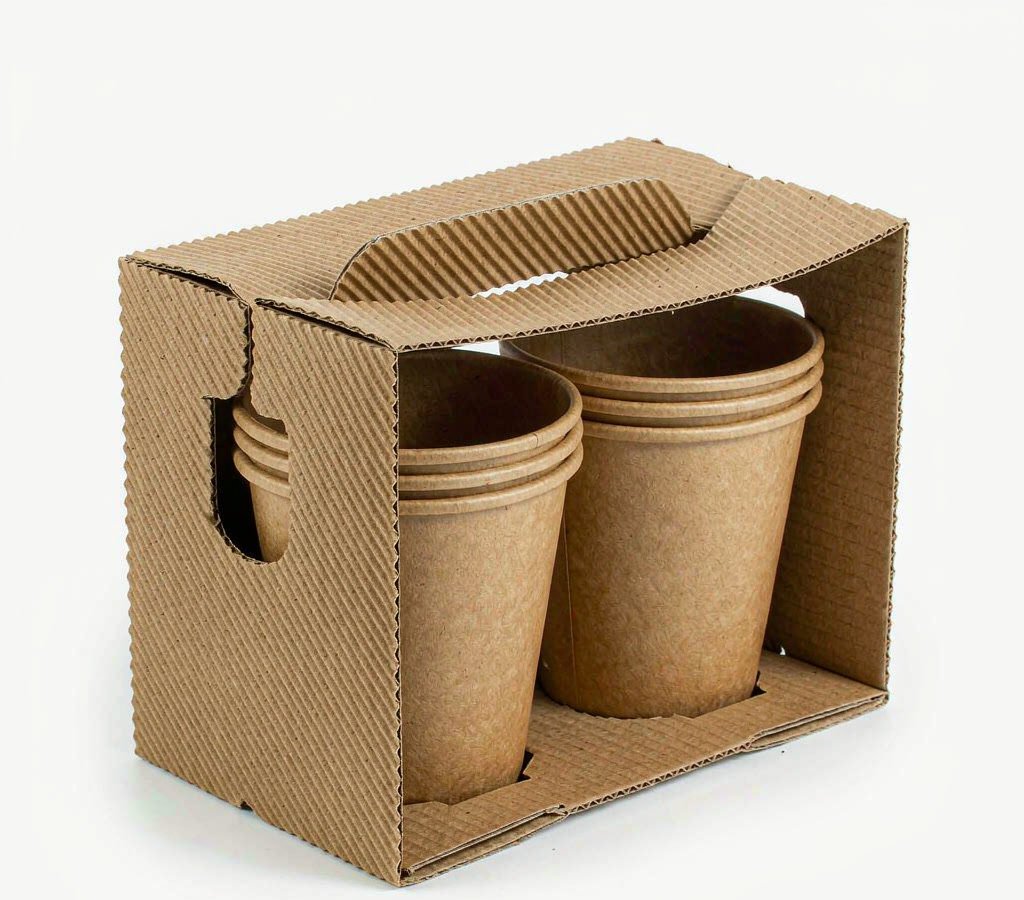
Storage closes the loop. Trays are light but bulky, and school kitchens rarely have spare dry space. Plan where cases will live before the first delivery, off the floor and away from steam and damp walls. Moulded fibre absorbs ambient moisture, and a soft-feeling tray is often a storage problem rather than a production problem.
Ordering trays for a school or canteen contract
Our minimum order is 5,000 pieces per SKU from existing moulds. For trays, one SKU means one format in one size. A four-compartment tray and a five-compartment tray are two SKUs, each with its own minimum. Custom shapes need a new mould and start at 20,000 pieces.
That structure suits contract buying for compostable trays for schools and canteens. A caterer serving several schools can consolidate the same format across sites to reach the minimum per SKU. A single small canteen may do better with one proven format than with three thin lines. Production runs 15–20 days after order confirmation, so term-time replenishment needs a simple reorder trigger tied to your stock count.
Start with samples before any of that. We dispatch free samples within three days. Ask for the two formats closest to your menu, run one real service with each, and let the return point tell you which tray to specify in the tender.
FAQ: compostable trays for schools and canteens
How many compartments do school meal trays usually need?
Most buyers choose between three, four and five compartments. Three suits simple menus for younger pupils. Four covers the standard main, two sides and dessert pattern. Five fits fully portioned set meals and care settings. Match the format to your menu pattern and portion tools, not to the largest option available.
Can compostable trays for schools and canteens go in the food-waste bin?
In many institutional schemes, yes, tray and leftovers go into the same food-waste collection. Acceptance depends on your local contractor and treatment route, so confirm before you buy. Ask whether certified compostable moulded fibre is accepted, and check what signage your caterer will need at the return point.
Are bagasse trays strong enough for hot, wet school meals?
Properly moulded bagasse fibre is rigid enough for hot, wet food over a normal service period. Judge it by testing rather than by photographs. Load a sample with your heaviest, wettest menu item, carry it one-handed, and check for sagging, sauce creep and a softening base after a full sitting.
What documents should a tender ask for?
Ask for documentation for the specific items you plan to import, named per SKU. Buyers typically request food-contact and compostability documentation and the quality basis behind it. Our tableware is certified to FDA and LFGB food-contact requirements and to EN 13432, with production under ISO 9001.
What is the minimum order for canteen trays?
Our minimum is 5,000 pieces per SKU from existing moulds, where each SKU is one format in one size. Custom shapes start at 20,000 pieces because they need a new mould. Free samples are dispatched within three days, and production runs 15–20 days after order confirmation.
Start with samples, not a container. If you are specifying compostable trays for schools and canteens, tell us your menu pattern and portion sizes. We will dispatch free samples within three days, so you can run a real lunch service before the tender closes. Reach us on WhatsApp +86 18733012158, or send your enquiry through our contact page. Hebei Daoxiang Eco Tableware Technology Co., Ltd.