— BUYING GUIDES
Compostable Tableware for Airline Catering: Trays, Cups and Cutlery Kits Explained
November 2026
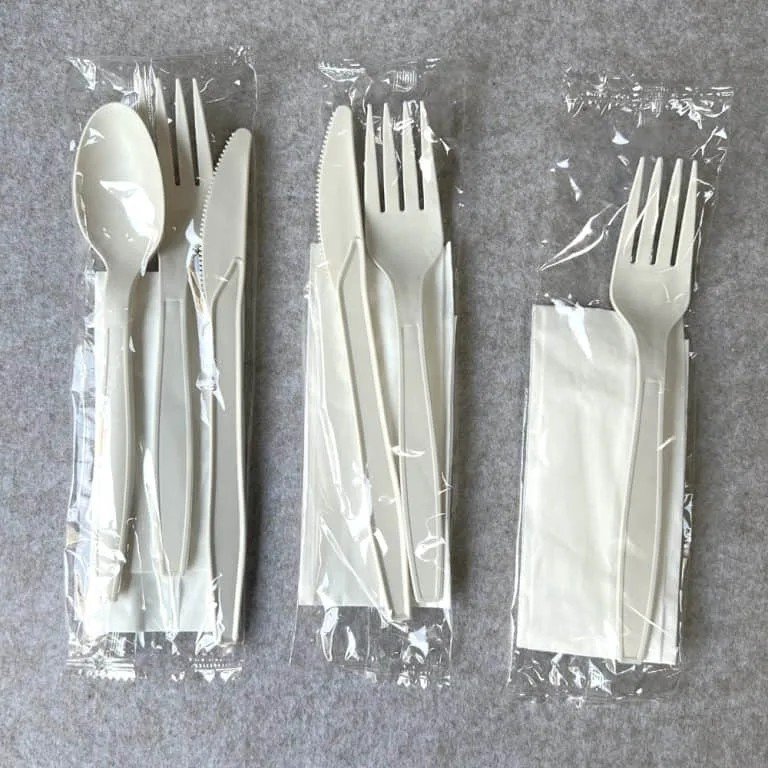
Compostable tableware for airlines has to do three jobs at once. It must hold a hot meal steady on a fold-down tray table. It must stay light, because every place setting flies. And it must leave the aircraft as one simple waste stream. This guide explains how buyers spec the full setting — compartment trays, cups and wrapped cutlery kits — and how to compare weight, test samples and order sensibly.
We write this from the factory side. Hebei Daoxiang Eco Tableware Technology Co., Ltd. runs its own moulding plant in Hebei, China. We produce sugarcane bagasse plant-fibre tableware — 126 items across six collections. Our packaged sets collection serves airline, hotel and event supply chains, among others. Everything below reflects how orders of compostable tableware for airlines actually run.
What compostable tableware for airlines has to survive in service
An airline place setting is a system, not a shopping list. The tray, the hot dish, the side items and the cutlery kit all share one small surface. They are loaded in a ground kitchen, chilled, reheated, trolleyed down an aisle and cleared into compact waste. A weakness in any single piece becomes a crew complaint.
Buyers of compostable tableware for airlines usually spec four groups together:
- The compartment tray, which carries the meal and stops items sliding in transit.
- The hot container and any side bowls, which hold the main course, salads and desserts.
- Cups and lids, for drinks service and small portion items.
- The wrapped cutlery kit, which keeps cutlery, napkin and small sachets together as one hygienic unit.
Spec these groups as one setting from the start. A tray that fits your caterer’s racks but leaves no room for the kit is a failed tray. Ask every supplier the same question: show me the complete setting, assembled, not four separate product photos.
One more service reality shapes the spec: waste. On many routes, cabin waste handling and sorting rules reward a setting that leaves as one material stream. Compostable tableware for airlines lets crew clear fibre trays, cups and kits together after service. That does not remove the caterer’s local waste checks. It does mean the setting should be tested at the clearing stage, not only at serving. Ask suppliers to declare the material of every component, including the kit wrap.
Weight per place setting: the first check in compostable tableware for airlines
No single figure decides an airline order like weight does. Fuel burn follows weight, and a place setting flies hundreds of sectors in its life as a stocked item. That is why experienced buyers compare compostable tableware for airlines by complete setting weight, never by one tray alone.
We do not publish per-piece weights here, because weights only mean anything like-for-like. Wall thickness, tray format and kit contents change the total. Instead, run the same weighing routine on every supplier’s samples:
- Assemble the full setting exactly as the crew will serve it, including the wrapped kit and lids.
- Weigh the complete setting on the same scale, in the same state, for each supplier.
- Record the parts separately too, so you can see whether savings sit in the tray or the kit.
- Repeat with ten settings stacked, which also shows how the sets nest for trolley storage.
Turn the weighing into fleet arithmetic with your own numbers. Multiply your measured saving per setting by settings per flight and sectors per day. Small per-setting differences become large totals very quickly at fleet scale. This is the calculation that justifies trying compostable tableware for airlines against the plastic setting it replaces.
A lighter setting that flexes under a hot dish is not a saving. Weigh first, then load-test the lightest two or three options. Weight narrows the field; strength decides it.
Compartment trays: the formats buyers typically source
The tray does most of the work in compostable tableware for airlines. It carries the meal, separates courses and gives the setting its structure. Buyers typically source moulded-fibre trays in a small set of common market formats. Treat the list below as sourcing conventions, not as a specification sheet:
| Tray format | Typical airline use | Buying note |
|---|---|---|
| Full-size meal tray | Main meal service, one setting per tray | Check fit against your caterer’s racks and the tray table |
| Compartment tray | Hot dish, side and dessert kept apart | Divider height decides whether sauces travel between sections |
| Half-size or snack tray | Short-haul and buy-on-board service | Often paired with a wrapped kit and a cup only |
| Lidded tray or container | Pre-loaded meals sealed in the kitchen | Lid fit matters most; test after chilling and reheating |
Two checks matter more than the format name. First, footprint: the tray must sit flat on the tray table and slide into existing trolley and rack systems. Second, divider behaviour: compartments only earn their space if sections hold a real portion and keep liquids apart. Our bagasse trays wholesale guide covers compartment formats, stacking and packing in more depth.
Moulded bagasse fibre suits this job because it is pressed into shape, not folded. The tray keeps rigid walls and dividers without a separate plastic liner. That rigidity is what the load tests below are designed to prove. When you compare tray samples, press the divider walls and the tray corners. Those are the points that fail first under a loaded, reheated meal.
Cups, lids and the small items that complete the tray
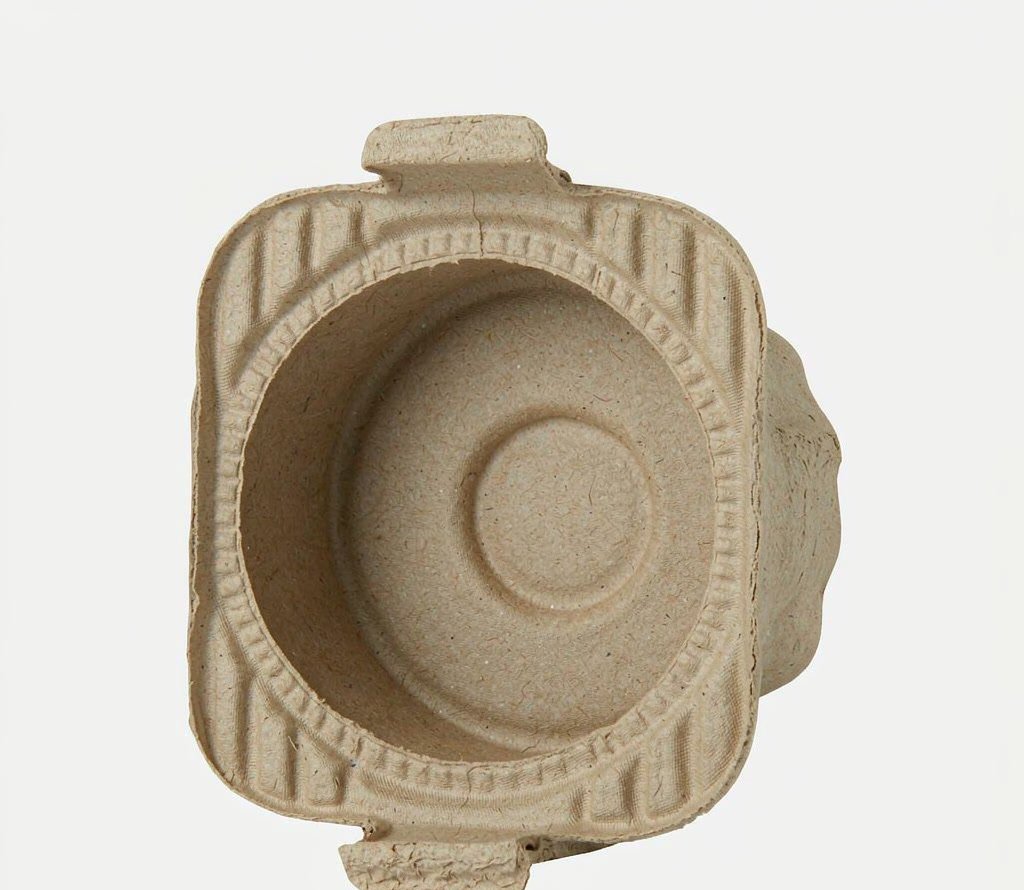
Cups look like the simplest part of compostable tableware for airlines, and they cause a steady share of complaints. The usual problems are not dramatic failures. They are cups that nest too tightly to separate at speed, and lids that loosen after chilling.
In our range, bagasse cups cover portion, sauce and tea cups, plus larger catalogue cups. Cup lids are part of the same range, so cups and lids can be specced together. For airline service, buyers usually focus on three checks:
- Separation speed. Crew serve hundreds of drinks per flight. Cups must release from the stack one at a time, every time.
- Lid fit after temperature change. Test lids on filled cups after chilling, not only at room temperature in your office.
- Portion fit. Sauce and dessert portions need small cups that sit securely inside the tray’s compartments.
Storage on board matters too. Cups and lids ride in galley drawers and trolley inserts with fixed footprints. Measure the nested stack height of your samples. A stack that grows taller than the incumbent item quietly breaks the caterer’s loading plan.
Treat cups as part of the setting, not a separate commodity line.
A cup that saves a fraction on unit cost but slows the drinks service costs the airline more than it saves you.
Wrapped cutlery kits and packaged sets
The cutlery kit is where compostable tableware for airlines becomes a single, sealed unit. A typical kit combines the cutlery pieces with a napkin and any small sachets the menu needs. Each passenger opens one pack, and clearing means collecting one pack per seat.
Our cutlery is paper cutlery, supplied loose or as individually wrapped sets. Those wrapped sets sit in our packaged sets collection, alongside other ready-to-serve combinations. When you spec a kit, confirm the contents list piece by piece. Kit contents are a common source of quiet mismatch between quotation and delivery.
Three kit checks are worth writing into your order:
- Wrap integrity. Seals should survive packing, trolley transport and handling without splitting open.
- Contents accuracy. Open kits from several cases and count. Every kit in a case should match the agreed list.
- Tray fit. The finished kit must lie flat in its tray position without lifting the hot container’s lid.
Kits also simplify stock counting. Caterers plan by settings, not by loose pieces. One kit per setting means one unit to count, load and reconcile after each flight. Loose cutlery, by contrast, needs separate counts for every piece type.
Our compostable cutlery wholesale guide explains paper cutlery formats and wrapped set options in full.
Read it alongside this guide if cutlery is the part of your setting still undecided.

Testing a full tray set before you commit
Never approve compostable tableware for airlines from single-piece samples on a desk. Ask for enough pieces to build complete settings, then test the setting as the crew will use it.
Assemble and load
Build the full setting with your caterer’s real menu items. Load the hot container, sides, cup and kit onto the tray. Carry it one-handed, slide it across a table, and stack loaded trays the way a galley would.
Run the chill and reheat cycle
Put loaded settings through your caterer’s normal chilling and reheating routine. Afterwards, check tray rigidity, divider behaviour and lid fit again. Moulded fibre that feels stiff when dry and empty can behave differently after a full service cycle.
Clear it like crew
Finish the test at the waste end. Clear the used setting into the space a trolley allows. Food-soiled items should leave together, in one motion, without sorting at the seat. That single-motion clearing is a real part of why airlines choose a one-material setting.
On compliance, our tableware is certified to FDA and LFGB food-contact requirements and to EN 13432, with production under ISO 9001. Ask us for the documentation for the specific items you plan to import, and check it against your market’s current requirements. Keep the document file with the approved sample set for each SKU. When a tray or kit version changes, refresh the file for compostable tableware for airlines items at the same time. Version drift between the served product and the held documents is a common audit finding.
Ordering compostable tableware for airlines: MOQ, samples and lead times
Our minimum order is 5,000 pieces per SKU from existing moulds. In an airline setting, each tray format, cup size and kit version is its own SKU. Custom shapes need a new mould and start at 20,000 pieces.
That per-SKU structure rewards a tight first order. Launch with one tray format, one cup and one kit version, each above the minimum. Prove the setting in service, then add formats. Free samples are dispatched within 3 days, so the full-setting tests above can run before production. Production takes 15–20 days after order confirmation.
FAQ: compostable tableware for airlines
What items make up a full set of compostable tableware for airlines?
A complete place setting normally combines a compartment tray, a hot container, side bowls, a cup with lid and a wrapped cutlery kit. Buyers should spec and test these pieces together, as one assembled setting, rather than approving each item separately.
How do buyers compare the weight of airline tableware?
Weigh the complete assembled setting, including the wrapped kit and lids, on the same scale for every supplier. Then record the parts separately to see where the weight sits. Never compare one supplier’s full setting against another supplier’s tray alone. Keep a written record per SKU, so future orders of compostable tableware for airlines can be checked against it.
Can compostable trays handle hot airline meals?
Properly moulded bagasse fibre is pressed into rigid trays and containers that suit hot meal service. Judge it by testing, not by claims. Run loaded samples through your caterer’s chilling and reheating cycle, then check rigidity, dividers and lid fit.
What is the minimum order for airline catering tableware?
For items from our existing moulds, the minimum is 5,000 pieces per SKU. Each tray format, cup size and kit version counts as one SKU. Custom shapes need a new mould and start at 20,000 pieces.
Are the trays, cups and kits certified for food contact?
Our tableware is certified to FDA and LFGB food-contact requirements and to EN 13432, and production follows ISO 9001. Ask us for the documentation for the specific items you plan to import, and match it to your market’s rules.
Start with samples, not a container. If you are speccing compostable tableware for airlines, tell us which tray format, cup and kit contents you are considering. We will dispatch free samples within 3 days, so you can build and test the complete setting yourself. Reach us on WhatsApp +86 18733012158, or send your list through our contact page. Hebei Daoxiang Eco Tableware Technology Co., Ltd. will take it from there.