— BUYING GUIDES
Compostable Meal Prep Containers: A Wholesale Guide for Meal-Prep and Ready-Meal Brands
November 2026

If you buy compostable meal prep containers wholesale for a meal-prep or ready-meal operation, the container has a harder job than a takeaway box. It must hold a portioned meal through chilling or freezing, reheating and a delivery ride, without leaking or collapsing. This guide is written for that buyer. We cover compartment layouts for portion control, the freezer-to-microwave-to-doorstep tests worth running, lid and sealing choices, and stacking for subscription delivery. Compostable meal prep containers wholesale decisions made on photos alone usually fail at one of those three stages.
We write this from the factory side. Hebei Daoxiang Eco Tableware Technology Co., Ltd. runs its own moulding plant in Hebei, China. We produce sugarcane bagasse plant-fibre moulded tableware, with 126 items across six collections. Meal prep sits inside that wider container range, alongside bowls, trays and clamshells. Everything below reflects how wholesale buyers in this segment actually specify, test and reorder.
Who buys compostable meal prep containers wholesale, and what changes
Most container guides start with formats. This one starts with buyers, because the right format depends on who fills the container and when the meal is eaten. In compostable meal prep containers wholesale purchasing, three buyer types dominate.
Subscription meal-prep brands cook in batches, chill or freeze portions, and deliver several meals per customer each week. Their container must stack tightly, survive reheating, and look consistent across a full week of menus. A failure repeats across hundreds of identical meals, not one order.
Ready-meal producers fill at higher speed and sell through retail or foodservice channels. They care about fill-line handling, lid fit at pace, and a container that still looks neat after days in a chiller cabinet. Their volumes per design are larger and change less often.
Distributors and foodservice suppliers buy for both groups above. They need a short, reliable range that covers most menus without multiplying stock lines. For them, compostable meal prep containers wholesale sourcing is a range decision, not a single-product decision.
All three share one difference from takeaway buying. The meal is rarely eaten where it was packed. Time, temperature change and transport sit between kitchen and customer. That gap is what your specification and your sample tests must cover. It is also why compostable meal prep containers wholesale shortlists should be shorter, and tested harder, than takeaway shortlists.
Compartment formats for portion control in compostable meal prep containers wholesale orders
Portion control is the commercial reason meal-prep brands choose compartment containers. Compartments keep protein, grains and vegetables in set ratios, protect textures, and make nutritional claims easier to keep consistent. Buyers typically source single-compartment bases, two-compartment and three-compartment trays, and round bowls with separate lids. Treat the sizes below as common market ranges buyers typically source, not as a specification sheet for any one factory.
| Format | Typical meal-prep use | Buying note |
|---|---|---|
| Single compartment | Curries, pasta, grain bowls and mixed dishes | Simplest fill and seal; choose depth by sauce level |
| Two compartments | Protein with one side, or main with sauce separate | Check the smaller section still holds a real portion |
| Three compartments | Protein, grain and vegetable in fixed ratios | Best portion control; dividers also add rigidity |
| Round bowl with lid | Soups, salads and breakfast pots | Lid fit decides leak performance; test filled and tilted |
Capacities buyers typically source for meal-prep mains commonly fall around 500 ml to 1,500 ml, with smaller pots for sides, sauces and desserts. Use that band only as a shortlisting range. Then match volume to your own weighed portions, because a container that looks right can still leave a standard portion looking lost or overfilled.
Two checks matter more than headline capacity. First, divider height: low dividers let sauces migrate during delivery, even when each section was filled correctly. Second, usable floor area: deep, narrow sections stack food instead of spreading it, which changes both presentation and reheating. If you also buy general takeaway formats, compare this shortlist against our wider guide to bagasse food containers before you fix the range.

Test the full cycle: freezer, microwave and delivery
A takeaway container is tested once, at serving. A meal-prep container should be tested three times, in sequence, because each stage stresses the fibre differently. Build this cycle into your sample protocol for any compostable meal prep containers wholesale shortlist. Use your own menus, your own chillers and your own delivery method.
Stage one: chilling and freezing
Fill the container, lid it, and hold it for the longest storage period in your real operation. Then handle it cold: stack it, move it and open it. Cold fibre can feel stiffer and less forgiving than fibre at room temperature. Check lids for loosening and bases for cracking at corners and hinges. A container that only works fresh has failed the meal-prep job.
Stage two: reheating
Reheat the same chilled or frozen meal the way your customers will, following the heating guidance you print on your own packaging. Then check shape, lid fit and handling strength while the food is hot. Steam is the quiet problem here. It softens fibre and builds pressure under a tight lid. Look for sagging bases, warped rims and lids that lift or stick.
Stage three: the delivery ride
Finally, send the reheated or chilled meal through a real delivery run, stacked as your riders or drivers actually stack it. Inspect on arrival, not back in the kitchen. Leaks at the lid line, sauce crossing between compartments and crushed lower layers all show up here first. In compostable meal prep containers wholesale buying, this third stage rejects more samples than the first two combined.
Keep notes per stage and per SKU. A container can pass reheating and fail delivery, and that distinction tells you whether to change the container, the lid or the packing method.
Lids and sealing options for subscription delivery
Buyers comparing compostable meal prep containers wholesale usually meet three lidding routes in the market. Hinged clamshells fold shut and suit dry or low-sauce menus and fast packing. Separate flat lids give a cleaner top surface for labels and sleeves, and they stack more predictably. Film sealing is also offered in the wider market for retail ready meals. It needs sealing equipment and compatible rims. Treat it as a separate line investment rather than a container upgrade.
Ask any supplier which route each shortlisted SKU actually supports. Do not assume a base and a lid from the same catalogue page were moulded for each other. Request paired samples, fill them with your sauciest menu item, and tilt and shake them as a delivery bag would be handled.
Labelling deserves a line in the specification too. Subscription brands live on reheating instructions, allergen panels and use-by dates. Check that the lid or base gives a flat, clean area large enough for your label, and that the label still adheres after chilling. Buyers who also run hot takeaway lines will find the seal discussion in our guide to compostable takeaway containers useful as a comparison.
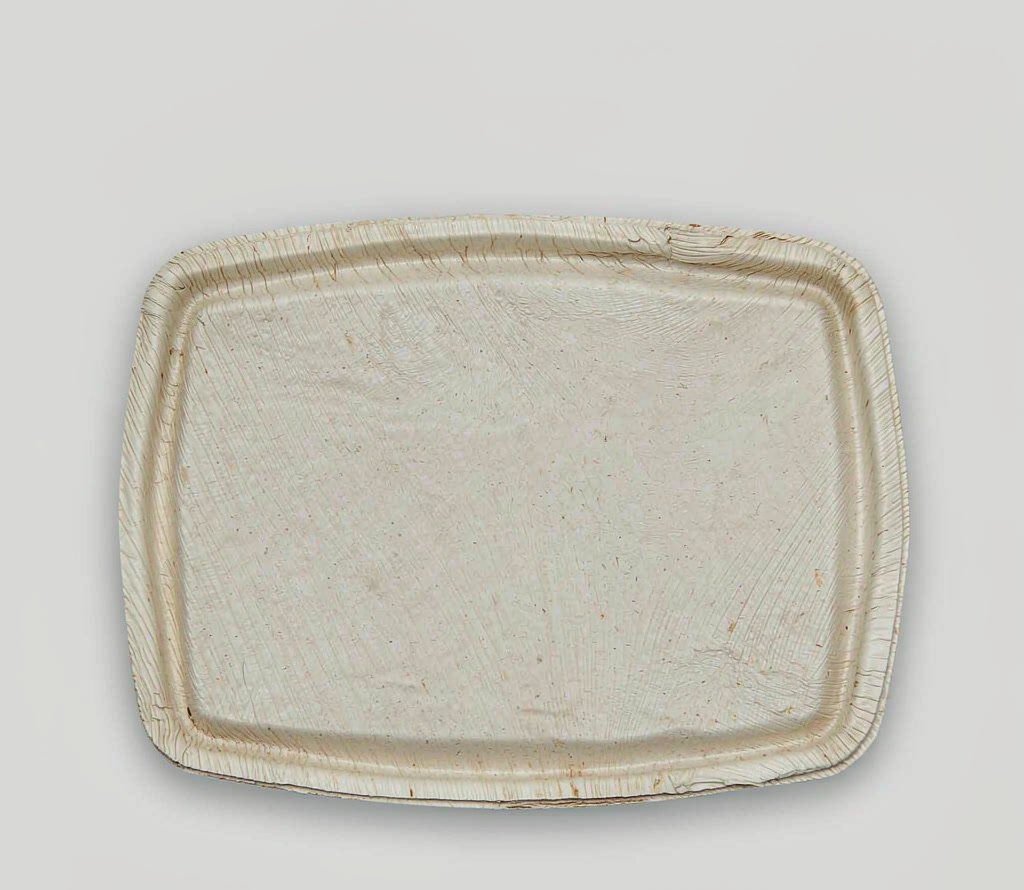
Stacking and packing for weekly subscription runs
Subscription delivery is a stacking problem before it is a container problem. Five or ten meals travel in one bag or box, often mixed with other customers’ orders in the same vehicle. In compostable meal prep containers wholesale orders, stack behaviour decides breakage and leakage rates more than wall thickness alone.
Distributors reselling compostable meal prep containers wholesale should run the same stack checks. Their customers will judge the range on the worst delivery, not the best one.
Check four things on samples. First, empty nesting: bases and lids should separate easily on the packing line, without staff prising them apart. Second, filled stacking: a filled container should carry the weight of the stack above it without the lid dipping into the food below. Third, footprint consistency: mixed formats in one delivery box waste space and shift in transit, so limit the footprints you run. Fourth, case packing: agree how bases and lids are counted, sleeved and cartoned, so your packing team is not recounting on arrival.
Storage matters as well. Bagasse is a natural fibre and absorbs ambient moisture, so cases belong off the floor and away from damp walls. Rotate stock so older cases are used first. A container stored badly can feel soft before it is filled, and that storage fault is easy to mistake for a production fault.
MOQ, samples and ordering compostable meal prep containers wholesale
Our minimum order for items from existing moulds is 5,000 pieces per SKU. One SKU means one format in one size with its matching lid arrangement where a separate lid applies. Custom shapes need a new mould and start at 20,000 pieces. Most meal-prep buyers therefore launch with two or three proven SKUs rather than a different container for every menu line.
Free samples are dispatched within 3 days, and production runs 15–20 days after order confirmation. Use the sample stage for the full freezer, reheating and delivery cycle above, on real food. Approving compostable meal prep containers wholesale volumes from an empty sample on a desk is the most common mistake we see in this segment.
Plan the reorder rhythm before the first order lands. Subscription demand is weekly and unforgiving, so agree in advance which SKUs you will reorder, and at what stock level you will trigger the next production run. A range that sells well but stocks out in week six damages the brand faster than a slightly narrower range that never runs dry.
On compliance, our tableware is certified to FDA and LFGB food-contact requirements and to EN 13432, with production under ISO 9001. Ask us for the documentation for the specific items you plan to import. Keep that document set with the SKU list it covers, because your own customers and market authorities will ask for the same papers.
FAQ: compostable meal prep containers wholesale
What is the minimum order for compostable meal prep containers wholesale?
For items from our existing moulds, the minimum is 5,000 pieces per SKU, where a SKU is one format in one size. Custom shapes need a new mould and start at 20,000 pieces. Most buyers combine two or three SKUs in one order, and each SKU meets its own minimum.
Can compostable meal prep containers go from freezer to microwave?
Meal-prep use asks exactly that of a container, but performance depends on the specific item, the food and the reheating guidance you give customers. Do not rely on a catalogue claim from any supplier. Run the full cycle on samples with your own meals: chill or freeze, reheat as instructed, then check shape, lid fit and strength while hot.
Which compartment format is best for portion control?
Three-compartment formats give the tightest control, because protein, grain and vegetable portions stay separate and repeatable. Two compartments suit a main with one side or a separate sauce. Single compartments work best for mixed dishes. Match the format to your weighed portions, not to the photograph.
How do I stop leaks during subscription delivery?
Start with the lid pairing, not the base. Test the exact base and lid together, filled with your sauciest dish, tilted and stacked as your drivers stack them. Check divider height on compartment formats, limit mixed footprints in one box, and inspect after a real delivery run rather than in the kitchen.
How long do samples and production take?
We dispatch free samples within 3 days. Once an order is confirmed, production runs 15–20 days. Build your freezer-to-microwave-to-delivery testing into the sample window, so approval is based on the full cycle before you commit to compostable meal prep containers wholesale volumes.
Start with samples, not a container. Tell us which menus and portion sizes you are packing, and we will send free samples for your own freezer, reheating and delivery tests. Reach us on WhatsApp +86 18733012158 or through our contact page. That is the fastest way to judge compostable meal prep containers wholesale for your range, from Hebei Daoxiang Eco Tableware Technology Co., Ltd.