— Buying Guides
Biodegradable Food Packaging Wholesale: Verifying Claims Before You Import
10 November 2026 • Buying Guides • 5 min read
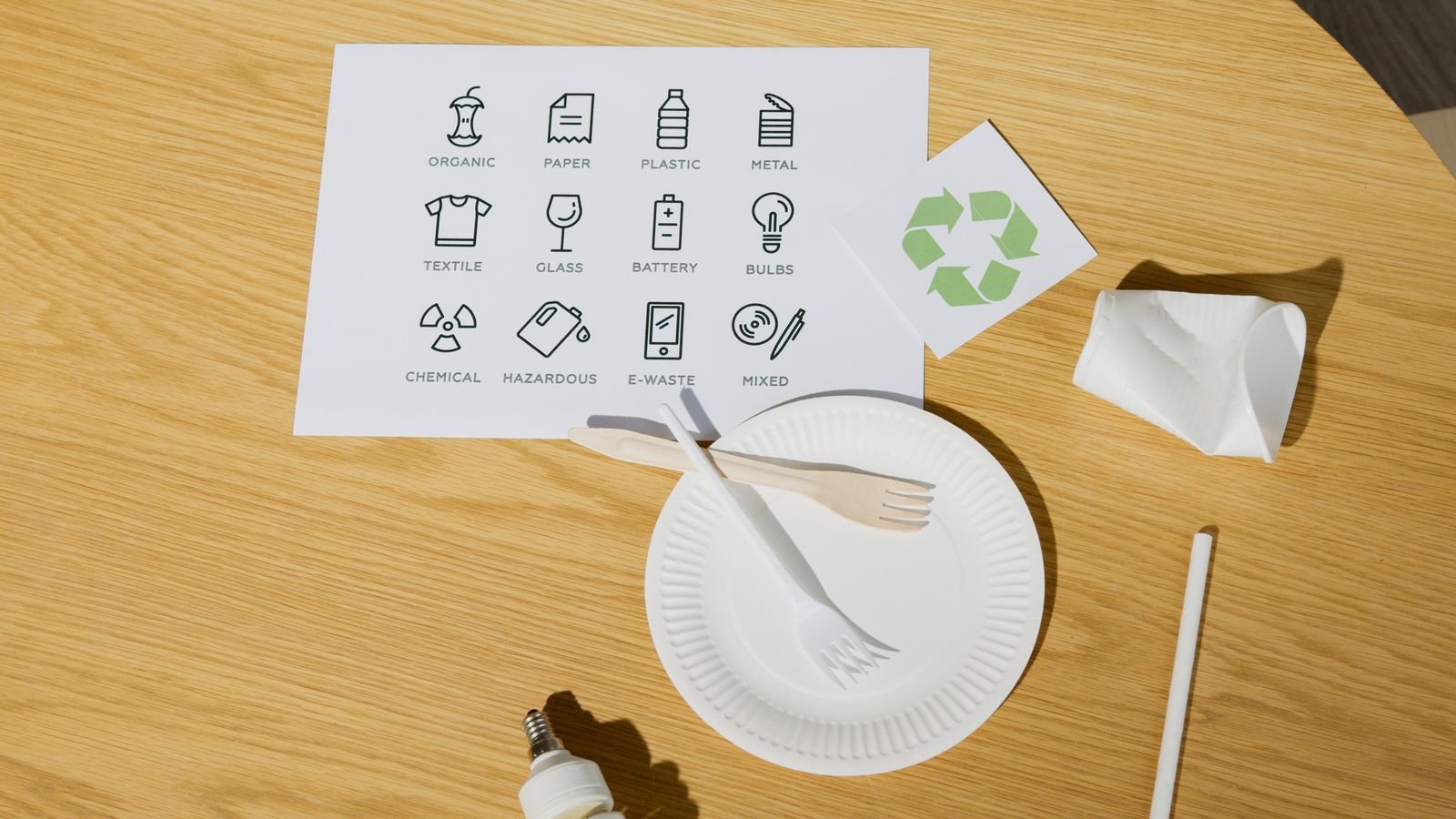
Almost every offer an importer receives calls its food packaging biodegradable. The word appears on bagasse, PLA, coated paperboard and blends whose behaviour after disposal differs completely — and it is the buyer, not the supplier, who answers for the claim when a retail customer, a marketplace or a customs officer asks for evidence. This guide to biodegradable food packaging wholesale sourcing is therefore not about definitions. It is about verification: what the word “biodegradable” does and does not establish, and which documents turn a marketing claim into something you can print on your own packaging.
It also covers the red flags that appear in supplier offers, and how the file an EU buyer needs differs from the one a US buyer needs.
We write from the factory side. Hebei Daoxiang Eco Tableware Technology Co., Ltd. moulds sugarcane bagasse tableware in our own factory in Hebei — 126 products across six collections, documented under FDA, LFGB and EN 13432, with the factory operating to ISO 9001. The checks below are the ones our own customers apply to us when they buy biodegradable food packaging wholesale from us, and the ones we would apply in their position. Use them on every offer you compare, including ours.
Why “Biodegradable” Is the Weakest Claim on the Offer
“Biodegradable” states that a material can be broken down by microorganisms. By itself it says nothing about how long that takes, under what conditions, or what remains afterwards. A product can be honestly described as biodegradable and still degrade far more slowly than your customer’s listing implies — and in most markets the bare word is not tied to one compulsory test that every supplier must pass before using it. That makes it close to useless as a purchasing criterion: it cannot be compared between offers, and it cannot be evidenced after the fact.
“Compostable” is stronger, because it can be tied to a published test standard: EN 13432 in Europe, ASTM D6400 in North America. A claim referenced to a standard can be checked. There is a certificate, a test report, a named laboratory and a defined product that was actually tested. Your verification job is to move every claim on an offer from the left column of this table to the right.
| Claim on the offer | What it actually establishes | What to ask for instead |
|---|---|---|
| “Biodegradable” | That the material can break down eventually — no timeframe, no conditions | The test standard, laboratory and report behind the claim |
| “Compostable”, no standard named | An intention, not evidence | EN 13432 or ASTM D6400 certificate and test report for the product |
| “Certified”, shown as a logo image | That a logo file exists | Certificate number, issuing body, validity dates and the scope of products covered |
| “Food safe” | Nothing specific | Food-contact test reports or a declaration for the exact product — FDA framework for the US, LFGB-based reports commonly requested in Europe |
| “Eco-friendly”, “green”, “degrades naturally” | Marketing language | Which property is being claimed, and the document that proves it |
None of this means a supplier using loose language is dishonest. It means you cannot build your own product listing on it. The standard-referenced claim is the only kind that survives contact with a retail buyer’s compliance team, so it is the only kind worth paying for.
Biodegradable Food Packaging Wholesale: The Per-SKU Document Pack
Certificates attach to products and materials, not to companies. A factory’s ISO 9001 certificate describes its quality management system; it does not certify that a particular bowl is compostable. Request documents per SKU — or per clearly defined product group, where the certificate’s scope states that it covers the group — and read the scope before you read anything else. The pack to request:
- Compostability certificate and test report. EN 13432 for European programmes, ASTM D6400 for North American ones. Check that the product description matches your SKU, the issuing body is identifiable, the dates are current, and the report is the full document rather than a cover page.
- Food-contact documentation. Test reports or declarations covering food contact for the exact product: FDA-framework evidence for the US market, LFGB-based reports for European buyers.
- The specification sheet. Dimensions, capacity and piece weight — the physical identity of the product the documents describe. Without it, you cannot prove the tested item and the shipped item are the same thing.
- Any claim-specific report. If an offer advertises a “free-from” property — PFAS-free is the current example — request the test report behind that claim, for your SKU. Do not take the adjective; take the report. We give the same advice about our own range.
- Matching samples. Documents describe a product; samples prove the factory ships it. Compare sample weight and dimensions against the specification sheet, and keep one approved set as your reference standard.
Our own pack follows the same structure, and we expect buyers to ask for the file per SKU before ordering. Four questions will get you most of the way with any supplier:
- Which standard was this SKU tested against, and which laboratory issued the report?
- Does the certificate cover this product, or the raw material in a different form?
- When was the tested sample produced, and when does the report expire?
- Can you send the complete report, including the results pages?
A supplier who answers those four in writing, with documents attached, has done most of your compliance work for you. Which documents prove what is set out in our guide to eco tableware certifications; the point here is to collect them per SKU, before the order, not after it.
Greenwashing Red Flags in Biodegradable Food Packaging Wholesale Offers
Verification would be unnecessary if offers were uniformly accurate. They are not. These are the patterns that should slow an order down:
- One certificate for everything. A single report offered as covering a mixed catalogue of different materials and product forms. Scope is the first thing to read, and a catalogue-wide claim rarely survives reading it.
- The wrong product on the report. The tested item is a film, a raw-material sample or a different thickness from the product quoted. The certificate is genuine; it just is not about your goods.
- Logos instead of documents. The offer is decorated with certification marks, but the PDFs never arrive — only images of them.
- Expired or undated paperwork. Reports with no laboratory name, no test date, or a validity period that has already lapsed.
- Claims that move. “Home compostable” in the brochure becomes “where industrial facilities exist” when you ask which test supports it. Moving claims usually mean the document does not support the brochure.
- Samples that do not match the file. The samples weigh noticeably less, or measure differently, from the specification sheet the documents describe.
- Answers that never reach writing. Everything is confirmed on a call; nothing appears in the message thread you can attach to a purchase order.
Any single flag is a question, not a verdict — paperwork genuinely does lag behind production in this industry. A pattern of flags is different: it means your price comparison is premature, because you are comparing a documented product against an undocumented one, and those are not the same product at two prices.
EU and US Buyers Need Different Files
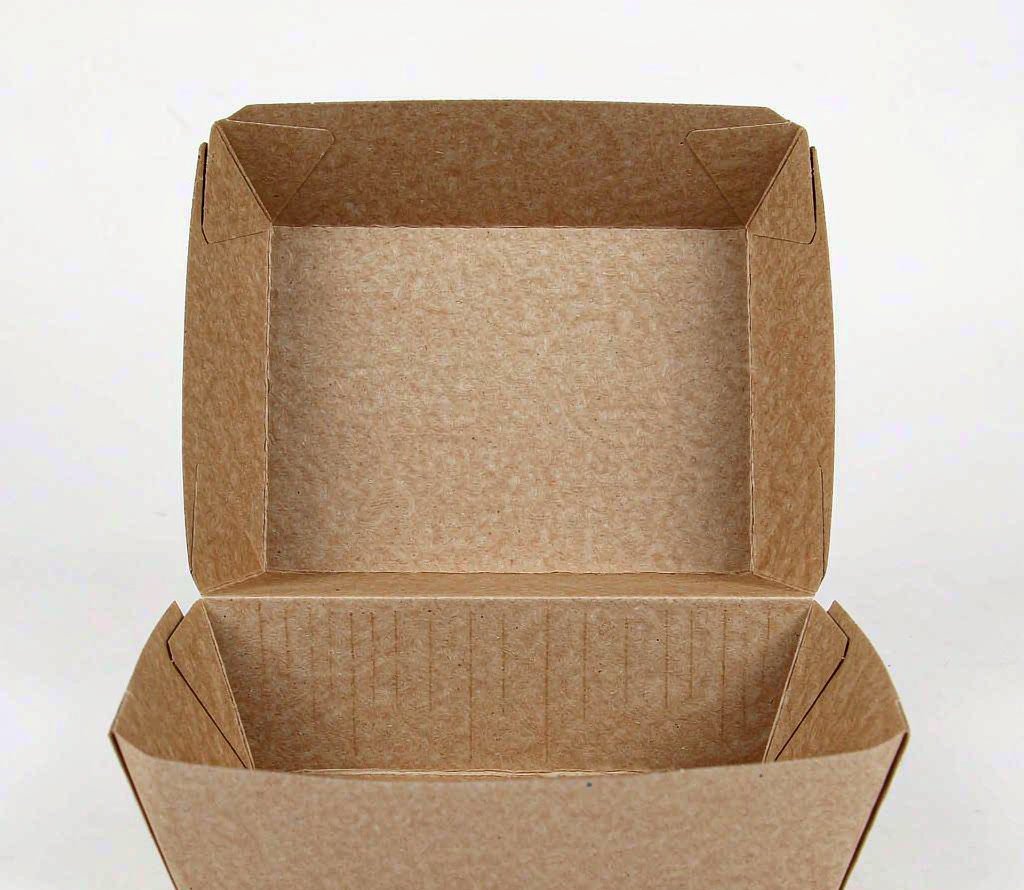
The document pack is not one pack. What your customer asks for depends on where the packaging will be sold, and the same SKU can be fully documented for one market and incomplete for the other.
European buyers. Importers supplying European retail and foodservice chains are typically asked for two files together: EN 13432 evidence behind the compostability claim, and a food-contact file, where LFGB-based test reports are the reference most commonly requested across European markets. Claims printed for consumers are checked by retail customers against these documents, so the pack effectively travels with the product listing.
US buyers. North American programmes work to ASTM D6400 as the compostability reference their customers cite, alongside food-contact documentation under the FDA framework. Requirements also vary by state and by customer, and large distributors run their own documentation checklists — ask what yours contains rather than assuming the European pack will satisfy it.
The practical consequence: build the pack per destination before production starts, not when the goods land. Confirm with your customer or broker which files they will request, then collect exactly those from the factory, per SKU. Discovering a missing report at the listing stage costs a season; requesting it at the quotation stage costs an email.
Why Serious Importers Standardise on Certified Compostable Ranges
Verification costs time per SKU, and that cost shapes buying strategy. Importers who verify once, for a stable certified compostable range, turn every reorder into routine. Importers who mix materials and claim types multiply their document files — and the chance that one listing carries a claim its paperwork does not support. Standardising also simplifies your own marketing: one claim set, checked once, used across the whole range.
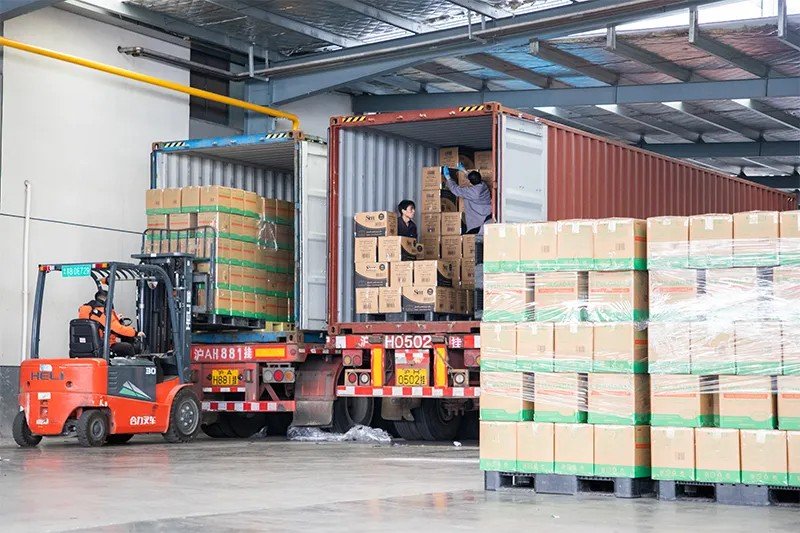
That is how our range is built: one material family — moulded sugarcane bagasse — across all 126 products in our six collections, documented under FDA, LFGB and EN 13432. An importer can document plates, bowls, containers and trays under one consistent approach instead of five different ones. Stock moulds start at 5,000 pieces per SKU, so documented SKUs can be added incrementally as a programme grows; a custom shape of your own starts at 20,000 pieces and should follow a successful stock-mould trial. Production runs 15–20 days from a confirmed order.
For the order-planning side of the same biodegradable food packaging wholesale programme — formats, MOQ structure and mixed-SKU container loading — see our companion guide to compostable food packaging wholesale. This article covers the paperwork; that one covers the order. Run both before you commit, and the first shipment holds no surprises.
Frequently Asked Questions
Is “biodegradable” on its own enough to sell food packaging in the EU or US?
No. The word is not tied to a single test a supplier must pass, so it cannot be evidenced when a customer asks. What buyers actually rely on is compostability documented against a standard — EN 13432 in Europe, ASTM D6400 in North America — plus food-contact documentation for the exact product.
What is the difference between EN 13432 and ASTM D6400?
Both are compostability standards that define test conditions and pass criteria; EN 13432 is the European reference and ASTM D6400 is the North American one buyers cite. They are not interchangeable documents. Ask for the one your destination market’s customers request, tested on the product you are buying.
A supplier sent one certificate for their whole catalogue. Is that acceptable?
Only if the certificate’s scope genuinely covers those products — read the scope, the product descriptions and the validity dates. Certificates normally name specific products, materials or product groups. If your SKU is not clearly inside the scope, request the report for your SKU before ordering.
Which documents should I request before placing a biodegradable food packaging wholesale order?
Five things: the compostability certificate and its full test report; food-contact documentation for the exact product; the specification sheet with dimensions and piece weight; a test report behind any specific claim the offer makes; and samples that match the documents. All per SKU, all in writing.
Do Daoxiang products come with documentation?
Our biodegradable food packaging wholesale range is covered by FDA, LFGB and EN 13432 documentation, and the factory operates under an ISO 9001 quality management system. Ask us for the document pack for your SKUs before you order — we expect the same checks described in this article to be applied to us.
Can I verify claims on samples before ordering in bulk?
Yes, and you should. Free samples are dispatched within three days. Compare the samples against the document pack — weight, dimensions, lid fit — and keep one approved set as the reference standard for the shipment inspection. Stock-mould orders then start at 5,000 pieces per SKU.
Start with the document pack. Send us your destination market and the SKUs on your shortlist, and we will return the per-SKU documents together with free samples, dispatched within three days. Test the samples against the paperwork, and only then talk quantities. Message us on WhatsApp at +86 18733012158, or send your shortlist through our contact page. Verify once, properly, and every reorder after that is routine.