Eco tableware manufacturer: a 12-point buyer checklist
Choosing an eco tableware manufacturer is where a programme either holds up or falls apart, and the risk is rarely the material. It is the gap between what a website claims and what a factory can deliver. This checklist gives you twelve things to verify before you commit, so you are comparing suppliers on evidence rather than on marketing.
The short answer
- Test the paperwork: standards, test reports, and whether they cover the specific pieces.
- Test the commercial terms: MOQ, lead times and samples, all confirmed in writing.
- Test the operation: capacity, quality control, and whether a visit is welcome.
- Test the conversation: how fast and how clearly they reply to a real brief.
The paperwork: certifications and test reports
Ask which standards apply to the pieces you want, and ask for the test reports rather than the logos. Food contact in the United States and the European Union runs on different frameworks, and compostability claims need their own reports. The labels guide explains what to look for and why the difference matters. A reliable manufacturer answers piece by piece; one that only sends a badge image is asking you to take the whole claim on trust.
There is a second paperwork check that buyers skip: does the certification cover the exact product and the exact market? A food-contact report for the United States does not answer for Europe, and a compostability mark on a cup says nothing about the plate next to it. Ask for scope as well as for the certificate.
The commercial terms: MOQ, lead times and samples
Three numbers decide whether a supplier is practical. First, the minimum order quantity: it should be confirmed in the quotation, not guessed at in advance, so you can compare suppliers on the same basis. Second, lead times, confirmed with the quotation so you can plan around real dates rather than a hopeful range. Third, samples, because a spec sheet cannot tell you how a piece feels, how a lid seats or how a compartment plate stacks in your service. Ask for samples on request and evaluate them against your actual menu.
The full flow, from first message to delivery, is laid out in how ordering works. If a supplier is vague on all three, the problem is not the price, it is the fit, and it will surface the moment you place the first real order.
The operation: capacity and quality control
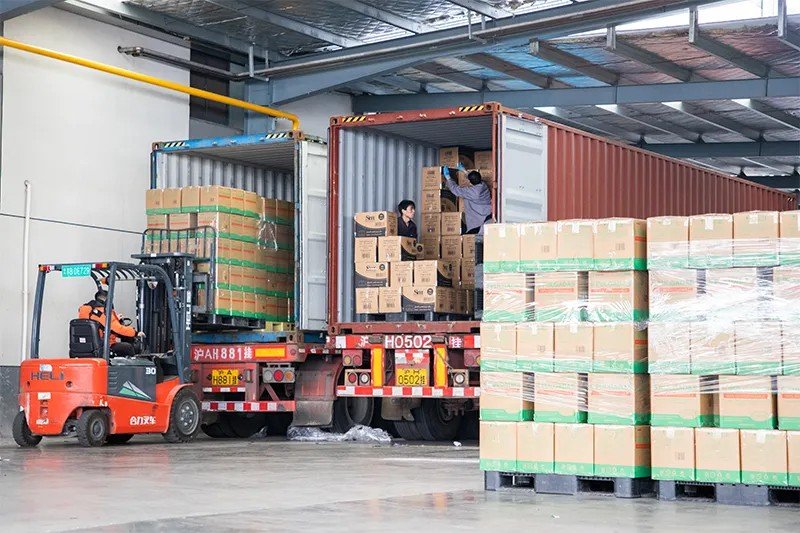
Look past the sample and ask how the line runs at scale. A 126-piece catalogue implies real capacity, but the question is consistency: even walls, clean rims, a lid that seats the same way on the first unit and the ten-thousandth. Ask how quality is checked piece by piece and what happens to off-spec pieces, because a factory that quietly ships rejects will eventually ship them to you.
If a programme needs a shape that does not exist yet, confirm the custom capability, from drawing to sample and on to production. Our custom mould programme runs seven days to a first sample and thirty days from an approved sample to production, and the custom mould guide covers the stage-by-stage timeline. A manufacturer who can show you that path is telling you they can hold a programme together as it grows.
The visit and the conversation
A factory visit settles the questions a quotation cannot: whether the line runs at the scale claimed, how quality is controlled, and whether the operation behind the website is the one you will buy from. The factory visit guide covers what you would see at our Hebei plant, from the moulding floor to the finished goods store. If travel is not possible, ask what evidence they will send instead: photos, a video call from the floor, or a third-party audit.
The last test is the simplest, and it is the one most suppliers fail. Send a real brief, with the pieces, quantities and destination, and see how fast and how clearly you hear back. Our standard is a reply within one business day; treat a slow, generic answer as a signal about how the whole programme will run once the deposit is paid.
Choosing your eco tableware manufacturer
Run the checklist across two or three suppliers and score them the same way, because the gap between a real factory and a trading company shows up fast under these twelve questions. A manufacturer that clears them will say so in the first reply, since the evidence is already on the floor and there is nothing to invent. Start with the brief, ask for the reports and the samples, and let the answers decide rather than the price on its own. When you are ready, send us the brief and hold us to the same standard you hold everyone else.
Running a supplier through the checklist?
Send us the pieces, quantities and destination, and judge us on the reply. Send a brief →