— BUYING GUIDES
PFAS in Compostable Packaging: What Buyers Should Ask and Which Test Reports to Request
November 2026
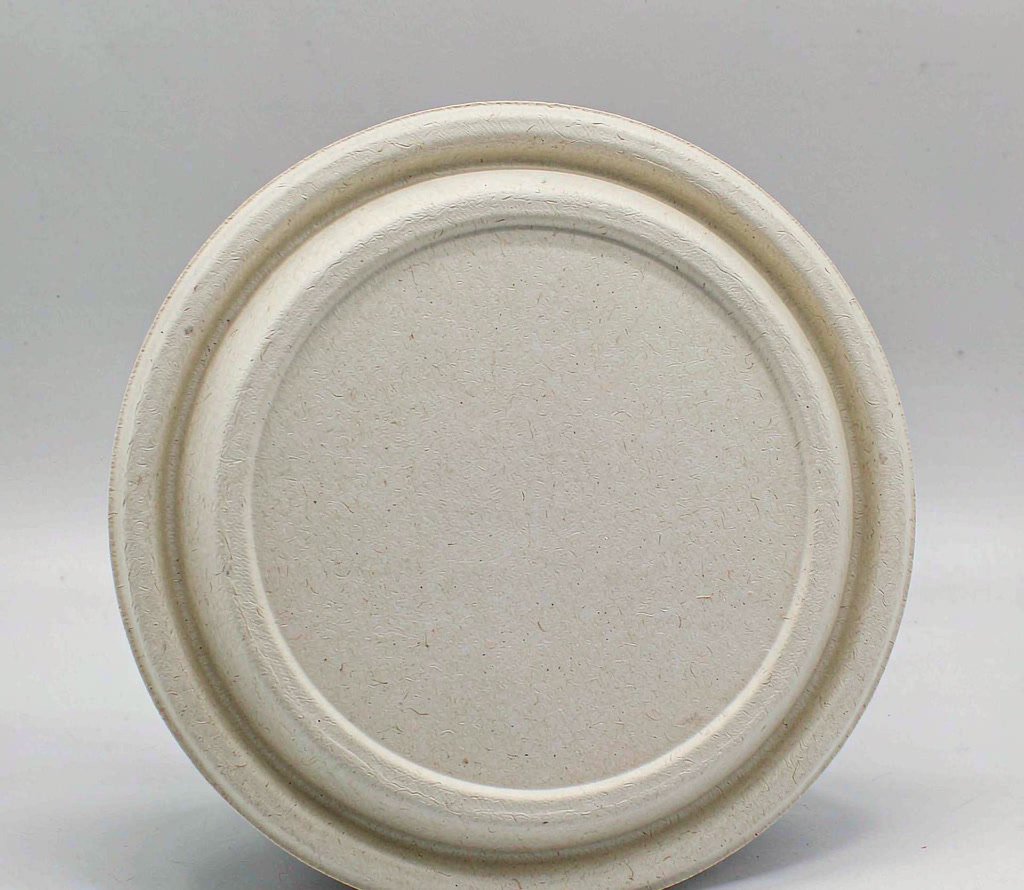
If you buy moulded fibre tableware, PFAS in compostable packaging is now an evidence question, not a marketing question. A claim on a catalogue page is not evidence. Evidence is a test report or declaration that names the exact SKU you plan to import. This guide shows which documents to request, how to read them, and what should make you pause. Use the same checklist with every supplier you compare.
We write this from the factory side. Hebei Daoxiang Eco Tableware Technology Co., Ltd. runs its own moulding plant in Hebei, China. We produce sugarcane bagasse plant-fibre moulded tableware, with 126 items across six collections. This guide describes no single supplier’s status. It teaches a checking method buyers can apply to any supplier, on any SKU.
Why PFAS in compostable packaging became a buying question
Three pressures brought this topic into everyday sourcing. First, food packaging must resist grease and moisture. Historically, some grease-resistant treatments across the wider packaging industry used fluorinated substances. Buyers therefore learned to ask how resistance was achieved. Second, regulation moved. The EU Packaging and Packaging Waste Regulation includes PFAS limits for food-contact packaging, applying since August 2026. Third, retailers and foodservice groups now ask importers for evidence, not reassurance.
That combination changes the importer’s job. You place the packaging on your market, so a customer or regulator will ask you for evidence. A spoken assurance will not answer them. You need a file, built before shipment, connecting each claim to a document. Our separate guide to the PPWR for tableware buyers covers the wider regulation. This article stays on the PFAS evidence file itself.
Start from a simple rule for PFAS in compostable packaging. Treat every SKU as its own case. A bowl, a plate and a clamshell box from one factory may still differ in pulp, treatment and intended food contact. Evidence for one item does not automatically cover another.
How grease resistance is achieved in moulded fibre, in general
Buyers cannot judge evidence until they understand the function being evidenced. A plate holding a salad needs little grease resistance. A tray holding fried food or a saucy meal needs much more. Suppliers achieve that resistance in different ways. Your question is never just whether resistance exists. Your question is how it was achieved, for that SKU.
Resistance from fibre structure and pressing
Some resistance comes from the fibre itself. Dense pulp, careful forming and firm hot pressing close the surface of the wall. A well-pressed wall slows oil and water longer than a loose wall. Buyers can test these physical factors with real food. Fill a sample with your oiliest dish, leave it for a full service period, then check the underside for soak-through and softening.
Physical performance, however, proves only performance. A sample that holds oil well does not tell you what was added to help it do so. Equally, a sample that softens quickly does not prove anything about chemistry. Keep the two questions separate. Test function with food. Test composition with documents.
Resistance from added treatments
Suppliers may also use added sizing or barrier treatments during production. The type, amount and purpose vary by factory, product and target market. Trade descriptions are often vague. Words like sizing, treatment or coating tell you almost nothing alone. Ask the supplier to describe, in writing, what role any added treatment plays for the exact SKU, and whether it is used across a range or only on certain items.
Do not replace one unproven claim with another. If a supplier offers a different treatment as the answer, do not assume it needs no evidence. This guide labels no treatment option as the right choice. The buying skill is verification, not substitution. Whatever method a supplier uses for PFAS in compostable packaging, ask the same questions. What is it? Why is it used on this SKU? Which document supports it?
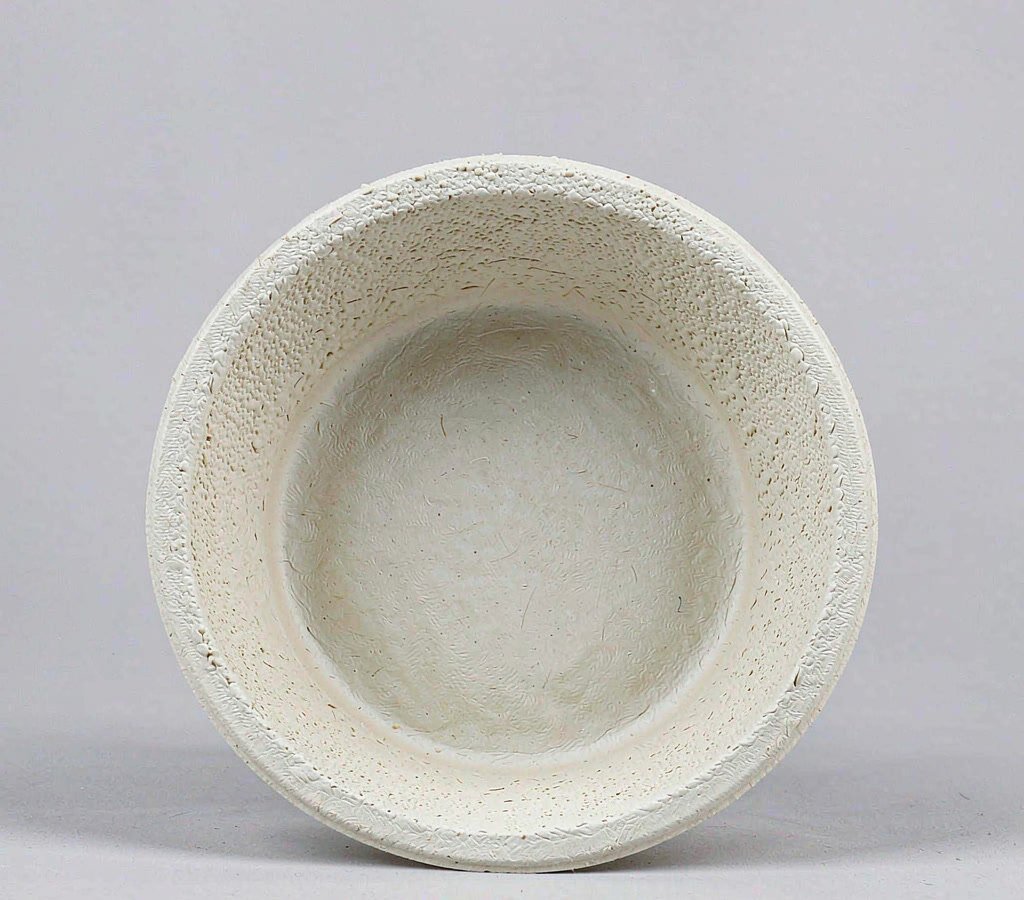
PFAS in compostable packaging testing: total-fluorine screening vs targeted testing
Most confusion around PFAS in compostable packaging starts with test language. Two kinds of laboratory work are often discussed as if they were interchangeable. They are not. Each answers a different question, and a careful buyer reads them differently.
Total-fluorine screening
Total-fluorine screening measures fluorine as a broad indicator. Think of it as a screening step, not an identification step. A result can signal that fluorine is present in the sample tested. It does not identify which specific substances are present. Fluorine can also come from sources other than the substances a buyer is asking about. Treat screening results as a prompt for closer reading, not a complete answer.
For PFAS in compostable packaging, ask what a screening report covered. Which sample was tested? Which method did the laboratory use? How did the laboratory itself describe the result and its limits? If a supplier presents a screening result as if it identified, or excluded, every individual substance, ask for that reading in writing. A careful laboratory report will usually be more precise than a sales summary of it.
Targeted PFAS testing
Targeted testing looks for a defined list of specific substances. The value of the report depends on that list. A targeted report can only speak about substances it covered, not substances outside its panel. So the panel itself is part of the evidence. Ask which substances were included, which method was used, and how the laboratory reported substances that were not detected.
Neither approach should be oversold. Screening is broad but not specific. Targeted testing is specific but limited to its panel. Buyers dealing with PFAS in compostable packaging often need to understand both readings together. They also need the supplier’s own written declaration alongside the laboratory work. A report, a declaration and a clear SKU description support each other. None of them should be stretched beyond what it actually says.
The evidence checklist for PFAS in compostable packaging: what to request per SKU
Use the table below as your working checklist for PFAS in compostable packaging. Send it to any supplier, for any item, before you place an order. Keep the replies together, in one file per SKU.
| Evidence to request | What it should show | Pause and ask if |
|---|---|---|
| Written supplier declaration for the SKU | The item name, its material description, and the supplier’s position on added treatments for that item | It covers a whole company or range, with no SKU named |
| Description of how grease resistance is achieved | Whether resistance comes from fibre and pressing, an added treatment, or both, for that item | The answer is only a trade word like treatment or coating |
| Total-fluorine screening report, where available | The sample tested, the laboratory, the method used, the date, and the result as the laboratory states it | It is presented as proof about every individual substance |
| Targeted test report, where available | The list of substances covered, the method, the laboratory, the date, and the sample description | The substance list is missing, so the scope cannot be judged |
| Link between report and shipped item | A sample description that clearly matches the SKU, format and material you plan to import | The report names a different item, material or supplier |
| Change notification commitment | How the supplier will tell you if material, treatment or production route changes for that SKU | There is no route for learning about a change after approval |
Notice what this checklist for PFAS in compostable packaging does not do. It does not ask for one headline document and stop there. A declaration without laboratory support is only a statement. A report without a clear SKU link is only a sample result. A result without a date or method cannot be weighed properly. Buyers need the set, read together.
Keep PFAS evidence separate from your certification file. Our wider certifications overview explains what common tableware certifications cover. Our own tableware is certified to FDA and LFGB food-contact requirements and to EN 13432, with production under ISO 9001. Those documents answer food-contact and compostability questions. They are a different file from PFAS evidence for a specific SKU, so do not let any supplier merge the two into one vague assurance.

What a credible PFAS in compostable packaging report looks like
A credible report is boring in the best way. It identifies itself clearly and limits itself honestly. Check these points before you file any report as evidence.
- The laboratory is named, with contact or accreditation details you can check.
- The sample is described, matching the item, material and format you plan to import.
- The method is stated, so you can see what the testing was designed to measure.
- The date makes sense. The report is recent enough for the current version of that SKU.
- The scope is honest. The wording states what was covered, and does not claim more than the method can show.
- The result is the laboratory’s own wording. It has not been rewritten into a stronger sales claim.
Warning signs are usually just as clear. Be careful with a report that names no laboratory, or a certificate-style graphic with no method, date or sample description. Be careful when a report for one material is offered as evidence for another, or a verbal assurance never becomes a document. None of these signs proves a problem with the item itself. Each means the evidence, as presented, is not yet usable.
Dates deserve one extra check. Formulations and treatments can change over time, so an old report may describe a different item in practice. Ask whether the tested sample matches current production for that SKU. Ask again when you reorder after a long gap.
Questions to ask any supplier about PFAS in compostable packaging
Good questions on PFAS in compostable packaging are short, specific and hard to answer vaguely. Put them in your enquiry email, so the answers form part of your record. These questions work with a factory, a trader or an agent.
- For this exact SKU, how is grease resistance achieved?
- Is any added treatment used on this SKU? If so, what is its role?
- Will you state your answer in a written declaration naming this SKU?
- Which laboratory reports support this SKU, and may we see the full reports?
- For each report, which sample was tested, by which method, and when?
- If targeted testing was used, which substances did the panel cover?
- Has the material or treatment for this SKU changed since the report date?
- How will you notify us if the material or treatment changes later?
Then file the answers with discipline. Keep one folder per SKU, not one folder per supplier. Save the declaration, the full reports and your email thread together, and note which order each file supported. If a customer asks a year later, you should find the evidence in minutes.
Re-check at the moments that matter. Ask again when you add a new SKU. Ask again when a supplier changes a specification or a production route. Ask again when your market’s requirements change. PFAS in compostable packaging is not a question you settle once for a whole range. It is a per-SKU habit that you repeat, calmly, at each of those moments.
FAQ: PFAS in compostable packaging
What evidence should I request for PFAS in compostable packaging?
Request a set, per SKU. Ask for a written supplier declaration naming the item, and for how grease resistance is achieved for that item. Ask for the full laboratory reports behind any claim, with sample, method and date visible. Then check the sample description against the item you plan to import. One document alone rarely answers the whole question.
Is total-fluorine screening the same as PFAS testing?
No. Total-fluorine screening measures fluorine as a broad indicator. It does not identify individual substances on its own. Targeted testing looks for a defined list of specific substances. Its value depends on which substances the panel covered. Read each report for what its method can actually show. Ask the laboratory or supplier to explain the scope in writing if it is unclear.
Does a compostability certificate prove anything about PFAS?
Not on its own. A compostability certificate answers a compostability question for the item it names. Food-contact documents answer food-contact questions. PFAS evidence is a separate file, built from declarations and laboratory reports for the exact SKU. Keep the files separate, and do not let one document stand in for another.
Why must reports be requested per SKU, not per supplier?
Because items differ. Pulp, pressing, treatments and intended use can vary between a bowl, a plate and a box from the same factory. A report describes the sample that was tested, not everything a supplier sells. If the report does not clearly match your SKU, treat it as background only. Ask for evidence that names, or clearly covers, your item.
What should I do if a supplier offers only a verbal assurance?
Ask for it in writing, naming the SKU, and ask which reports support it. A supplier may need time to gather documents, and that alone is no warning sign. An assurance that never becomes a document is different. You cannot pass a conversation to a retailer or regulator as evidence. Pause the claim, not necessarily the relationship, until the file exists.
Start with samples, not a container. If PFAS in compostable packaging is on your checklist, build the evidence file at sample stage, SKU by SKU. Tell us which items you are considering, and we will dispatch free samples within 3 days. Reach us on WhatsApp +86 18733012158 or through our contact page. Ask us for the documentation for the specific items you plan to import. Hebei Daoxiang Eco Tableware Technology Co., Ltd.