— BUYING GUIDES
Bagasse Bowls Wholesale: Choosing Soup, Salad and Noodle Bowls That Hold Up
8 November 2026 • Buying Guides • 5 min read
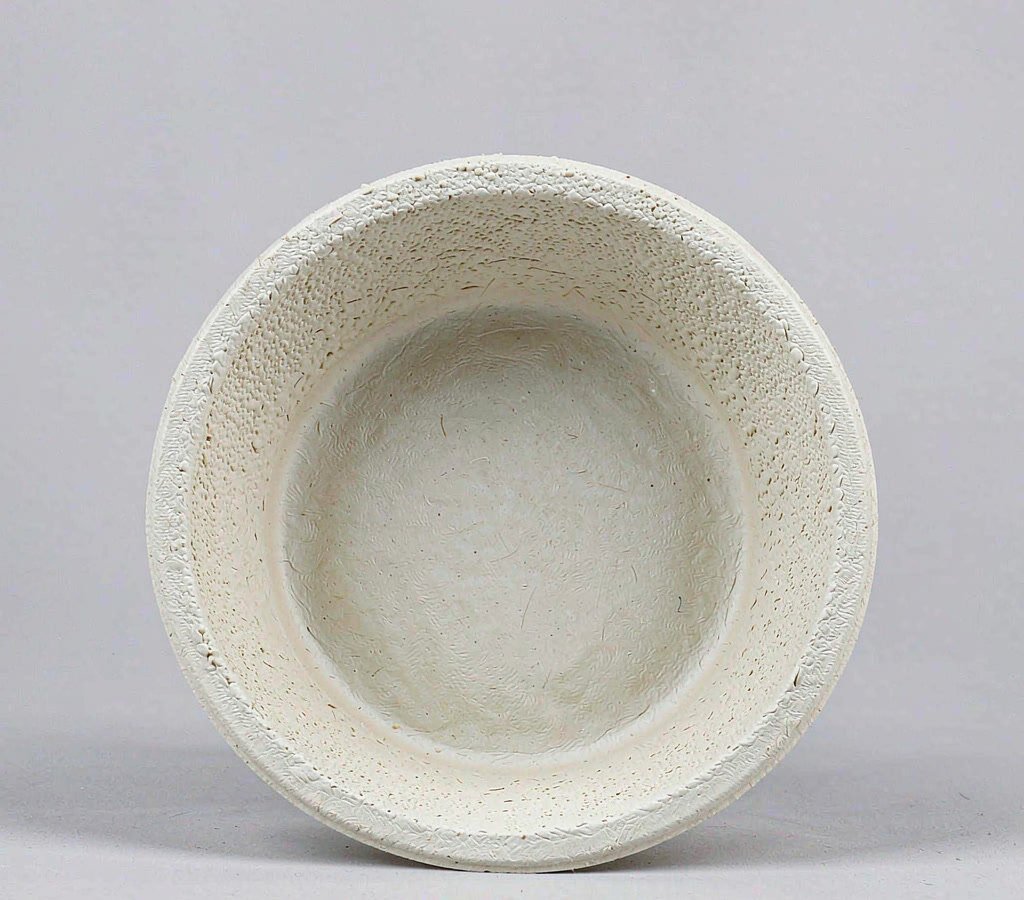
Most bowl problems do not show up in a product photo. They show up twenty minutes into service, when a soup bowl has softened at the rim, a lid no longer sits flat, or a delivery order arrives in a damp bag. If you buy bagasse bowls wholesale, the decision is therefore less about how a bowl looks and more about how it behaves with hot liquid, oil, stacking and transport.
This guide works through the choices that matter when you buy bagasse bowls wholesale: which capacity bands suit which dishes, how to check fibre lid fit, and what hot soup does to moulded fibre. It also covers rigidity for takeaway versus dine-in, how to test samples for leaks and oil strike-through, and how ordering works once you have a shortlist.
Bagasse is the fibre left after sugarcane juice extraction, pressed into a rigid, compostable moulded shape. It sits in a different class from thin paper bowls. The wall is denser, the rim holds its shape, and the bowl can be lidded and stacked for takeaway.
What buyers actually need from bagasse bowls wholesale
Wholesale buyers usually approach bowls in one of three ways. Importers and distributors buy range: a family of sizes covering soup, salad, noodle and rice dishes, consistent across repeat orders. Foodservice wholesalers buy for resale to restaurants and caterers, so presentation and complaint rates matter. Chains and contract caterers buy for a defined menu, so one or two sizes carry almost all the volume and must never vary.
The route differs, but the criteria for bagasse bowls wholesale are shared. The bowl must keep its rigidity while the food is being eaten, not just while it is served. Lids must fit the same way in the last carton as in the first. And the supplier’s moulds must be stable, so the bowl approved from samples is the bowl that arrives in production. The rest of this guide follows that order: capacity, lids, heat and rigidity, testing, ordering.
Start with capacity: match the bowl to the dish
Capacity is where most selection mistakes happen: buyers order the size they have always ordered instead of the size the dish needs. Too small leaves no headroom for liquid movement; too large makes a normal portion look mean and raises cost per serve. When comparing bagasse bowls wholesale, think in the common capacity bands buyers work with, not single sizes.
As a general market pattern — not any one factory’s catalogue — soup portions sit in the smaller bands, salads and poke-style dishes in the mid bands, and noodle soups and large rice bowls in the upper bands. The table summarises the working logic.
| Dish type | Common capacity band buyers look at | What to prioritise |
|---|---|---|
| Side soup, miso, small starter portions | Small band (single-serve starter sizes) | Rim rigidity, comfortable handling when hot |
| Standard soup portions, chowders, stews | Lower-mid band | Wall strength with liquid, lid fit for takeaway |
| Salads, poke, grain and Buddha bowls | Mid band, wider and shallower profile | Presentation, wide opening, neat stacking |
| Noodle soup, ramen, pho-style dishes | Upper band | Depth, headroom so broth does not slosh, heat tolerance |
| Sharing and large rice or curry portions | Largest common band | Base stability, resistance to softening under weight |
Two details matter more than headline capacity. First, fill line versus brim capacity. A bowl rated by brim volume works well below that number in service. Soups also need headroom of roughly a finger’s width below the rim, so the lid does not sit in the liquid. Second, profile: a deep, narrow bowl suits noodle soup and holds heat, while a wide, shallow bowl of the same volume suits salads and photographs better on delivery platforms. When requesting bagasse bowls wholesale samples, ask for both profiles in your target band and judge them with your actual dishes, at your actual portions.
Depth affects logistics too: deeper bowls nest less efficiently, while shallower bowls stack tighter but give liquid more surface to move across. For high-volume soup service, decide that trade-off deliberately rather than by default.
Lids: the fit check that decides takeaway quality
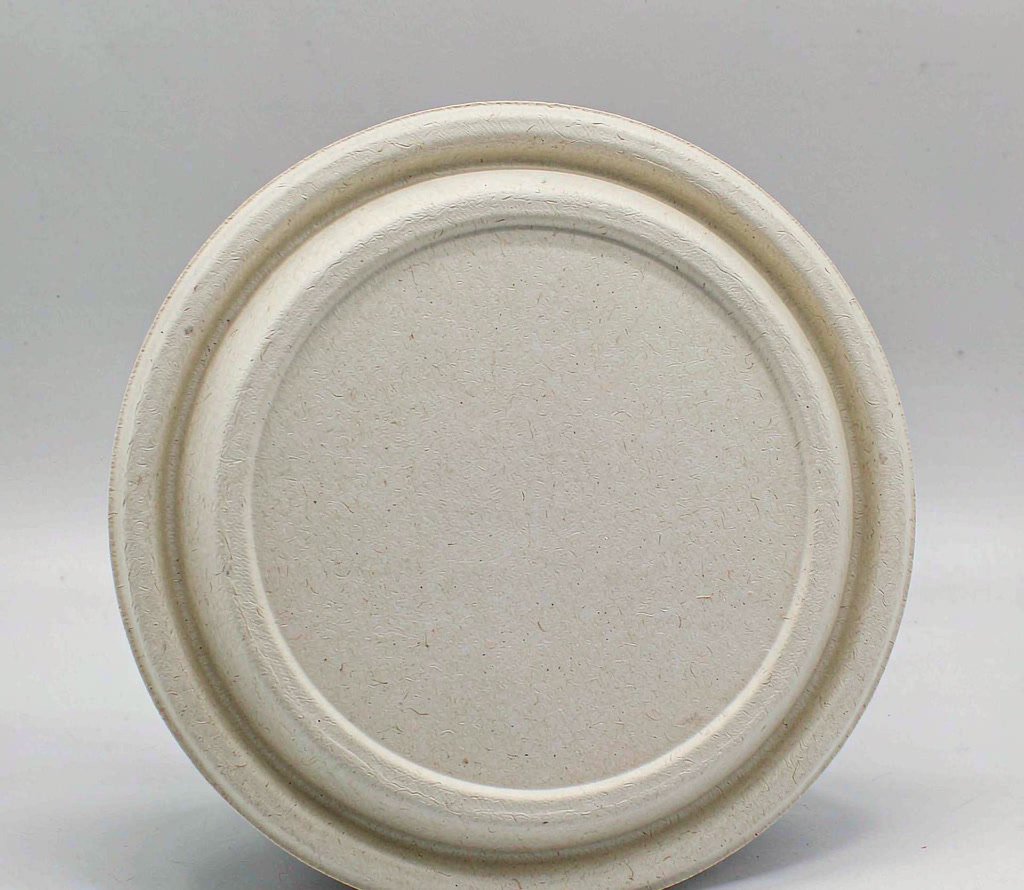
In bagasse bowls wholesale for takeaway and delivery, the lid matters as much as the bowl. Bagasse bowls are commonly paired with moulded fibre lids from the same material family, so bowl and lid stay in one material instead of mixing fibre with plastic. A fibre lid does not snap on like plastic; it works by close fit on the rim — which makes fit a testable property, not a matter of opinion. Run these checks on samples:
- Seating: the lid should sit evenly all the way round with no rocking. Press gently at opposite points; if one side lifts, the pairing will leak in a bag.
- Rim contact: run a finger around the join, feeling for a continuous contact line rather than gaps where the lid bridges a low spot.
- Tilt test: fill to your working fill line with water, apply the lid, and tilt to about 45 degrees over a tray. A good fit weeps slowly or not at all; a poor fit runs from one point immediately.
- Stack pressure: stack three filled, lidded bowls for fifteen minutes, then check whether lower lids have shifted or rims have deformed.
- Re-fit after heat: steam changes fibre slightly. Lid a bowl of hot soup, wait ten minutes, then remove and refit the lid — it should still seat cleanly, as a customer at home will do.
One specification point in bagasse bowls wholesale: bowl and lid are a matched pair from the same mould set. If you change supplier or size, re-run the fit checks. Do not assume existing lid stock transfers. Most “the lid doesn’t fit” complaints trace back to a pairing that was never tested as a pair.
Hot soup, heat and the rigidity your service actually needs
Moulded bagasse handles hot food well in normal service — soups, noodles and curries are its home ground — but buyers should understand the mechanism. Fibre absorbs a small amount of moisture over time, so a bowl holding near-boiling liquid for an extended period will gradually feel less rigid than one holding a salad. The variables are temperature, contact time, and whether the bowl is held, stacked or bagged while hot. For detailed temperature ranges, our guide on plant fibre tableware temperature performance covers the data. The takeaway here is simple: test at your real holding time, not serving time. That matters most for slow delivery routes, buffet holding or reheating in the bowl.
Channel matters just as much. A dine-in bowl lives a short, gentle life: filled at the pass, carried to a table, emptied, cleared. A takeaway bowl is filled, lidded, bagged, stacked and transported — sometimes on a scooter — then eaten from later, often in the hand. If you source bagasse bowls wholesale for mixed channels, specify for the harder life: a bowl that passes takeaway always passes dine-in; the reverse is not true. Three checks separate the two:
- Hand-hold test: fill with hot liquid and hold in one hand, as a customer would. Noticeable flex at serving temperature is a warning sign for delivery.
- Spoon pressure: press firmly with a spoon against base and wall at working temperature and feel whether the base drums or gives — noodle and soup bowls take this pressure at every meal.
- End-of-meal test: leave a filled bowl for your longest realistic service or delivery window, then repeat the hand-hold test. Fibre still firm after that dwell time is fibre you can reorder with confidence.
Base design plays a part too. A defined foot ring stands more stably when hot and lifts the hottest part of the base off the table. When comparing bagasse bowls wholesale samples, fill them with hot water and pick them up — grip comfort reveals wall thickness distribution that a specification sheet will not.
Test samples like a buyer, not a browser
Samples are where bagasse bowls wholesale is won or lost, and a look-and-feel inspection is not enough. Our walkthrough of what to check when testing tableware samples sets out the general method. For bowls, add a liquid protocol, because liquid behaviour is what your customers will judge:
- Leak dwell test: fill with water at serving temperature and leave for 30–60 minutes on white paper or card. A damp ring or softened base patch shows exactly where the wall or base is weak.
- Oil strike-through test: fill with a hot, oily liquid — curry or a soup with surface oil — and hold for your realistic service time. Check the outside wall and base for oil shadow reaching the outer surface; that is what reaches customers’ hands and bags.
- Lid-under-load test: combine the fit checks above with movement: lidded, bagged, carried, stacked in a box. Bowls rarely fail standing still; they fail in motion.
- Repeat across the set: test several bowls from the sample batch, not one hero piece. Consistency across pieces reveals mould condition and process control — which is what you are really buying.
- Cold check: if chilled items are in scope, refrigerate filled bowls and inspect the base afterwards; condensation softening matters for prep-ahead service.
Write results down per size and profile, pass or fail against your own conditions. That sheet becomes your specification when you order, and your reference if a shipment is disputed.
Ordering bagasse bowls wholesale: MOQs, samples and lead times
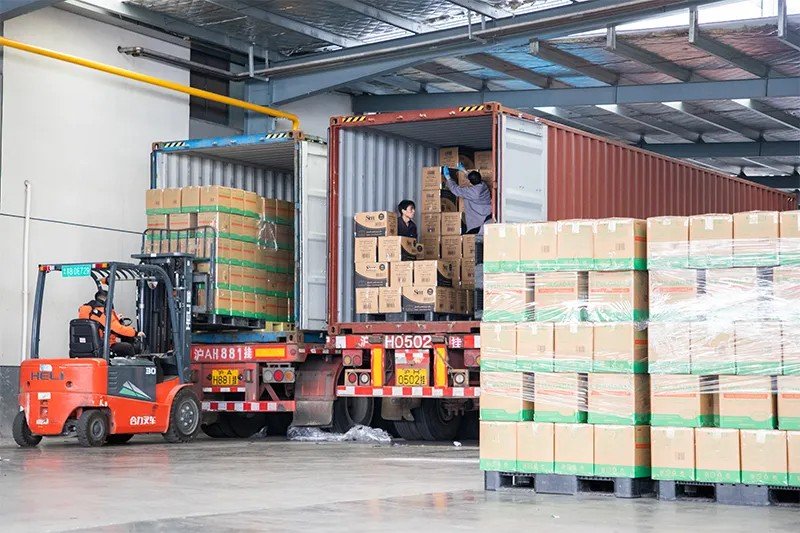
Once the shortlist is set, the commercial path is straightforward. At Hebei Daoxiang Eco Tableware Technology Co., Ltd., our own factory in Hebei, China, bowls sit within 126 products across six collections, including the standard tableware collection, where most bowl lines live. Stock-mould items carry a minimum order of 5,000 pieces per SKU; custom shapes start from 20,000 pieces. Samples are sent free within 3 days, and production lead time is 15–20 days. The full breakdown is in our guide to MOQ, samples and lead times, so it is not repeated here.
Two planning points for bagasse bowls wholesale in particular. First, sequence your range: confirm the one or two highest-volume sizes first, because that is where a specification error costs most. Second, align the compliance file with the order, not after it. Food-contact tableware should be supported by the relevant documentation. In our case that means FDA and LFGB food-contact compliance, EN 13432 compostability certification and an ISO 9001 quality system. Our overview of eco tableware certifications explains what each document covers. Use it to check certificates against the specific bowls you are buying, rather than collecting logos.
Finally, keep your approved samples and test sheet. Bowl programmes are repeat business; with the reference kept, reorders become verification instead of a fresh selection.
Frequently asked questions
Which bowl sizes should a new buyer sample first?
Start from your menu, not a catalogue. Pick the band your highest-volume dish sits in — soup, salad or noodle — and sample two profiles in that band, plus one size either side. Most bagasse bowls wholesale ranges settle on two to four SKUs once the core dish is right; extra sizes can follow later.
Do fibre lids seal as tightly as plastic lids?
They work differently. A moulded fibre lid seals by close rim fit rather than a snap or film seal. It handles normal takeaway and delivery well when the pairing has been fit-tested. But it is not a liquid-tight closure for turning a full soup bowl upside down. The tilt and stack tests above show whether the fit suits your delivery distances.
How long can a bagasse bowl hold hot soup before softening?
In normal service — filling, serving and eating within the usual window — a moulded bagasse bowl stays rigid and comfortable to hold. For bagasse bowls wholesale, softening is temperature multiplied by time. Dishes held hot for long periods should therefore be sample-tested at your real holding time. Our temperature guide, linked earlier, sets out the ranges in detail.
Can bagasse bowls be custom printed or embossed?
In bagasse bowls wholesale generally, customisation usually means embossing in the mould or printing on outer surfaces. Fully custom shapes are a separate route with a higher minimum — 20,000 pieces, against 5,000 for stock moulds. Raise branding at enquiry stage, so sampling tests the finished article, not a plain stand-in.
What should I check on certificates for bowls?
Check that the documents name the material and product type you are buying. Check that the standards match your market: FDA and LFGB for food contact, and EN 13432 if you will make compostability claims in Europe. And check that the certificates are current. Documentation for a different product in the same material is not the same as documentation for your bowls.
Ready to test bowls in your own kitchen? Send us your dish list and the sizes you currently use, and we will suggest which items to sample. Samples are free and sent within 3 days. Run the leak, oil and lid-fit tests in this guide with your own food, before committing to a production order of bagasse bowls wholesale. Message us on WhatsApp at +86 18733012158, or send the details through our contact page for a quotation and a sample plan.