— BUYING GUIDES
Bagasse vs Cornstarch Tableware: Heat, Strength and Composting Compared
November 2026
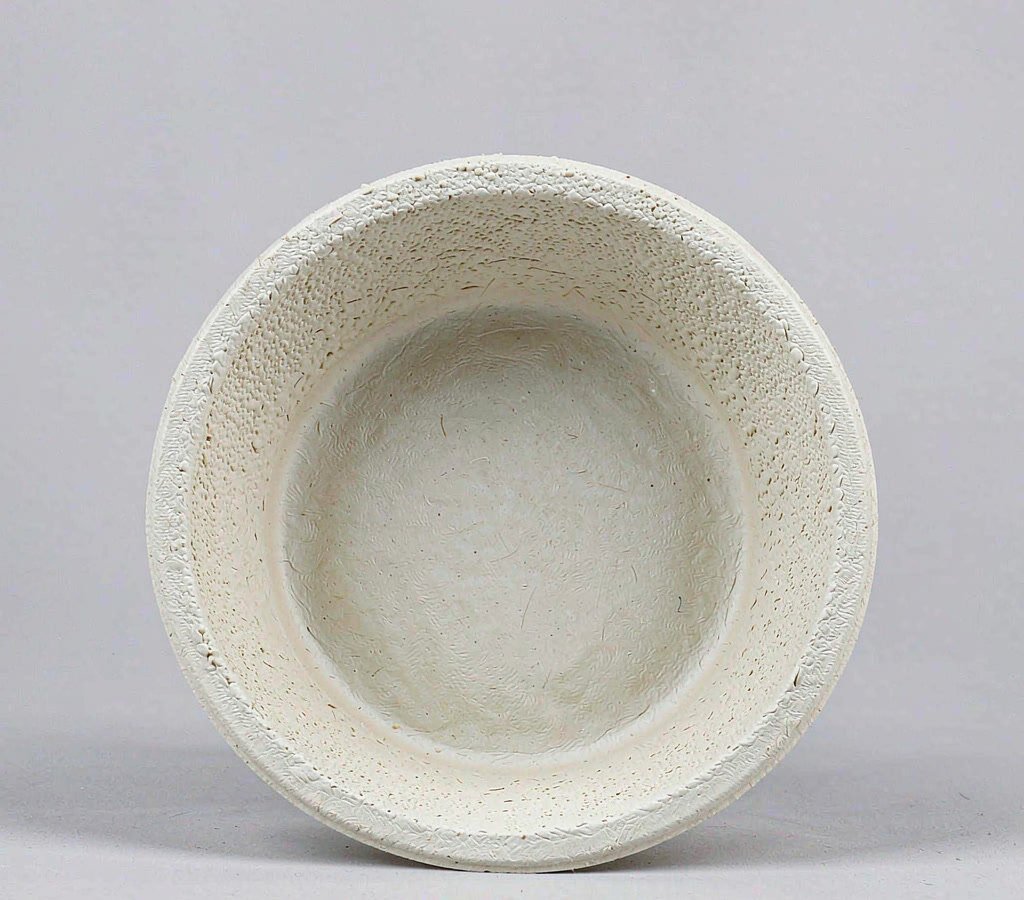
The shortest honest answer in any bagasse vs cornstarch tableware comparison is this. Bagasse tableware is moulded plant fibre, pressed into shape. Most products sold as cornstarch tableware are moulded resin, made from a starch-based material that is often blended. They can look similar in a catalogue photo. They behave differently with heat, wet food and composting. This guide explains both materials in plain terms, then shows which claims to verify, SKU by SKU, before you order either one.
We write this from the factory side. Hebei Daoxiang Eco Tableware Technology Co., Ltd. runs its own moulding plant in Hebei, China. We produce sugarcane bagasse plant-fibre moulded tableware, with 126 items across six collections. We do not make cornstarch tableware, and we do not sell it. Our cutlery is paper cutlery and individually wrapped sets only. Buyers ask us about bagasse vs cornstarch tableware every week, because the two are quoted against each other.
What each material actually is in a bagasse vs cornstarch tableware comparison
Most confusion in this category starts with names. One material is named after its raw material and its process. The other is often named after only one ingredient in its recipe. Understanding that difference explains most of the performance gap.
Bagasse: fibre, water and pressure
Bagasse is the fibrous residue left after sugarcane stalks are crushed for juice. Tableware makers wash and pulp that fibre, then press it in heated moulds. The finished plate or bowl is fibre all the way through. Cut one in half and you see pressed fibre, not a solid polymer wall. That structure is why bagasse feels matte and slightly textured.
It is also why thickness and pressing quality matter so much. A well-pressed wall is rigid. A thin, loosely pressed wall flexes and softens faster.
Cornstarch-labelled products: a starch-based resin, usually blended
Products marketed as cornstarch tableware are rarely, if ever, pressed from pure corn starch alone. Pure starch is brittle and absorbs water quickly. On its own, it cannot hold a hot, wet meal. Suppliers therefore process starch into a mouldable resin. That resin is commonly blended with other polymers, fillers or processing aids.
The exact recipe varies by supplier and by SKU. Some blends contain a high share of starch. Others use starch as one component among several. Reputable suppliers will state the composition plainly when asked. The buying problem is not the blending itself. Blending is how this material class is made usable. The problem is a label that names one ingredient and says nothing about the rest.
So treat the word cornstarch as a starting question, not a specification. In any bagasse vs cornstarch tableware sourcing conversation, ask two things first. What share of the finished product is actually starch? What makes up the remainder? The answers decide heat behaviour, composting route and labelling. They also decide what you may print on your own packs. A supplier who repeats only the word cornstarch has not yet given you a specification.
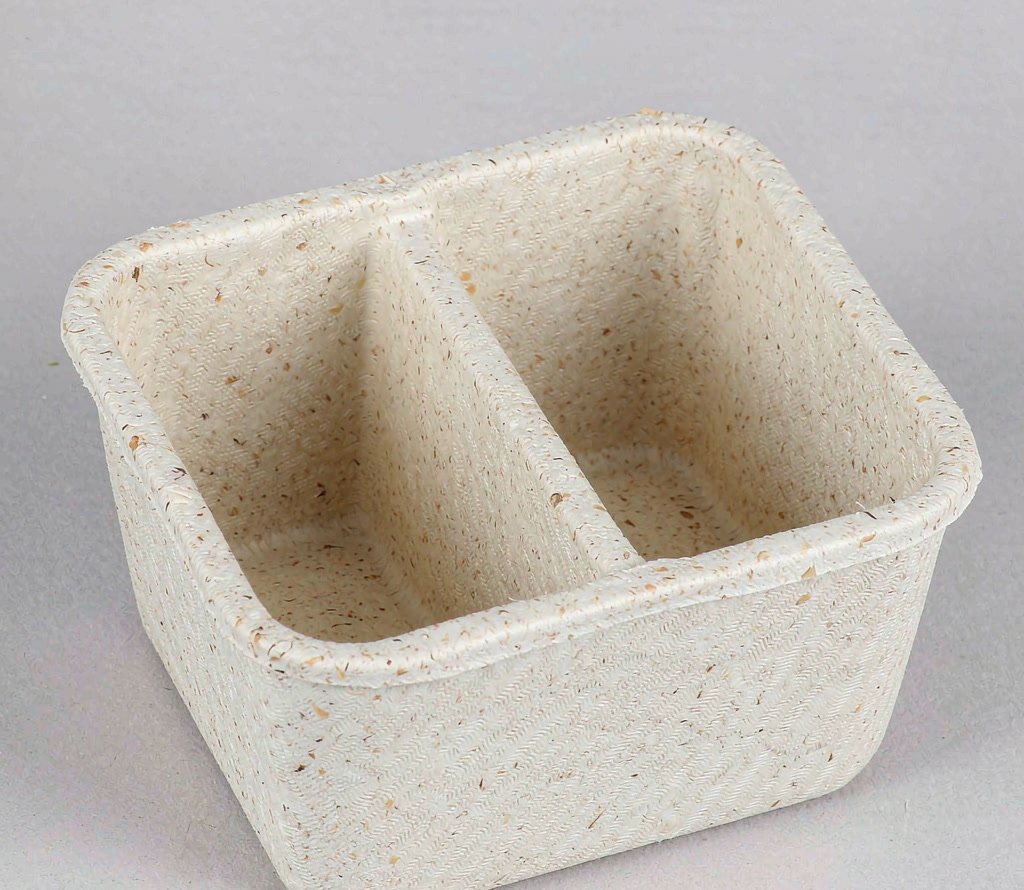
Head-to-head: bagasse vs cornstarch tableware at a glance
The table below summarises bagasse vs cornstarch tableware as buyers actually feel it in service. Performance figures are common market ranges buyers typically source, not specifications for any single product. Always confirm the figures for the exact SKU you plan to import.
| Point of comparison | Bagasse (moulded fibre) | Cornstarch-labelled (starch-based resin) |
|---|---|---|
| What it is | Pressed sugarcane fibre, fibre throughout the wall | Moulded resin in which starch is one component, often blended |
| How it is formed | Pulp pressed in heated moulds | Resin moulded or formed much like a plastic item |
| Heat in normal service | Commonly sourced for hot food and drinks; many listings cite use up to around 100 °C for short service | Commonly more heat-sensitive; many listings cite lower limits, often around 70–85 °C, varying by blend |
| Wet and oily food | Holds sauces and oils well over a normal meal when well pressed | Varies widely by blend; some items soften or warp with hot, wet food |
| Feel and rigidity | Matte, fibrous, rigid when the wall is thick enough | Smoother, more plastic-like; rigidity depends on wall thickness and blend |
| Typical formats | Plates, bowls, clamshells, trays, cups and lids | Often cutlery, cups, plates and trays; range varies by supplier |
| Composting route | Fibre products are commonly certified for industrial composting; check the exact SKU | Depends entirely on the full blend; check certification for the exact SKU |
| Key document to request | Food-contact and composting documents naming the SKU | A full composition declaration, plus documents naming the SKU |
Read the table as a map, not a verdict. A well-made resin item can outperform a badly pressed fibre item. That is why the bagasse vs cornstarch tableware decision belongs at SKU level. Compare one named plate against one named plate. Test both with the same food, at the same temperature, for the same time.
Heat and strength in bagasse vs cornstarch tableware
Heat is where buyers notice the gap first. Bagasse fibre tolerates hot food well for normal service. Starch-based resin is usually less forgiving. Many cornstarch-labelled items carry lower heat guidance than fibre items. Hot soup, steaming rice or a freshly fried serving can soften or distort a resin wall. The exact limit depends on the blend, so a generic category claim means little. Ask for the stated limit for the exact SKU. Then test below that limit, not above it.
Our separate plant-fibre tableware temperature guide explains how to run heat tests on fibre samples. The same protocol works for this comparison. Fill both candidates with the same hot, wet dish. Leave them for a full service period. Check the base for softening and the rim for distortion. Carry each item one-handed, loaded, as a customer would.
Strength follows a similar pattern. A bagasse plate gains rigidity from its pressed fibre wall and rim design. A resin item gains rigidity mainly from wall thickness and shape. Thin resin cutlery and plates can feel flexible, especially once warm. Judge neither material by a dry, empty sample at room temperature. Judge both warm, loaded and timed. That habit removes most surprises from a bagasse vs cornstarch tableware order.
One more caution applies to both sides. Microwave and oven claims vary widely across the market. Some items are sold for short reheating only. Others carry no heating claim at all. Never transfer a heating claim from one SKU to another. If your customers reheat food in the packaging, write that use into your enquiry. Then test it on samples before printing anything on a pack.
Composting claims in bagasse vs cornstarch tableware: verify per SKU
Composting is the second area where labels outrun specifications. A fibre product and a resin product can both carry compostable language. They may still follow different routes, on different evidence. Your job is to match each claim to a document for the exact item.
For bagasse, the claim rests on the fibre itself. Moulded fibre is plant material, so industrial composting is its natural route. Our own tableware is certified to FDA and LFGB food-contact requirements and to EN 13432, with production under ISO 9001. That covers our bagasse SKUs only. Every other supplier must evidence its own items the same way.
For cornstarch-labelled products, the claim rests on the whole blend. Starch itself breaks down readily. The other components decide whether the finished item does. A blend can change the composting route, the timeframe or the certification outcome. So a certificate for one resin SKU proves nothing about the next one. It may use a different recipe from the same factory.
Ask which standard the claim refers to. Ask whether the certificate names the exact SKU and formulation. Ask whether the route is industrial composting, home composting or neither. Put the answers in writing before repeating any claim downstream.
This discipline protects your own labelling. If you print compostable on a retail pack, you inherit the claim. Retailers will ask you for the evidence, not your supplier. A careful bagasse vs cornstarch tableware file, built SKU by SKU, is what lets you answer. Our wider explainer on pulp-moulded versus plastic tableware covers how moulded fibre compares with conventional plastic. The same habit applies there: claim only what a document for that SKU supports.
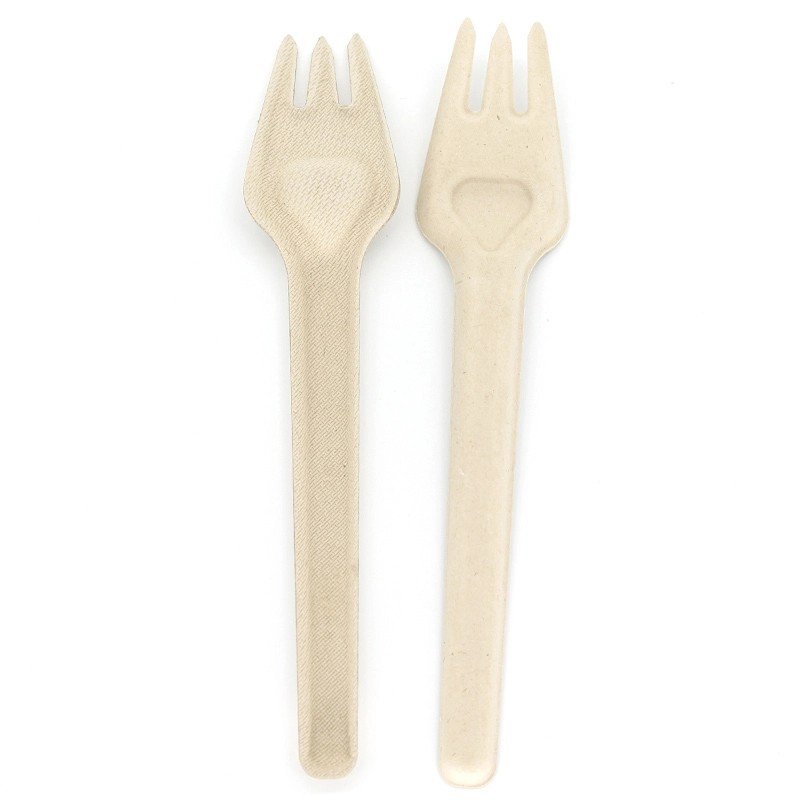
Formats, cutlery and range planning
Range planning is the third difference in bagasse vs cornstarch tableware buying. Bagasse suits broad tableware programmes. Plates, bowls, clamshell boxes, compartment trays, cups and lids all come from the same moulding process. A distributor can build a matched range from one material and one factory. That simplifies documents, packing and reordering.
Cornstarch-labelled ranges are often narrower and more cutlery-led. Resin moulding suits forks, knives and spoons, plus some cups and plates. If a customer asks for a fully matched set, check which pieces come from which material. Mixed-material sets are common, and there is nothing wrong with selling one. The problem starts when the whole set inherits one material claim. A bagasse plate does not make a resin fork a fibre product. Label and document each piece for what it is.
Cutlery deserves one clear statement from our side. Daoxiang does not sell cornstarch cutlery, CPLA cutlery or wooden cutlery. Our cutlery is paper cutlery, plus individually wrapped sets that pair it with other service items. If your range plan needs resin cutlery, you will source that piece elsewhere. When you compare a bagasse vs cornstarch tableware quotation, check the cutlery line separately. It is the line where material descriptions drift most often.
Cost comparisons need the same care. Headline unit prices mislead here. Resin and fibre items differ in weight, packing density and breakage rates. Freight often dominates the landed cost of light, bulky tableware. Compare full landed cost per usable piece, after breakage, for the same format. The cheaper line is not always the cheaper range.
How to verify any bagasse vs cornstarch tableware claim before you order
Verification is a short list of requests and tests, applied to every SKU. Run it for fibre items and resin items alike. A good supplier in either material will recognise the list.
- Request a composition declaration. For resin items, ask for the starch share and the remaining components. For fibre items, ask whether anything is blended into the pulp.
- Match certificates to SKUs. Each food-contact and composting document should name the item, or clearly cover it. A company-level certificate is not a product document.
- Confirm the composting route. Industrial, home or neither, stated in writing for that SKU. Check that your customers actually have access to that route.
- Test heat with real food. Use your hottest, wettest dish, not water alone. Time the test for a full service period.
- Test load and carry. Load the item, carry it one-handed, and stack filled items if your customers do.
- Check the claim wording. Compare the supplier’s claim with the document behind it, word by word. Print only what the document supports.
Ordering bagasse from us then follows our standard pattern. The minimum is 5,000 pieces per SKU from existing moulds. Custom shapes need a new mould and start at 20,000 pieces. Free samples are dispatched within 3 days, and production runs 15–20 days after order confirmation. Use the sample stage to run the tests above. Keep one approved sample with its documents as your reference, and compare production stock against it on arrival.
FAQ: bagasse vs cornstarch tableware
Is cornstarch tableware made only from cornstarch?
Usually not. Most items sold under that name use a starch-based resin. The resin is commonly blended with other components so it can be moulded and resist moisture. The starch share varies by supplier and SKU. Ask for a written composition declaration for the exact item before repeating any material claim.
Which handles hot food better in a bagasse vs cornstarch tableware comparison?
Bagasse usually handles hot food better over a normal service period. Common market ranges put fibre items at higher heat guidance than most starch-resin items. Blend and wall thickness can narrow or widen that gap. Treat every figure as a range to verify. Test both candidates with your own hottest dish before deciding.
Is cornstarch tableware home compostable?
Do not assume so. Home composting is a specific claim that needs its own evidence. Many compostable products in both materials are certified for industrial composting only. Ask which route the certificate covers for that exact SKU. Then label your packs with that route and no wider claim.
How can I verify the composition of a cornstarch-labelled product?
Ask the supplier to state the composition in writing, per SKU. Request the food-contact and composting documents for that item, and check they match the declared formulation. If the recipe changes, the documents should be re-confirmed. A supplier who cannot describe the non-starch share has not given you a verifiable product.
Does Daoxiang sell cornstarch tableware or cornstarch cutlery?
No. We make bagasse plant-fibre tableware only. Our cutlery is paper cutlery and individually wrapped sets. If a bagasse vs cornstarch tableware range plan needs resin cutlery or resin tableware, that part must come from another supplier.
Start with samples, not a container. If you are weighing bagasse vs cornstarch tableware for a new range, test the bagasse side on your own food first. Tell us which plates, bowls or trays you are considering, and we will dispatch free samples within 3 days. Reach us on WhatsApp +86 18733012158 or through our contact page. Ask us for the documentation for the specific items you plan to import. Hebei Daoxiang Eco Tableware Technology Co., Ltd.