— BUYING GUIDES
Bagasse vs Paper Plates and Containers: A Buyer’s Comparison
November 2026
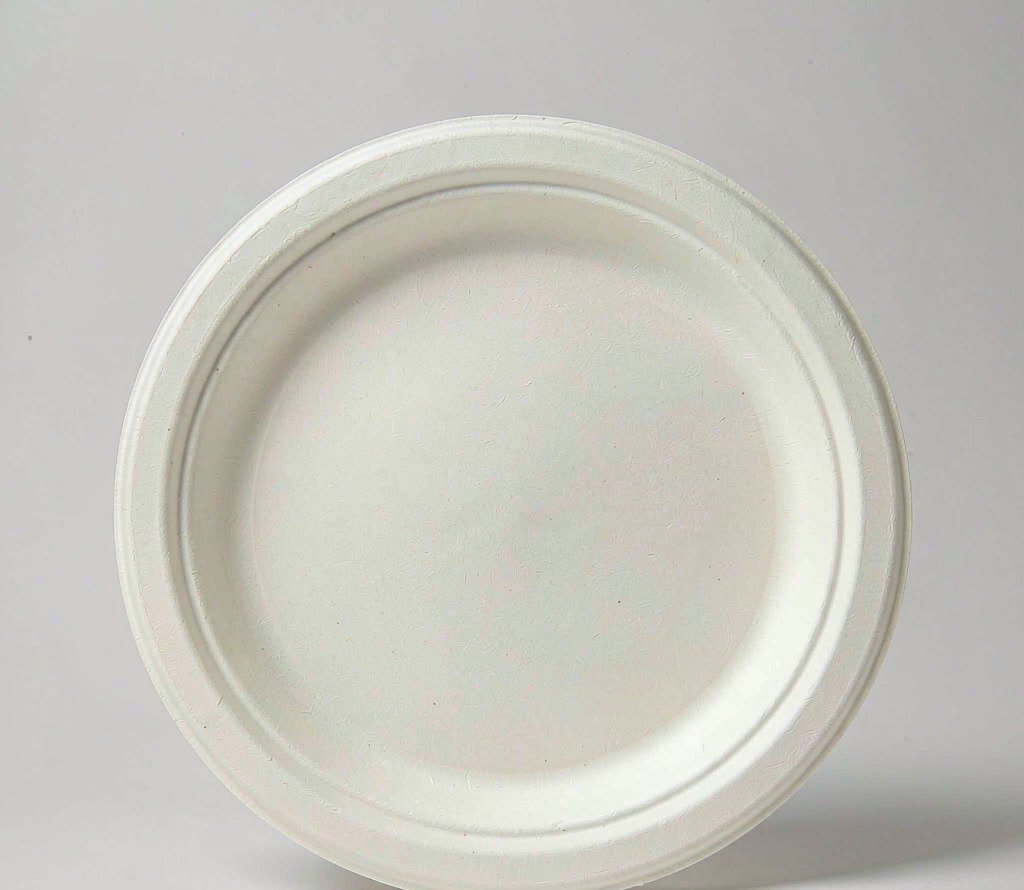
The bagasse vs paper tableware choice looks like a simple fibre-against-fibre decision. It is not. One side is thick moulded fibre that holds liquid through its pressed wall. The other is thin paperboard that usually needs a coating to survive sauce. In most bagasse vs paper tableware decisions, the food being served settles the argument. This guide compares rigidity, grease and heat behaviour, printing, and end-of-life routes. It ends with side-by-side sample tests you can run before ordering.
We write this from the factory side. Hebei Daoxiang Eco Tableware Technology Co., Ltd. runs its own moulding plant in Hebei, China.
We make sugarcane bagasse tableware — 126 items across six collections. Our only paper products are paper cutlery and individually wrapped cutlery sets. We do not sell paper plates or paper containers, and this bagasse vs paper tableware guide says plainly where paper wins.
Bagasse vs paper tableware at a glance
The table below summarises the bagasse vs paper tableware comparison buyers raise most often. Performance notes describe common market ranges buyers typically source. Treat them as screening notes for a shortlist, not as a specification for any single SKU. Confirm the exact behaviour of each item by testing samples.
| Criterion | Bagasse (moulded fibre) | Paper (paperboard plates and containers) |
|---|---|---|
| Base material | Sugarcane fibre left after juice extraction, pulped and hot-pressed in moulds | Wood-pulp paperboard, formed or folded into shape |
| How it resists liquid | Dense pressed fibre wall; no separate plastic lining in plain moulded items | Usually a surface lining: polyethylene (PE), PLA, aqueous coating, or none |
| Rigidity in one hand | Thick wall, stiff under a full hot serving, forgiving to carry | Thin wall; light plates flex under heavy or wet loads unless board grade is high |
| Grease and wet food | Holds oily and saucy food over a normal meal service when well moulded | Depends on the lining; uncoated board soaks quickly, lined board performs far better |
| Heat and steam | Typically sourced for hot fills and steaming food; fibre does not melt | Lined board tolerates hot fills, but steam softens the board itself over time |
| Printing and branding | Limited: matte fibre surface, best for sleeves, labels and embossing | Excellent: smooth surface takes detailed, full-colour print directly |
| Composting route | Plain moulded fibre is compostable where certified per item | Uncoated and certified compostable-lined items can compost; PE-lined items cannot |
| Recycling route | Not for the paper recycling stream; route with food waste where accepted | Clean uncoated board can be recycled; food-soiled and PE-lined board is often rejected |
| Best-fit uses | Hot, wet and oily meals, compartment service, clamshells and bowls | Dry and light food, printed retail packs, cold and short-service items |
| Key buying check | Pressing quality, wall stiffness and per-item certification documents | Lining type in writing, per-item certification, and local waste acceptance |
Read the table as a routing tool. Many buyers end up stocking both materials, each for different menu items. The mistake is forcing one material across the whole menu.
Construction first: two different ways to make a plate
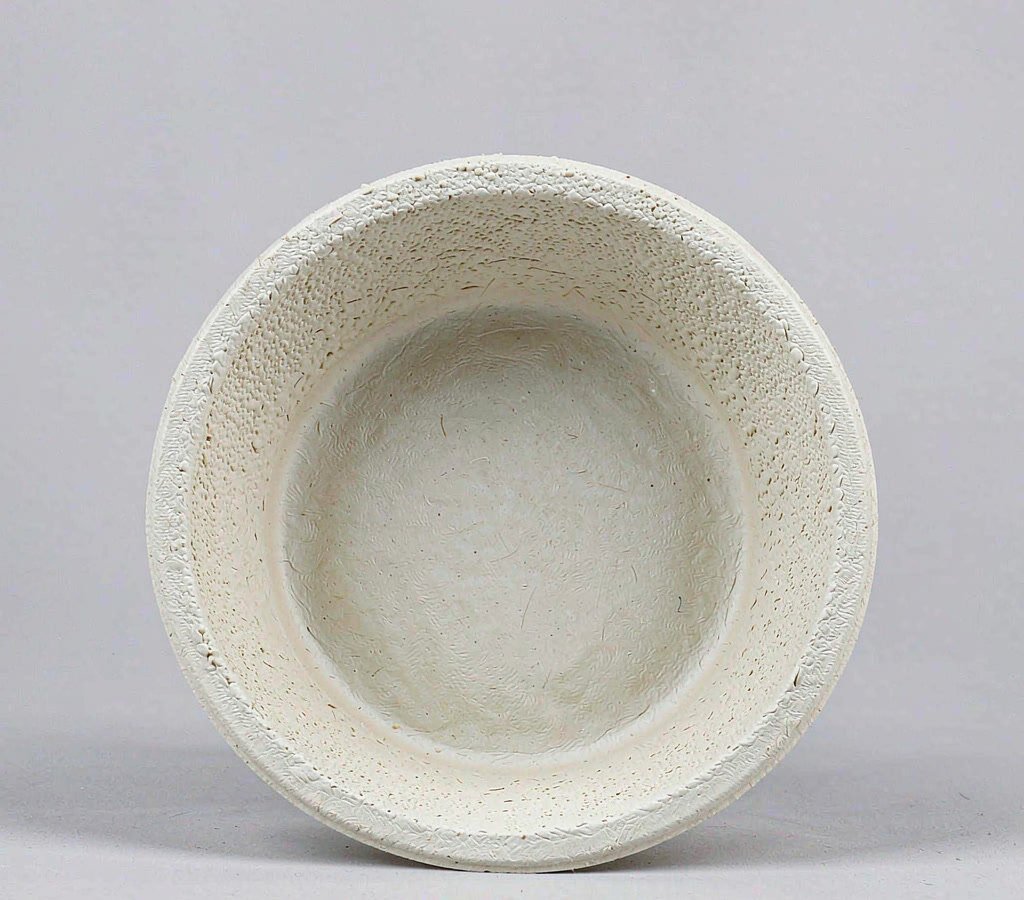
Every later difference in the bagasse vs paper tableware debate starts with construction. Bagasse begins as a wet fibre pulp. The pulp is formed, pressed and dried inside a heated mould. The finished plate is one piece of fibre, with its strength built into the wall itself.
Paper plates and containers start as flat paperboard. The board is cut, formed, folded or pressed into shape. Board alone absorbs water and grease quickly. That is why most food-service paper items carry a lining. The lining, not the board, does most of the liquid-resistance work.
That lining is the single most important question on the paper side. PE-lined board uses a thin polyethylene plastic film. PLA-lined board uses a bioplastic film instead. Aqueous coatings use a water-based barrier layer. Each option behaves differently in service and at end of life. A quotation that only says paper tells you almost nothing.
In a serious bagasse vs paper tableware sourcing exercise, ask the paper supplier to state the lining in writing, per SKU. Ask the bagasse supplier about wall thickness and pressing quality instead. If you want the wider forming picture, our overview of pulp moulded vs plastic tableware explains how moulded fibre differs from plastic-style forming.
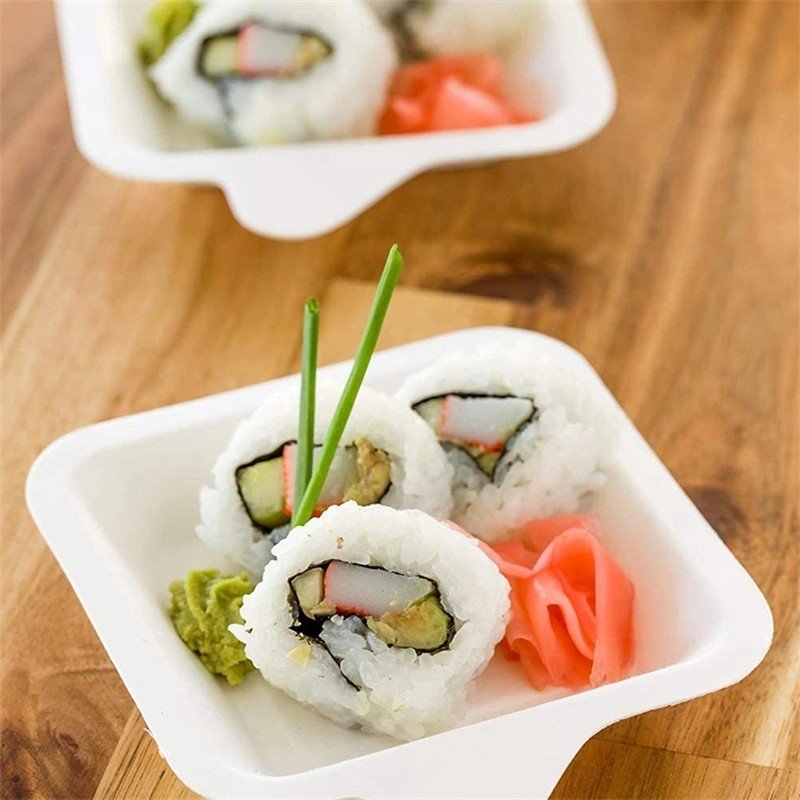
Service performance: bagasse vs paper tableware with hot, wet and oily food
Performance is where the bagasse vs paper tableware gap shows up first for end users. A moulded bagasse plate carries a full, hot serving in one hand with limited flex. A thin paper plate under the same load often needs a second hand, a tray, or a doubled plate. Board grade narrows that gap, but it rarely closes it.
Grease, sauce and soak-through
Bagasse resists grease through fibre density and pressing. A well-pressed plate holds an oily serving for a normal meal without soaking through. A poorly pressed one softens where sauce pools. That is a moulding-quality question, and samples reveal it quickly.
Paper performance splits by lining. Uncoated board darkens and softens fast under oil or sauce. PE-lined and PLA-lined board resist soak-through well during service. Aqueous coatings vary more between suppliers. In any bagasse vs paper tableware test, serve the same oily dish on both and inspect the undersides after a full service period.
Heat, steam and lids
Neither material is ovenware, and both are normally sourced for service, not cooking. Within the common market ranges buyers typically source, bagasse keeps its shape under hot, steaming fills. Short microwave reheating is a common buyer test for both materials, and ratings vary by item. Fibre does not soften with heat the way thin board can once steam reaches it. Lined paper handles a hot fill, but the board under the lining gradually softens with steam and time.
Lids follow the same pattern. Moulded fibre lids give a rigid, stackable closure for bowls and trays. Paper containers often pair with separate plastic or lined-board lids. Check which lid material is actually quoted. A compostable container with a conventional plastic lid is a mixed pack, and your customers will notice.
End of life: the PE-coated paper problem, stated plainly
The hardest part of any bagasse vs paper tableware comparison is disposal. Both materials are often marketed with the same green language. Their real routes out of the bin are very different.
Plain bagasse is a single fibre material. Where an item is certified compostable, it can go with food waste into industrial composting, where schemes accept it. Food residue on the item is not a contamination problem in that route. It is part of the same organic stream.
PE-coated paper is a composite, and that creates the problem. The polyethylene film does not biodegrade. A PE-lined plate or cup therefore cannot be composted as a whole item. Most composting schemes reject PE-lined items outright. They ask for them in residual waste instead.
Recycling is rarely the fallback for PE-lined food service items. The plastic film is bonded to the board, and most paper mills cannot separate it economically. Food residue adds a second reason for rejection. In practice, used PE-lined plates and containers usually end in residual waste, whatever the pack implies.
Other paper variants sit between these poles. Uncoated paperboard can be composted, but it fails early with wet food.
PLA-lined paper needs industrial composting, like other PLA items. Aqueous-coated items depend on the specific coating and certification. So the honest bagasse vs paper tableware question is never just paper or fibre. It is which lining, certified how, and accepted where.
Two checks protect you here. First, ask for the compostability certification for the specific finished item, not the raw material. Second, confirm what your customers’ local waste schemes actually accept. A certified item in the wrong bin still goes to residual waste.
Where paper genuinely wins
A balanced bagasse vs paper tableware assessment has to give paper its real strengths. Paper wins on printing, and it is not close. A smooth board surface takes sharp, full-colour print across the whole item. Bagasse takes sleeves, labels and simple embossing, but not detailed on-item artwork. For retail packs and branded events, that difference decides orders.
Paper also wins on established supply. Paperboard tableware has been stocked by local wholesalers for decades. Buyers can often top up locally at short notice, in small lots, across many sizes. Bagasse supply is more import-led and planned. That means longer replenishment cycles and more forecasting from the buyer.
For dry, light food, paper is often simply enough. Sandwiches, cakes, snacks and cold buffet items do not test rigidity or grease resistance hard. A light paper plate does that job well, and a heavier moulded plate adds little. Speccing bagasse there spends money where customers see no benefit.
Finally, paper formats are familiar. End users know how they feel, stack and print. If you are weighing fibre against other plant materials too, our bamboo vs bagasse vs palm leaf vs PLA comparison covers the wider field. Paper belongs in that wider choice, not outside it.
How to run a bagasse vs paper tableware test before you source
Do not settle a bagasse vs paper tableware decision from datasheets. Settle it with food. Order samples of both materials in the formats you actually sell. Then run the same short protocol on each set.
- Load and carry. Fill each plate or container with your heaviest serving. Carry it one-handed, as a customer would.
- Run the oil test. Serve your oiliest dish and a dish with free sauce. Leave both for a full service period, then check the undersides.
- Run the steam test. Fill with a hot, steaming portion and close the lid if one is used. Check shape, lid fit and base softness after ten minutes.
- Check the stack. Nest and unstack fifty pieces. Look for sticking, warping and rim damage on both materials.
- Confirm the paperwork. Record the lining type for every paper SKU. Record the certification documents for every bagasse SKU.
Write the result down per dish, not per material. A plate that passes sandwiches can still fail a curry. Assign each menu item to the material that passed it, and keep the notes with the SKU.
For the bagasse side, sourcing with us runs as follows. Our minimum order is 5,000 pieces per SKU from existing moulds. Custom shapes need a new mould and start at 20,000 pieces. Free samples are dispatched within three days, and production runs 15–20 days after order confirmation.
Our bagasse tableware is certified to FDA and LFGB food-contact requirements and to EN 13432, with production under ISO 9001. Ask us for the documentation for the specific items you plan to import. Apply the same request to any paper supplier, and add the lining question on top. A supplier who cannot state a lining in writing has not answered your bagasse vs paper tableware question at all.
FAQ: bagasse vs paper tableware
Which is cheaper: bagasse or paper tableware?
Neither, consistently. In a bagasse vs paper tableware costing, per-piece prices overlap by format and grade, and service fit decides reorders. Bagasse earns its place on hot, wet and oily food where rigidity matters. Paper earns its place on dry food, printed packs and fast local top-up supply. Compare cost per successful service, not cost per piece alone.
Can PE-coated paper plates be composted or recycled?
Generally, no. The polyethylene film does not biodegrade, so the whole item cannot be composted. Most paper mills also reject PE-lined, food-soiled items. In most collection systems, used PE-lined plates go to residual waste. Check your local scheme for its current rules.
Which handles hot and oily food better?
Bagasse, in most like-for-like formats. Its thick pressed wall stays rigid under hot, saucy servings over a normal meal. Well-lined paper performs respectably, but the board softens with steam and time. Test both with your own oiliest dish before deciding.
Does Daoxiang sell paper plates and containers as well?
No. Our range is moulded bagasse plates, bowls, trays, containers and cups. The only paper products we sell are paper cutlery and individually wrapped cutlery sets. We compare paper tableware here because buyers weigh it against bagasse, not because we supply both ranges.
How should I split a range between bagasse and paper?
Split by menu, not by habit. Put bagasse under hot mains, soups, curries and compartment service. Keep paper for dry items, bakery goods and printed retail formats. Then test the borderline items, such as saucy snacks, on both materials before fixing the split.
Start with samples, not a container. If your bagasse vs paper tableware shortlist includes bagasse plates, bowls or containers, send us the formats you are considering. We will dispatch free samples within three days, so you can run the side-by-side tests in this guide on your own menu. Reach us on WhatsApp +86 18733012158, or send your enquiry through our contact page. Hebei Daoxiang Eco Tableware Technology Co., Ltd. can quote the bagasse side of your range — and tell you plainly where paper serves you better.