Compostable Takeaway Containers Wholesale: A European Buyer’s Guide
8 November 2026 • Buying guides • 5 min read
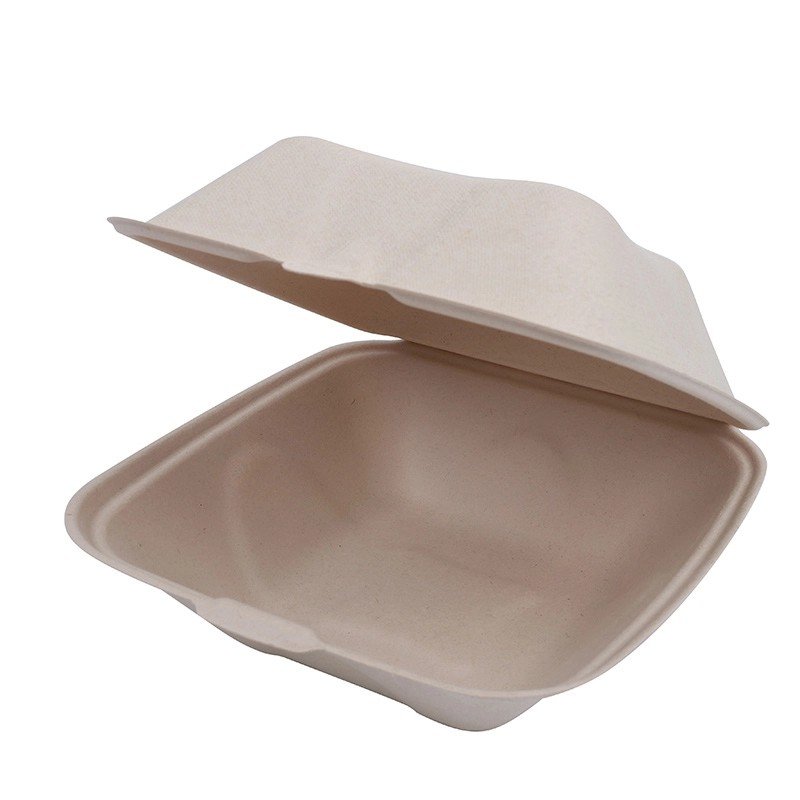
If you distribute foodservice packaging in Europe, your takeaway customers are asking for two things at once: containers that survive a delivery ride, and paperwork that survives a compliance check. That is why compostable takeaway containers wholesale has become a specification exercise rather than a simple price comparison. A container that leaks sauce is a problem your customer notices today. A container whose compostability claim cannot be documented is a problem you notice at the worst possible moment.
This guide is written for European distributors and catering suppliers who buy moulded fibre containers in volume. It covers the format choice between clamshells and lidded trays, and how to match each format to the food actually being served. It also covers EN 13432 checks, SKU by SKU, and how mixed container loads make the minimum order quantities workable.
We are Hebei Daoxiang Eco Tableware Technology Co., Ltd., a factory in Hebei, China, producing moulded tableware from sugarcane bagasse fibre. Our catalogue runs to 126 items in six collections, and takeaway containers are the part of the range European buyers ask us about most. What follows is the method we recommend before ordering — from us or anyone else.
Why European buyers are re-specifying their takeaway range
The regulatory direction in the EU is no longer background noise. The Packaging and Packaging Waste Regulation (PPWR) is tightening what can be claimed, sold and put on the market. Buyers increasingly have to show that the packaging they distribute matches the claims printed on it. We will not re-explain the regulation here — our separate guide to what the PPWR means for tableware buyers covers it in detail. For this article, one sentence is enough: in Europe, a takeaway container is now bought twice, once as a physical product and once as a set of documents.
Price per piece still matters, but so do the test reports behind the compostability claim and the consistency of the material. It also matters whether your supplier can keep the same specification in stock across a season.
Compostable takeaway containers wholesale starts with format: clamshell or lidded tray
The first decision in any container programme is format, and for moulded fibre it comes down to two families.
Clamshells are hinged, one-piece containers: base and lid moulded together, closed by folding. They are fast to pack at a service counter, need no separate lid inventory, and the closed hinge keeps heat in during short delivery trips. They suit dry and semi-dry food best — burgers, fried items, baked goods, and meals where sauce is a coating rather than a liquid. Their weakness is the seal: a hinge and a friction closure are not a liquid-tight system, so very wet dishes will find the gap.
Lidded trays are two-piece: a tray plus a separate lid that sits or clips over the rim. The rim-and-lid combination handles liquids far better, stacks neatly for chilled storage, and presents food well for retail and salad concepts. The trade-offs are operational: two components to stock and match, slightly more packing labour, and lids and trays must be ordered in step.
Neither format is “better”. European distributors who get this right usually carry both. They assign each menu category to the format that fits it, instead of forcing one container to do every job. That assignment is the subject of the next section. If you are still fixing the format definitions themselves, our bagasse food containers wholesale specification checklist sets out the terms importers agree with a factory before requesting quotations.
Match the format to the menu, not the other way round
Most container failures we hear about are not material failures. They are matching failures: a good container given the wrong food. Use the table below as a starting point when you brief your customers or plan your own range.
| Menu scenario | Recommended format | Why it works | Watch out for |
|---|---|---|---|
| Pasta with sauce | Lidded tray | Rim and lid contain liquid; portion stays presentable | Very oily sauces need a grease check with real food |
| Fresh salads | Lidded tray | Lid keeps leaves and dressing in place in transit; trays stack flat in chilled storage | Condensation under the lid on warm days |
| Fried food (chips, chicken, fritters) | Clamshell | Hinge closure vents lightly and keeps pieces crisp; fast packing | Steam build-up if sealed too long before delivery |
| Burgers and sandwiches | Clamshell | One-piece, quick to close, easy to stack for the rider | Sauces served on the side travel better |
| Soups and dishes in broth | Deep lidded bowl/tray format | Depth plus lid gives the only reliable liquid barrier | Test the full delivery distance, not just the counter |
| Saucy rice and curry dishes | Lidded tray | Sauce stays in the tray instead of reaching the hinge line | Order a sample in the exact size you plan to sell |
| Bakery and dry snacks | Clamshell | Simple, presentable, no separate lid stock | Delicate items need the right cavity size |
Two working rules sit behind the table. First, liquids decide: any dish where sauce can move independently of the food belongs in a lidded format. Second, sample with the real menu. A container that behaves with water in your office may behave differently with hot, oily ragù at the end of a 30-minute delivery route. That is why we send free samples within 3 days — and why we expect buyers to test with their own food before committing.
EN 13432, checked SKU by SKU
“Compostable” is a claim about a specific product, not about a factory in general. A supplier may hold certification that covers one material formulation or product family and not automatically everything in the catalogue. When you buy these containers for the European market, check the documentation the way an auditor would:
A practical document check, per SKU
- Ask for the EN 13432 certificate and the underlying test summary for the exact items you are ordering — the container family, material and construction you will actually receive, not a similar product.
- Check that the certificate holder, the product description and the scope line up with your purchase order. If the paper describes a different product group, treat the claim as unproven for your SKU.
- Confirm which certifications support which market. Buyers typically review EN 13432 for compostability alongside LFGB for the German market and FDA documentation for the US. Our own range is certified to FDA, LFGB, EN 13432 and ISO 9001, with matching documents supplied per product.
- File the documents with the SKU, not in a general folder. When a retail customer or an inspector asks, you should be able to produce the paper for that container in minutes.
This is a summary of the checking method only. The full breakdown of what each certification means and which documents sit behind it is in our guide to eco tableware certifications and what they actually cover. Read that before you sign off a new range; use this section as the checklist when you do.
Compostable takeaway containers wholesale: one container, many SKUs
The objection we hear most from mid-sized European distributors looking at compostable takeaway containers wholesale is not the product — it is the minimum order. Our MOQ is 5,000 pieces per SKU from stock moulds, and 20,000 pieces and up for a custom shape. Looked at one SKU at a time, that sounds like a lot of a single burger box. Read across a whole takeaway programme, it works differently.
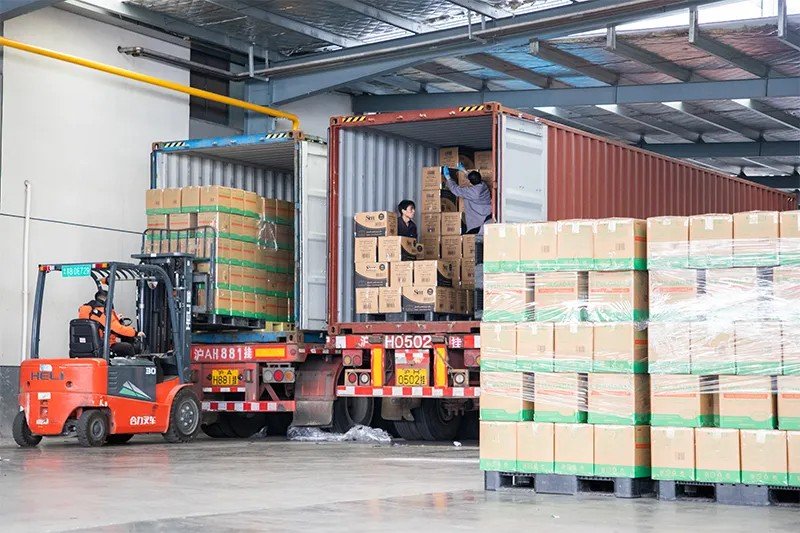
A working takeaway range is never one SKU. A distributor supplying twenty or thirty outlets typically needs clamshells in more than one size, lidded trays, bowls and a few items from the wider catalogue. Our range covers 126 items in six collections, and container buyers often combine several of them. Each SKU still has to meet its own 5,000-piece minimum, but the SKUs travel together. Mixed into one consolidated shipment, they share the shipment’s freight cost instead of one product carrying it alone. That is how the per-SKU minimum stops being a barrier — the commitment that matters is the total programme, not one box size.
Three practical consequences follow:
- Trial breadth beats trial depth. Rather than over-committing to one untested size, qualify several SKUs at their minimums in one shipment. Then learn which ones your market reorders, and deepen those lines next time.
- Custom stays a second step. A private shape or dedicated mould only makes sense after a stock-mould line has proven its volume. The 20,000-piece custom minimum is a scaling decision, not a starting point.
How consolidation, loading and freight actually work is covered in our guide to shipping plant fibre tableware. The full ordering sequence — samples, MOQ, lead times — is laid out in how ordering with us works. Keep this section as the principle: one programme, one shipment, many SKUs.
Grease, water, heat and cold: the honest use boundaries
Moulded bagasse fibre is a service material, not a permanent one, and a good distributor tells customers where its working limits are before a complaint does it for them.
Grease and water. Bagasse fibre containers are made for hot, oily and wet food in normal takeaway service. The moulded surface resists grease and moisture through the eating window, which is what matters for delivery and immediate consumption. They are not storage vessels. A saucy dish packed in the morning for the evening will soften any fibre container, and very hot liquid held for hours will do the same. Set that expectation with your customers and most “failures” disappear.
Heat. Hot food straight from the kitchen is the normal use case, and short reheating is part of everyday service for this material. What fibre does not like is prolonged, intense dry heat — treat the container as packaging for serving and reheating, not as a baking dish.
Cold and freezing. Chilled storage is fine, and containers can go into the freezer for prepared-meal concepts. On thawing, expect the fibre to be less rigid than it was, and design the portion and lid choice accordingly. Condensation, not cold, is the usual enemy.
These are the working boundaries in plain language. The detailed temperature behaviour — from freezer to hot food, and what happens at each stage — is covered in our plant fibre tableware temperature guide, which is the right reference when a customer asks for specifics.
Frequently asked questions
Are compostable takeaway containers strong enough for delivery?
For the food they are matched to, yes. The failures we see are almost always matching failures — liquid dishes in hinged clamshells, or containers asked to store food for hours. Match lidded formats to wet dishes, clamshells to dry and fried food, and test with your real menu and your real delivery distance before you commit.
What EN 13432 documents should I ask for before ordering?
Ask for the certificate and test documentation for the exact SKUs you are buying, check that the holder and product description match your order, and file the papers against each SKU. Do not accept a certificate for a different product family as proof for yours. Our certification guide explains each document in detail.
Can I mix different container types in a single order?
Yes — that is the normal way to buy compostable takeaway containers wholesale. Each SKU meets its own minimum (5,000 pieces from stock moulds). The different lines ship together in one consolidated load, so the freight is shared across your whole range rather than charged against one product.
Should I start with a custom shape or a stock mould?
Start with stock moulds. Prove the volume on existing sizes first; a custom shape starts at 20,000 pieces and only pays back once a line is already selling. Most buyers who customise do it on their second or third order, for their best-moving SKU.
How do I check quality before placing a full order?
Order samples and test them with your own food, your own lids-and-closing routine and your own delivery run. We send samples free within 3 days, so the check costs you nothing but a few days — and it is the same check your customers will effectively run on you.
Start with your own menu, not our catalogue. If you are reviewing compostable takeaway containers wholesale for a European distribution programme, the cheapest next step is a realistic one. Pick the dishes your customers actually serve, and test the formats against them. Tell us the menu categories and the markets you sell into, and we will suggest the clamshell and lidded-tray combination that fits. Samples are free and leave within 3 days. Production runs 15–20 days once you are ready to order, and every SKU can be supplied with its FDA, LFGB and EN 13432 documentation.
Reach us on WhatsApp at +86 18733012158 for a quick first conversation. Or send your range list through our contact page and we will reply with the items, minimums and documents that apply — just the containers, the paperwork and a shipment plan.