— BUYING GUIDES
Bagasse Tableware Shelf Life: Storage Conditions and Stock Rotation for Distributors
November 2026
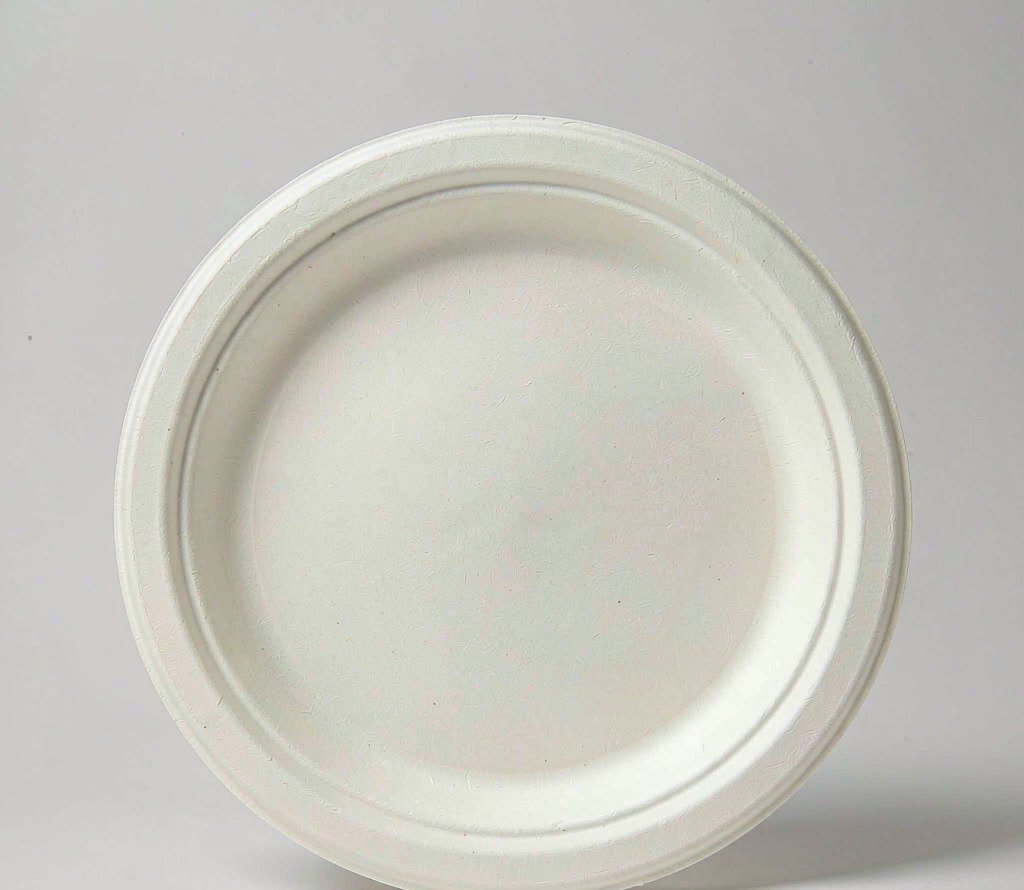
Bagasse tableware shelf life is rarely decided at the factory. It is decided in your warehouse. Dry, ventilated stock can stay saleable for a long working period. In buyers’ experience, the same cartons stored against a damp wall can soften, warp and pick up odour within one humid season. This guide explains what controls bagasse tableware shelf life in practice. It covers storage ranges, humidity control, pallet handling, rotation, and what degrades first.
We hold stock and ship it, so we write this from the factory side. Hebei Daoxiang Eco Tableware Technology Co., Ltd. runs its own moulding plant in Hebei, China. We produce sugarcane bagasse tableware — 126 items across six collections. What follows is warehouse discipline for distributors, not a promise about any single carton.
What bagasse tableware shelf life actually means
Bagasse tableware has no expiry date in the way food does. Shelf life here is about performance, not a food-style use-by date. Instead, bagasse tableware shelf life means the period during which a plate, bowl or box still performs as your customer expects. It stays rigid, keeps its shape, opens and closes cleanly, and carries no storage odour.
That distinction matters for how you manage stock. A distributor does not need a countdown clock. A distributor needs condition checks, a rotation rule, and a clear point where old stock gets inspected before it is sold. Most shelf-life complaints we hear about are condition failures, not age failures.
The material explains why storage matters so much. Bagasse is pressed from sugarcane fibre, dried hard in the mould, and left as a dry plant-fibre product. Our guide to how bagasse tableware is made covers that forming and drying process in detail. Once dried, the fibre can still absorb moisture back from the air around it. Every storage rule in this article follows from that single fact.
How long bagasse tableware shelf life lasts: the ranges buyers work to
Buyers often ask for one shelf-life number. Treat any single figure with care. In this trade, shelf life is a working range set by storage conditions, not a fixed product specification. The ranges below are the common market ranges buyers typically work to. They are planning figures for stock management, never a guarantee for a specific delivery.
Under dry, ventilated warehouse conditions, buyers typically work to a bagasse tableware shelf life of around 12 to 24 months from delivery. Within that window, well-stored stock normally needs only routine spot checks. Many distributors then treat older stock as inspect-before-selling, rather than writing it off automatically.
In damp or poorly ventilated storage, buyers typically assume a much shorter working window. A common working assumption is around 6 to 12 months before softening, warping or odour becomes likely enough to need checking. Cartons that have actually got wet are a different case again. Most buyers quarantine and inspect them at once, whatever their age.
| Storage condition | Common working range buyers typically use | Main risk to watch |
|---|---|---|
| Dry, ventilated, off the floor | Around 12–24 months, then inspect before selling | Slow dust, crush and surface wear |
| Humid or poorly ventilated | Around 6–12 months before checks become essential | Softening, warping, storage odour |
| Cartons wetted or stored on the floor | No assumed range — quarantine and inspect on discovery | Mould risk, collapsed stacks, failed hinges |
| Opened cartons in a working storeroom | Use first; buyers typically work through them within weeks to a few months | Dust, moisture swings, mixed dates |
Use the table as a triage tool, not a label claim. Do not print a shelf-life date on retail packs from a planning range alone. If your market or a retail customer requires a stated period, agree it per SKU with your supplier. Base it on your own storage trial, not on a generic figure from any guide, including this one.
Humidity control: the condition that decides bagasse tableware shelf life
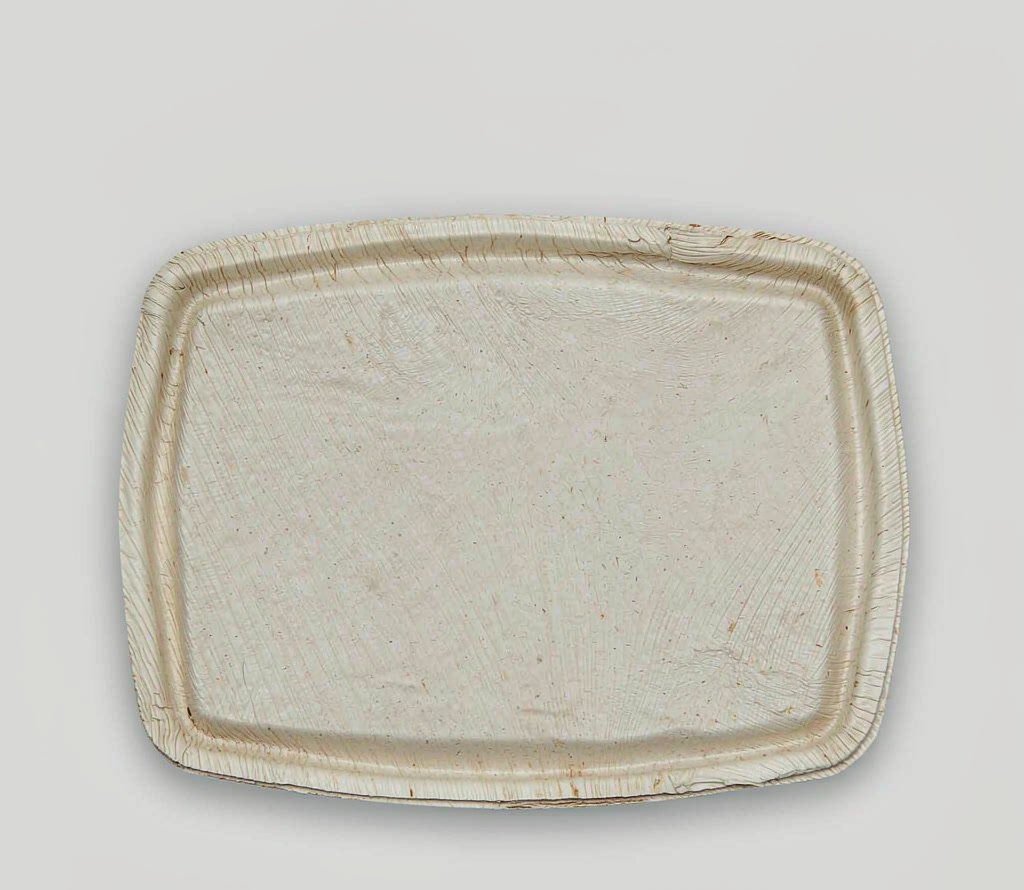
If you control only one variable, control humidity. Heat, light and time all matter less than damp air. Moulded fibre absorbs moisture gradually, so damage rarely happens in one bad day. It builds across weeks of humid storage, then shows up at your customer’s site. That slow build is why bagasse tableware shelf life can fail months after a clean delivery.
The humidity band buyers typically work to
As a common warehouse practice, buyers typically aim to keep storage relative humidity roughly in the 40% to 65% band. They also try to avoid long periods above that band, especially through a humid season. Treat those figures as common market practice for dry goods storage, not as a tested limit for any single SKU. Your own warehouse readings matter more than any published band.
Temperature plays a supporting role. Buyers typically store moulded fibre at ordinary ambient warehouse temperatures, commonly around 15 to 30 degrees Celsius. They keep cartons away from heaters, sunlit walls and cold surfaces where condensation forms. Stable conditions beat a perfect average: repeated damp and drying cycles tire the fibre faster than steady storage does.
Condensation, seasons and problem corners
Warehouses rarely fail evenly. The risky spots are predictable: exterior walls, floor-level bays, corners with no airflow, and areas under roof joints. Condensation on a cold wall can wet one face of a carton while the rest of the aisle stays dry. Walk those spots after heavy rain and during seasonal changeovers, not only on a fixed schedule.
Monitoring does not need to be elaborate. A simple hygrometer in each storage zone, read and logged on a regular round, shows trends early. What you are looking for is drift, not precision. If one zone reads damp for week after week, move bagasse stock out of it before you investigate the building.
Cartons, pallets and handling: protecting stock on the ground
Most storage damage is physical before it is chemical. Crushed cartons deform the stacks inside them. Deformed plates then get blamed on age or production, when the cause was a forklift decision months earlier. Good handling protects bagasse tableware shelf life as directly as dry air does.
Start before the goods reach your racks. The condition stock arrives in sets the condition it can be stored in. Our shipping and logistics guide for plant-fibre tableware covers how cartons and pallets travel from China. On arrival, note any wet, crushed or re-taped cartons on the delivery record. Quarantine them for inspection instead of racking them with sound stock.
- Store off the floor, always. Pallets or racking only, never cartons directly on concrete, which wicks moisture upward.
- Keep cartons dry and closed. Open one working carton per SKU, and reseal or cover the rest against dust and damp.
- Respect stack limits. Do not stack pallets or heavy goods on top of tableware cartons unless the carton was packed for it.
- Leave airflow gaps. Keep a clear gap between pallet rows and exterior walls, so damp wall faces never touch cartons.
- Handle stacks, not loose product. Move nested stacks inside their sleeves or cartons, so rims and hinges stay protected.
Forklift discipline deserves one plain rule. No forks through cartons, no dragging pallets across wet floors, and no outdoor staging in rain. A pallet left on a wet loading bay for one afternoon can undo months of good storage. Brief the team that handles the goods, not only the team that buys them. Treat handling as part of bagasse tableware shelf life, not as a separate topic.
What degrades first: hinges, thin walls and fit
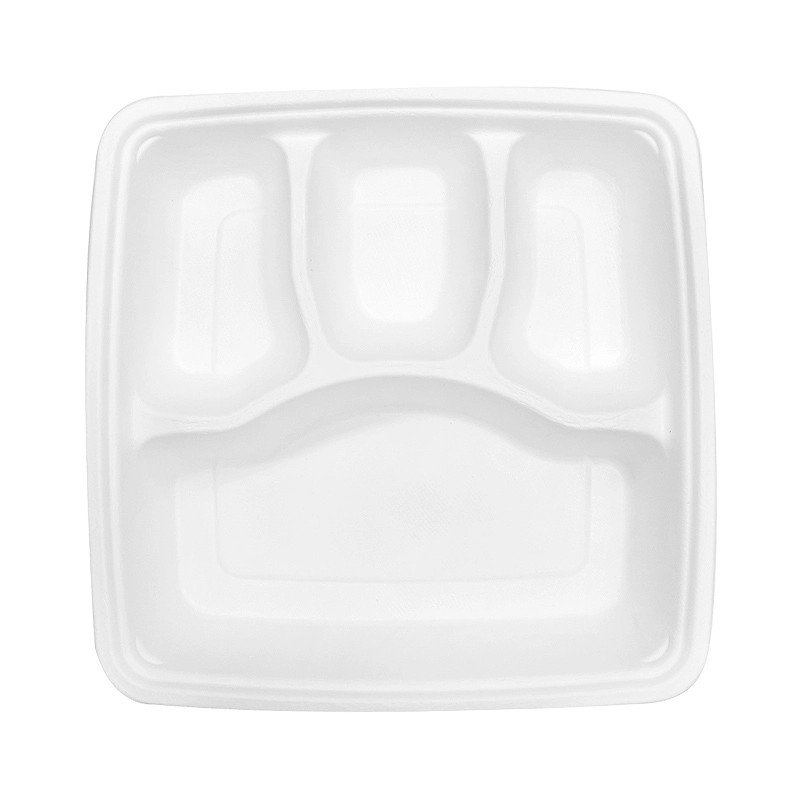
Ageing in moulded fibre is uneven. A carton can look sound while specific parts have already lost performance. Knowing what fails first tells your team where to look during inspections. Check bagasse tableware shelf life in that order: hinges first, thin sections second, fit last. It also tells you which SKUs need the strictest rotation in your range.
Hinges and closing parts
Clamshell hinges degrade first in most buyers’ experience. A hinge flexes along one thin line, so moisture softening and repeated movement weaken it fastest. The box still looks fine when closed. It fails when staff open and close it during service. Test hinges by opening and closing samples several times, not by looking at them.
Thin walls, rims and dividers
Thin sections come next: bowl walls, tray dividers, plate rims and lid edges. These parts carry the least fibre, so they soften and warp before thick bases do. Check them by hand pressure and by stacking. A rim that no longer sits flat, or a divider that flexes loosely, is an early warning for the whole carton.
Lid fit, surfaces and odour
Lids deserve a separate check because fit is a tolerance question. Slight warping that a plate tolerates can stop a lid seating evenly on its container. Seat sample lids on their matching bases during every inspection round. Finally, check surfaces and smell. Dust and scuffing are cosmetic, but a musty storage odour transfers to food service and ends customer trust quickly. Any carton with visible mould should be removed from saleable stock at once.
Keep one sealed reference carton from each major delivery, stored in your best zone. When older stock looks doubtful, compare it against that reference: same stiffness, same hinge action, same lid fit. Our tableware is certified to FDA and LFGB food-contact requirements and to EN 13432, with production under ISO 9001. Ask us for the documentation for the specific items you plan to import.
Stock rotation for distributors: making bagasse tableware shelf life manageable
Rotation is what turns bagasse tableware shelf life from a worry into a routine. The rule is simple: first in, first out. The work is in making the rule easy to follow on a busy warehouse floor. Systems that rely on memory fail every peak season.
- Date every delivery on arrival. Mark the delivery month clearly on each pallet and carton face your team sees first.
- Rack by date, not by convenience. New stock goes behind or below older stock of the same SKU, never in front of it.
- Pick oldest first, every time. Make the oldest saleable date the default pick face, so rotation needs no daily decision.
- Inspect on a fixed round. Many distributors check a sample carton from the oldest date monthly, and after any leak or humid spell.
- Move ageing stock deliberately. If a date band slows down, promote it, bundle it or sell it into faster channels before condition becomes the problem.
- Record write-offs by cause. Note whether losses came from damp, crushing, odour or simple over-ordering, so the next order fixes the real cause.
Two buying habits make rotation easier before stock even arrives. First, order against realistic sell-through, not against the best month you ever had. Slow SKUs are where shelf life problems collect. Second, split mixed orders by expected speed. Fast lines can carry deeper stock; slow lines should run lean and reorder. A smaller, fresher slow line beats a full rack of ageing trays.
Free samples fit this system at the front end. Ours are dispatched free within three days, so you can test a format before committing warehouse space to it. An item your customers reorder monthly rarely becomes a storage problem. An untested item bought in depth can become one within a single season.
FAQ: bagasse tableware shelf life
How long does bagasse tableware shelf life last in a normal warehouse?
In dry, ventilated storage, buyers typically work to around 12 to 24 months as a common market range. After that, most distributors inspect before selling rather than discarding automatically. Treat it as a planning figure, not a specification or guarantee for any single delivery.
What humidity should bagasse tableware be stored at?
As common warehouse practice, buyers typically aim for relative humidity roughly in the 40% to 65% band. They avoid long periods above that band and keep cartons away from damp walls and floors. Log readings by zone, and act on drift. Your own warehouse conditions matter more than any single published figure.
What goes wrong first when bagasse tableware is stored too long or too damp?
Hinges usually weaken first, followed by thin walls, rims, dividers and lid fit. Surfaces then pick up dust, scuffing and storage odour. Inspect those parts by hand, not by carton appearance. A sound-looking carton can still hold boxes whose hinges fail in service.
Can I still sell stock that has passed the range I planned for?
Often, yes, if inspection shows it still performs. Open sample cartons, flex hinges, check stiffness, seat the lids, and smell the product. Sell only what passes, and move it quickly through faster channels. Remove anything with visible mould, strong odour or collapsed stacks from saleable stock completely. Judged by condition, bagasse tableware shelf life stays a test, not a calendar guess.
Does stock rotation really change bagasse tableware shelf life?
Rotation does not change the material, but it changes what your customers receive. First-in-first-out picking means no carton sits through repeated humid seasons at the back of a rack. In practice, disciplined rotation is why two distributors can report very different bagasse tableware shelf life from the same product.
Start with samples, not a container. If you are planning stock around bagasse tableware shelf life, tell us which formats you expect to hold longest. We will dispatch free samples within three days, so you can judge stiffness and fit before committing warehouse space. Reach us on WhatsApp +86 18733012158, or send your enquiry through our contact page. A short message with your formats and estimated volumes is enough to reach Hebei Daoxiang Eco Tableware Technology Co., Ltd.